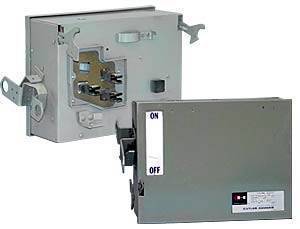
Cutler Hammer Bus Plugs For Sale – Cat. #CP2HD465
Sometimes the biggest challenge MIDWEST runs into, when reconditioning old bus plugs and obsolete bus plugs, is rust. Ironically this biggest challenge usually has the easiest solution, scrap out the bus plug. Sometimes healthy parts can be harvested from the rusted bus plugs, but care has to be taken to assure the recovered parts have not also been damaged by rust. The problem with rust is that it can be very insidious. Let’s say we want to recondition a Square D bus plug, Siemens Bus Plug or Cutler Hammer bus plug. It doesn’t make any difference. The rust doesn’t care. The problem is, we frequently don’t know the extent of the rusting until we have disassembled the bus plug and started the metal refinishing. The surface preparation may reveal severe structural rusting that was not fully apparent cosmetically. Now we’re not talking about full blown metal failure where you could push your finger through the metal. That’s obvious. We are referring to non cosmetic deterioration that prevents professional surface reconditioning. And this is not always visually apparent. It might not even be discovered if a company just repaints on old ITE or Westinghouse bus plug, for example. MIDWEST is very carful of equipment from facilities that have been out of service and unheated for any period of time. Extensive moisture damage can occur and not be visible until MIDWEST begins the full reconditioning process. This is another reason we recondition and test our equipment. There can be hidden defects. Some structural, some functional, some electrical, and any of them could turn a bus plug into a piece of scrap metal.
Categories: General Bus Plug Information Tags: Bus Plugs Damaged by Rust, Cutler Hammer Bus Plug, ITE Bus Plugs, MIDWEST Electrical Testing, obsolete bus plugs, old bus plugs, reconditioned bus plugs, Rusted Bus Plugs, Siemens Bus Plugs, square d bus plugs, Westinghouse Bus Plugs
MIDWEST was asked by a retired electrician why we bother disassembling a bus plug to recondition it. He worked for a contractor for years and they serviced bus plugs and bus duct a few times. But all they had to do was clean them off and operate them a couple
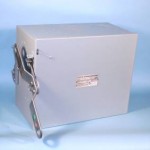
ITE RV366 Bus Plugs Available at www.swgr.com
times. They never found any problems. They didn’t bother removing them from the bus duct. He said he worked on GE General Electric bus plugs, Square D bus plugs and westinghouse bus plugs. He wanted to know what we would find that they didn’t. The obvious area of concern would be the disconnect fingers on the back of the bus plugs. These are not visible unless you remove the bus plug from the bus duct. It’s not unusual for disconnect fingers to be misaligned, bent or damaged by overheating due to improper fit on to the bus duct. In addition, we often find fuse holder supports or operating mechanism supports actually broken. A broken support for an operating mechanism is a disaster waiting to happen. It’s especially dangerous because it will fail right when you are operating the bus plug. And that’s a bad place to be if you are the one switching the bus plug. The concern is for the safety of the person doing the switching. It’s easy to repair or replace equipment. But it’s not so easy to repair or replace people or body parts.
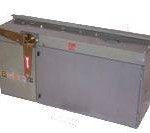
Square D PBQ4640 Bus Plugs Available at www.swgr.com
Whether it’s an ITE RV366 bus plug or RV364 or Square D PBQ4640 bus plug, any bus plug can have these defects. Many defects are more related to the installation and environment than to the particular manufacturer. The big deal is we know all the things that can go wrong with electrical bus plugs and most of these failures can not be found with a quick visual inspection of an installed bus plug by someone inexperienced, who has never tore one apart, or repaired one after it has broken or failed mechanically or electrically.
Categories: General Bus Plug Information Tags: bus duct, Bus Plug Defects, bus plug disconnect fingers, Bus Plug Safety, disconnect fingers, Electrical Bus Plugs, GE Bus Plugs, Installing Bus Plugs, ITE RV364. Square D PBQ4640, ITE RV366, Operating a Bus Plug, reconditioned bus plugs, square d bus plugs, Westinghouse Bus Plugs

Square D PQ3206 Bus Plug
It is not unusual for MIDWEST to get a call because a company is having numerous problems with their old bus plugs. Things go along okay for years and then one year they have one failure after another. It seems to make no difference who the manufacturer is. They could be old Square D bus plugs, GE General Electric bus plugs, Westinghouse bus plugs, Cutler Hammer bus plugs or ITE bus plugs. The problem seems not to care who the manufacturer is. When this pattern appears, it is usually because a chronic mechanical or environmental problem has been present for many years and has been getting progressively worse. Soon or later the mechanical problem or contaminate reaches a critical stage and the bus plugs collectively start to fail. Usually the failure seems to be caused by overheating, or by mechanical failure between the bus duct and bus plugs, or by moisture. The problem isn’t just moisture or dirt. It’s the accumulation of dirt over many years or the presence of moisture over many years. This means there is a chronic condition causing you to replace bus plugs. One typically doesn’t have to suddenly replace Square D bus plugs or replace Cutler Hammer bus plugs because of normal operating conditions. And replacing Westinghouse bus plugs one after the other without addressing the root cause, will not make the problem go away. So if you find yourself having to repair or replace numerous bus plugs, look for a chronic cause. If you just don’t find something, then look for a recent acute change that would affect all the bus plugs.
MIDWEST’s Switchgear Shop received an unusual request for blue Square D bus plugs and black General Electric bus plugs. Plus, we were asked if we could paint ITE and Cutler Hammer bus plugs other colors and if we could put a unique label on each bus plug. Of course the answer was yes, but this was different. We have reconditioned Westinghouse bus plugs and Cutler Hammer Bus Plugs that were already painted black and we had to repaint them gray. We had some Square D bus plugs and General Electric Bus Plugs that were a 1950’s kitchen cream color and looked like they had been repainted every ten years. But this was the first time that a customer requested a specific color, other than the manufacturer’s original color, which is usually gray.
They had a lot of 30 amp and 60 amp bus plugs. Quite a few 100 amp bus plugs and a couple 200 amp bus plugs and one large 400 amp bus plug. But what was really unusual was their reason for the color coding and labeling. It appears that, in some states, bus duct and bus plugs that are used only on a specific manufacturing machine or production process, are exempt from state tax. If they buy replacement bus plugs or have service on the existing bus plugs, the replacements and service is non taxable. If the bus plugs or bus duct are used on something other than a specific manufacturing machine or process, service and equipment is taxable. They wanted the bus plugs for a specific process to be all the same color. They also wanted the bus plugs to be painted the same color as the bus duct and to be labeled for the specific manufacturing machine or process. We are not state tax experts, but, as they explained it, it seemed to make sense.
Categories: Questions Asked By Our Customers Tags: 100 Amp Bus Plugs, 200 Amp. 400 Amp, 30 Amp Bus Plugs, 60 Amp Bus Plugs, bus duct, Cutler Hammer Bus Plugs, General Electric Bus Plugs, ITE Bus Plugs, Painted Bus Plugs, reconditioned bus plugs, Replacement Bus Plugs, square d bus plugs, Westinghouse Bus Plugs
MIDWEST was asked what electrical equipment was the most colorful. Certainly a strange question, But the answer may seem even stranger. The most colorful equipment is electrical bus duct and bus plugs. We’ve seen a thousand manufacturing plants over the years and many, especially the older ones, have painted their old electrical bus duct and bus plugs specific colors to identify the specific electrical system or the specific load being fed. Here are a few examples. One plant painted the 480 volt bus duct and bus plugs blue and painted all their old 240 volt system orange. It would be hard to mix these systems up. Another plant, a huge facility with over a thousand old Square D and Westinghouse bus plugs, painted everything black. It was pretty impressive, until you tried to read some of the labels on the obsolete bus plugs. Some facilities will paint a particular bus run a specific color to identify it as belonging to a specific manufacturing process. They want to separate the process load from general building load. Blue seems to be the choice of colors for equipment feeding specific processes or manufacturing cells. Critical processes may use red. Some may paint their GE General Electric bus plugs one color and the Cutler Hammer or Westinghouse bus plugs a different color. And then there are those facilities that had a color code many years ago, but have added other manufacturers’ equipment since then. And now you find different old colored bus plugs on the same bus duct with plain grey new bus plugs. We have seen some pretty strange stuff. There are some facilities that were former manufacturing plants that had their own electrical engineering staff and maintenance electricians working all three shifts. Everything was well maintained. Things were labeled. Equipment, including old and new bus duct and bus plugs, were maintained and repaired or replaced as needed. They even had up to date electrical drawings. Those were the days. Now some of those same facilities are multiple occupancy buildings with light assembly, storage, office space and, too frequently, abandoned space. And the colorful electrical distribution systems all seem to have become one color. We’ll call it sad grey.