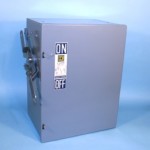
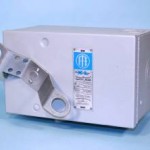
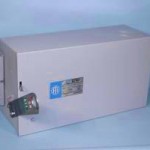
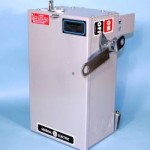
Every day MIDWEST’s Switchgear Division receives interesting calls, mostly about technical stuff. Often just plain old problem solving. And sometimes an emergency request for a replacement bus plug. Every once in a while we are asked whether the bus plug we sold was new or used. They couldn’t tell the difference. An example is a call about a Square D PQ3603G bus plug. The customer thought we made a mistake and sent them a new bus plug instead of a used PQ3603G. He was a bit surprised when we told him it was used, but had been reconditioned by MIDWEST. The reconditioning process is a full detailed disassembly, reconditioning of components, reassembly and final quality control testing and inspection. Thirty years ago, the common practice for some companies may have been to just wipe a used bus plug off and send it out the door. Those days should be long gone. Unfortunately there are suppliers that still don’t do much more than cosmetics. MIDWEST has a huge advantage.We are a full service electrical testing and switchgear maintenance company and have been for over 30 year. In addition to high current and high voltage test equipment, we have test stations to simulate normal installation and operation of electrical equipment. Reconditioning a used Square D PQ3603G bus plug to look like new is routine work at MIDWEST.But it is always nice to get a compliment from our customers.We passed it on to the Switchgear Services Shop.We have received similar compliments about other equipment, such as fused panel board switches, circuit breakers, transformers, etc.
MIDWEST was asked how we can tell if a bus plug has been water damaged. What if a brand new bus plug is exposed to water, say rain. How can we tell after it has already dried off? If it’s new, how would MIDWEST even know it was exposed to rain or water? The answer goes to the heart of why MIDWEST fully reconditions bus plugs. If a bus plug has been exposed to water, we would know as soon as we disassemble it for reconditioning. The old or new bus plug hardware, nuts and bolts and washers, would have some rust. The exposed surfaces of bolt holes would have rust at the edges. This is more obvious than you might think. In addition, between the inside of the new bus plug enclosure and attached interior parts, we find dust that has the visual pattern of water exposure. Like spilling water on a surface that had just a little dust on it. After the water evaporates, you can still see the pattern of the water exposure on the surface. Usually all this is pretty obvious to the engineering technician doing the work, if they are actually reconditioning the replacement bus plugs. But, if a company is just giving it a shoe shine, meaning a little inside cleaning with a little outside painting, they may never detect the water damage. Even an insulation resistance test pole to pole and pole to ground may not reveal the damage. But it is there and it shortens the reliable life expectancy of the bus plug. Rust especially is insidious when it starts at support hardware. MIDWEST’s best suggestion is to buy fully reconditioned equipment if you are buying obsolete bus plugs, used bus plugs, or new surplus bus plugs. This is true whether buying Square D bus plugs, Siemens bus plugs, ITE bus plugs or any other manufacturer’s product.
Sometimes you couldn’t write the script for the strange things that happen in the real world.At least in our world of reconditioning old used bus plugs and selling them to folks that tell us they couldn’t tell the difference from new.The technical world seems so boring to outsiders, but MIDWEST has its share of action. For example, a large food processing facility called at 6:15 PM on a Monday night, in a screaming panic, because they needed a replacement 200 amp bus plug and they needed it right away. They couldn’t get a new one immediately and the electrical suppliers for most of the US were already closed for the day.The cracking in his voice changed to audible relief when we told him we had a fully reconditioned Square D PQ3620G bus plug, boxed and ready for shipping pickup. It was set to go to another customer, but it was part of an order for over 100 bus plugs and there was no urgency for it to ship. It was a shipping scramble but the food processing plant had their like new Square D bus plug the next morning. What’s the chance MIDWEST would have a Square D PQ3620G bus plug sitting at the shipping dock, ready to go, and someone calls and needs it “right now.”The answer to that question is that it’s much more common than one would ever guess. It seems improbable, but it happens fairly often. The odds may be higher because of the number of bus plugs, transformers and circuit breakers we ship.But it’s always a nice thrill for MIDWEST to defy the odds. And it gives the Engineers something to argue about, the odds versus reality.
Once in a while MIDWEST gets phone calls that are just scary.For example, a maintenance electrician called to ask what he should do. He needed to turn power off to a production machine. It was fed directly from an old bus plug. But the bus plug handle was broken so he couldn’t switch the bus plug. He tried using a vice grip, but the whole bus plug was moving and it still would not turn off. Production said they could not turn off the whole line just for one lousy switch. He said the bus plug was obsolete and he just wanted to get it out of there. It was kind of hanging at an angle and the pipe for the feeder going out the top was pulled out. He thought he and another guy could use a lift and pull it off live. He thought that might be okay because they would make sure there was no load on it.He said he had worked on broken bus plugs before.
This man was in a big jam between making a bad decision and doing what his boss wanted. He needed help. Our answer was simple and we told him we would send a letter if he needed. There was danger of serious injury or death if they tried to remove that live bus plug from a live bus duct. The bus duct would have to be turned off. The danger of shock hazard and arc blast hazard was too great under the circumstances. In addition, the situational danger was extreme because they would be working from a platform lift with no way to escaped from shock or arc blast. Plus they could be knocked right off the platform. And they were in a position that no one could immediately help them.
We were sure his boss did not fully understand the level of danger and just saw the problem as simply mechanical. We have been through this before. Once everyone understands how dangerous it is, they work out a safe solution, like turn the power off on third shift.
The big danger is beginning to think you can do something that you know is too dangerous. Sometimes, the longer you think about it, the more you convince yourself that maybe this time it would be okay. You’ll just be careful. When you start that line of thought, you just have to stop yourself.
If you know there is a danger of serious injury or death, you are not allowed to do it.
MIDWEST was asked by a manufacturing plant that used Siemens bus plugs in their facility, why they had not only Siemens bus plugs, but also used ITE Siemens, Square D and Cutler Hammer bus plugs. And most of his main switchgear and circuit breakers were GE General Electric. His purchasing department wanted maintenance to pick one electrical equipment manufacturer and stick with them. Purchasing figured they could get better prices that way.
ITE Bus Plugs Cat. No. RV424
First we explained that each type of electrical equipment they had, probably represented a time period or an expansion project. For example, that 100,000 square foot addition in 1968 may have been all Square D. The electrical contractor may have got his best pricing from Square D and therefore bought Square D bus plugs and bus duct. The contractor on a later project may have used Cutler Hammer. Later yet, Siemens. This was not unusual. Or this may have happened because of different delivery dates. Or a particular manufacturer of bus plugs may have fallen out of favor with contractors because of quality problems or high prices.
All this could be avoided by specifying a specific manufacturer. But single sourcing one manufacturer of electrical switchgear may result in higher prices. The manufacturer would have a lock on the sales. The manufacturer’s sales rep would usually figure this out pretty quick. If you put an alternate in your specification, you basically have the same environment as open source bidding.Sometimes a particular electrical bus duct and bus plug manufacturer has a lock on a customer’s business because of the purchasing department or maintenance department at that time. The head of maintenance for ten years just may be more familiar with or favor GE General Electric bus plugs. Or purchasing may be hooked on Eaton Cutler Hammer bus plugs. So it goes sometimes. But it can be very difficult to continually single source the electrical equipment you purchase for many years and decades. There are just too many variables and they change over time.There is not a problem having equipment from different electrical equipment manufacturers, as long as replacement bus plugs or other equipment and parts are readily available. Delivery is sometimes a problem in today’s ‘just in time’ world. MIDWEST’s reconditioned electrical switchgear, including bus plugs, is one solution to the availability problem.
There are situations where using only one manufacturer of electrical switchgear may be important and required. For example, Mission Critical facilities, remote access facilities that require many spare components, continuous process facilities, and, of course, facilities that are actually subsidiaries or are owned by a specific electrical equipment manufacturer.
MIDWEST receives many requests from folks that want to sell us their used bus plugs. These requests come from all over the country.Usually we ask for a little biography on their old bus plugs.If we are interested, we may ask them to send us some digital pictures of what they have.To recondition bus plugs, there is a huge difference in the cost between bus plugs that look like new bus plugs and those that have been painted several times and are damaged. Refurbishing damaged bus plugs is a waste of time.Along with all this, there is a need to have a sense of humor. Just about all the folks that call MIDWEST are great people, but they sure don’t know our business.Here is a recent quick example.We received a call from someone wanting to sell us several pallets of like new bus plugs. They described them; Gave us some catalog numbers; And said they just want to get rid of them. We asked for some digital pictures and they were happy to accommodate.When we reviewed the pictures, all their used bus plugs looked just great.Perfect candidates for refurbished bus plugs. But the pallets were outside on a nice sunshiny day. Good light for great pictures. But it rains outside and bus plugs do not like rain.We called the owners and they said their like new bus plugs were located in an area that was always warm and seldom rained. Seldom doesn’t mean never.It means occasionally does. Occasionally means at least once and at least once means rust. And rust means disaster for bus plugs.MIDWEST is not interested in rusty old bus plugs, even if they look like new bus plugs.
Previously MIDWEST discussed the problem of making certain the disconnect fingers lineup properly when you replace a bus plug.We really didn’t answer the question of how to make sure replacement bus plugs are connected properly.Here are a couple suggestions. Put a very thin film of proper contact lubricant on the contact surface of the old bus plug disconnect fingers.Install the bus plug on to the bus duct. Note the position of the replaced bus plug and how it went into place. Then remove the bus plug and closely inspect the contact surface of the disconnect fingers.The film of contact lubricant should reveal that the disconnect fingers properly slid, ie wiped, on to the bus bar in the bus duct. Remove any excess lubricant. In addition, one can inspect the bus bars of the bus duct and see visible evidence that the disconnect fingers of the replacement bus plug actually wiped the surfaces of the bus bars correctly.After having verified the bus plug had been properly installed, install it again in the same manner as the first time.All this should not be necessary, but sometimes old or obsolete bus plugs are difficult to tell if they connected properly. It can be especially difficult when installing some large bus plugs.The physical effort to get them in place impedes the ability to sense if they went into place properly. Follow the manufacturer’s instructions on the possible use of contact lubricant. Regardless, too much lubricant is a mistake because it collects dust.Also, if new, reconditioned or repaired bus plugs are installed in a previously empty space on the bus duct, you should be able to see the contact wipe marks on the bus bar the first time the bus plug is installed or see new wipe marks on the disconnect fingers of the bus plug itself.All this is a simple way to give greater confidence the bus plug is installed properly.For safety reasons, MIDWEST strongly recommends this only be done on de-energized bus duct.
MIDWEST’s Switchgear Shop was asked if they had a simple video of reconditioning a bus plug.The answer was, “Not yet, but give us a couple weeks.”They figured the customer asked, so they had the green light to make a video.This was truly a collaboration of Techies.Three weeks later they had two hours of video of everything to do with reconditioning an old used bus plug.They figured they had it all covered, disassembly, stripping, cleaning, replacing hardware, painting, reassembly, labeling, testing, and final QC checkout.Everyone was pleased until they were given the task of reducing their famous bus plug video from 2 hours to 5 minutes.Ouch! This seemed impossible to them.There was a lot of work, and therefore video, to reconditioning old used and sometimes obsolete bus plugs.The problem was solved by having just one person work on the editing.
In the end, everyone was pleased until Engineering viewed the video and went crazy because all the final testing and QC was edited out.The video is now back for re-editing.You can’t please everyone, especially fanatics.
6.0Our reconditioned bus plugs look and operate like new. Check them out and compare for yourself.
5,0Our reconditioned bus plugs meet national testing standards.
4.0Our reconditioned bus plugs are readily available. Manufacturers do not keep inventories of many types of new equipment. Lead times for new equipment orders can run into weeks or even months.
3.0Our reconditioned bus plugs are fast and easy to purchase. Check out our web site at www.swgr.com to see how easy it is.
2.0Our reconditioned bus plugs receive the same care as rare pieces of art. Well not quite. But the fact remains, our technicians take tremendous pride in their work.
1.0And the number one reason to buy a used bus plug is it saves you money, up to 70% off the cost of new.
We were looking for bus plugs and met Orville and Wilber Wright.Well, sort of.MIDWEST was in Dayton, Ohio, looking at old used bus plugs in a former manufacturing facility.A big place.A thousand bus plugs.They had used Square D, ITE, and ITE Bull Dog bus plugs. They had used bus duct and bus plugs throughout the entire facility. We found bus plugs in all the manufacturing areas and above the ceilings in the offices, even the executive office. The facility had evolved and expanded over ten decades. There was a century of history in this manufacturing plant.We found electrical infrastructure every where, behind walls that had been added or moved, above ceilings that had been remodeled many times, hidden in closets, and secreted away in basements long forgotten.We were especially surprised to find a solemn plaque in front of a very old building, a hundred years old that had been beautifully remodeled inside as executive offices.We were looking at old electrical bus plugs and transformers in an area of the building, walked out the front door to find the plaque that read, in part, “…these buildings were constructed in 1910 and 1911 to house the factory of Wilbur and Orville Wright’s first airplane company, The Wright Company.”Now that’s a paradigm shift.One moment it’s just an old building.A second later it’s the Beginning of Manned Flight.Today we have “Human Spaceflight.”But we also still have bus plugs, some new and some old and some no longer used.