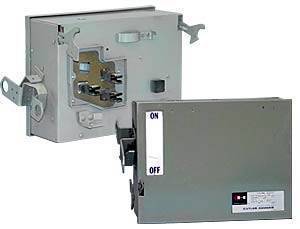
Cutler Hammer Bus Plugs For Sale – Cat. #CP2HD465
Sometimes the biggest challenge MIDWEST runs into, when reconditioning old bus plugs and obsolete bus plugs, is rust. Ironically this biggest challenge usually has the easiest solution, scrap out the bus plug. Sometimes healthy parts can be harvested from the rusted bus plugs, but care has to be taken to assure the recovered parts have not also been damaged by rust. The problem with rust is that it can be very insidious. Let’s say we want to recondition a Square D bus plug, Siemens Bus Plug or Cutler Hammer bus plug. It doesn’t make any difference. The rust doesn’t care. The problem is, we frequently don’t know the extent of the rusting until we have disassembled the bus plug and started the metal refinishing. The surface preparation may reveal severe structural rusting that was not fully apparent cosmetically. Now we’re not talking about full blown metal failure where you could push your finger through the metal. That’s obvious. We are referring to non cosmetic deterioration that prevents professional surface reconditioning. And this is not always visually apparent. It might not even be discovered if a company just repaints on old ITE or Westinghouse bus plug, for example. MIDWEST is very carful of equipment from facilities that have been out of service and unheated for any period of time. Extensive moisture damage can occur and not be visible until MIDWEST begins the full reconditioning process. This is another reason we recondition and test our equipment. There can be hidden defects. Some structural, some functional, some electrical, and any of them could turn a bus plug into a piece of scrap metal.
Categories: General Bus Plug Information Tags: Bus Plugs Damaged by Rust, Cutler Hammer Bus Plug, ITE Bus Plugs, MIDWEST Electrical Testing, obsolete bus plugs, old bus plugs, reconditioned bus plugs, Rusted Bus Plugs, Siemens Bus Plugs, square d bus plugs, Westinghouse Bus Plugs
MIDWEST was asked how we can tell if a bus plug has been water damaged. What if a brand new bus plug is exposed to water, say rain. How can we tell after it has already dried off? If it’s new, how would MIDWEST even know it was exposed to rain or water? The answer goes to the heart of why MIDWEST fully reconditions bus plugs. If a bus plug has been exposed to water, we would know as soon as we disassemble it for reconditioning. The old or new bus plug hardware, nuts and bolts and washers, would have some rust. The exposed surfaces of bolt holes would have rust at the edges. This is more obvious than you might think. In addition, between the inside of the new bus plug enclosure and attached interior parts, we find dust that has the visual pattern of water exposure. Like spilling water on a surface that had just a little dust on it. After the water evaporates, you can still see the pattern of the water exposure on the surface. Usually all this is pretty obvious to the engineering technician doing the work, if they are actually reconditioning the replacement bus plugs. But, if a company is just giving it a shoe shine, meaning a little inside cleaning with a little outside painting, they may never detect the water damage. Even an insulation resistance test pole to pole and pole to ground may not reveal the damage. But it is there and it shortens the reliable life expectancy of the bus plug. Rust especially is insidious when it starts at support hardware. MIDWEST’s best suggestion is to buy fully reconditioned equipment if you are buying obsolete bus plugs, used bus plugs, or new surplus bus plugs. This is true whether buying Square D bus plugs, Siemens bus plugs, ITE bus plugs or any other manufacturer’s product.
Categories: General Bus Plug Information, Questions Asked By Our Customers Tags: Bus Plug Parts, Fully Reconditioned Bus Plugs, Insulation Resistance Test, ITE Bus Plugs, new bus plugs, New Surplus Bus Plugs, obsolete bus plugs, old bus plugs, Replacement Bus Plugs, Siemens Bus Plugs, square d bus plugs, used bus plugs, Water Damaged Bus Plugs
MIDWEST was asked by a retired electrician why we bother disassembling a bus plug to recondition it. He worked for a contractor for years and they serviced bus plugs and bus duct a few times. But all they had to do was clean them off and operate them a couple
ITE RV366 Bus Plugs Available at www.swgr.com
times. They never found any problems. They didn’t bother removing them from the bus duct. He said he worked on GE General Electric bus plugs, Square D bus plugs and westinghouse bus plugs. He wanted to know what we would find that they didn’t. The obvious area of concern would be the disconnect fingers on the back of the bus plugs. These are not visible unless you remove the bus plug from the bus duct. It’s not unusual for disconnect fingers to be misaligned, bent or damaged by overheating due to improper fit on to the bus duct. In addition, we often find fuse holder supports or operating mechanism supports actually broken. A broken support for an operating mechanism is a disaster waiting to happen. It’s especially dangerous because it will fail right when you are operating the bus plug. And that’s a bad place to be if you are the one switching the bus plug. The concern is for the safety of the person doing the switching. It’s easy to repair or replace equipment. But it’s not so easy to repair or replace people or body parts.
Square D PBQ4640 Bus Plugs Available at www.swgr.com
Whether it’s an ITE RV366 bus plug or RV364 or Square D PBQ4640 bus plug, any bus plug can have these defects. Many defects are more related to the installation and environment than to the particular manufacturer. The big deal is we know all the things that can go wrong with electrical bus plugs and most of these failures can not be found with a quick visual inspection of an installed bus plug by someone inexperienced, who has never tore one apart, or repaired one after it has broken or failed mechanically or electrically.
Categories: General Bus Plug Information Tags: bus duct, Bus Plug Defects, bus plug disconnect fingers, Bus Plug Safety, disconnect fingers, Electrical Bus Plugs, GE Bus Plugs, Installing Bus Plugs, ITE RV364. Square D PBQ4640, ITE RV366, Operating a Bus Plug, reconditioned bus plugs, square d bus plugs, Westinghouse Bus Plugs
Bus Plug Square D PKA36200
If you read the recent information on Facebook beating Myspace by managing in “white space,” rather than in a formal business management environment, you have a good idea how MIDWEST makes many decisions to improve its web site for our customers. We make so called guesses based on conversations and suggestions from our customers. They tell us what they like. And in doing so, they are the white space between all the seasoned directives we get from the marketing professionals. The ‘world wide web’ is still exciting uncharted territory. There are not many years of prior art.
In response to customer white space chatter, MIDWEST set up a web site specifically directed at those looking for buyers of bus plugs. Hence, the domain name www.busplugsbuyer.com. You see here the results of white space management. This specific target site makes it easier for those that have bus plugs to sell to find us in general. Of course, they could find MIDWEST specifically if they already knew we existed. But, for those that don’t know who MIDWEST is, they might make a general search for buyers of bus plugs. Then go from the general to the more specific. Specifically, whether a GE General Electric bus plugs, Square D bus plugs, Cutler Hammer bus plugs, ITE Bus Plugs, or Federal Pacific bus plugs, it doesn’t make a difference. According to our customers, they would first search for a bus plug buyer and then go from there. This is all very simple from the seller’s point of view.
MIDWEST’s Switchgear Shop received an unusual request for blue Square D bus plugs and black General Electric bus plugs. Plus, we were asked if we could paint ITE and Cutler Hammer bus plugs other colors and if we could put a unique label on each bus plug. Of course the answer was yes, but this was different. We have reconditioned Westinghouse bus plugs and Cutler Hammer Bus Plugs that were already painted black and we had to repaint them gray. We had some Square D bus plugs and General Electric Bus Plugs that were a 1950’s kitchen cream color and looked like they had been repainted every ten years. But this was the first time that a customer requested a specific color, other than the manufacturer’s original color, which is usually gray.
They had a lot of 30 amp and 60 amp bus plugs. Quite a few 100 amp bus plugs and a couple 200 amp bus plugs and one large 400 amp bus plug. But what was really unusual was their reason for the color coding and labeling. It appears that, in some states, bus duct and bus plugs that are used only on a specific manufacturing machine or production process, are exempt from state tax. If they buy replacement bus plugs or have service on the existing bus plugs, the replacements and service is non taxable. If the bus plugs or bus duct are used on something other than a specific manufacturing machine or process, service and equipment is taxable. They wanted the bus plugs for a specific process to be all the same color. They also wanted the bus plugs to be painted the same color as the bus duct and to be labeled for the specific manufacturing machine or process. We are not state tax experts, but, as they explained it, it seemed to make sense.
Categories: Questions Asked By Our Customers Tags: 100 Amp Bus Plugs, 200 Amp. 400 Amp, 30 Amp Bus Plugs, 60 Amp Bus Plugs, bus duct, Cutler Hammer Bus Plugs, General Electric Bus Plugs, ITE Bus Plugs, Painted Bus Plugs, reconditioned bus plugs, Replacement Bus Plugs, square d bus plugs, Westinghouse Bus Plugs
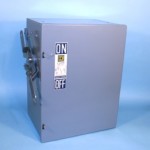
PQ3620G Square D Bus Plug For Sale
Sometimes you couldn’t write the script for the strange things that happen in the real world. At least in our world of reconditioning old used bus plugs and selling them to folks that tell us they couldn’t tell the difference from new. The technical world seems so boring to outsiders, but MIDWEST has its share of action. For example, a large food processing facility called at 6:15 PM on a Monday night, in a screaming panic, because they needed a replacement 200 amp bus plug and they needed it right away. They couldn’t get a new one immediately and the electrical suppliers for most of the US were already closed for the day. The cracking in his voice changed to audible relief when we told him we had a fully reconditioned Square D PQ3620G bus plug, boxed and ready for shipping pickup. It was set to go to another customer, but it was part of an order for over 100 bus plugs and there was no urgency for it to ship. It was a shipping scramble but the food processing plant had their like new Square D bus plug the next morning. What’s the chance MIDWEST would have a Square D PQ3620G bus plug sitting at the shipping dock, ready to go, and someone calls and needs it “right now.” The answer to that question is that it’s much more common than one would ever guess. It seems improbable, but it happens fairly often. The odds may be higher because of the number of bus plugs, transformers and circuit breakers we ship. But it’s always a nice thrill for MIDWEST to defy the odds. And it gives the Engineers something to argue about, the odds versus reality.
Here’s another odd but very dangerous circumstance that MIDWEST ran into during the field data collection for an Arc Flash Hazard analysis. The customer had an old Square D bus duct run in the oldest part of their plant. It was actually a complex made up of several buildings, the oldest being a wood structure going back seventy years. They had mostly Square D and General Electric bus duct and bus plugs, and a small run of ITE. The old part of the plant was used for storage. All the manufacturing equipment had long ago been removed. There were very few Square D bus plugs still being used in the bus duct in this area. There were maybe a dozen bus plugs that were still installed but no longer in use. In most cases, the pipe and wire feeder had been removed. But we found one 100 amp bus plug, no longer used, had a conduit going into a small room full of junk. We had been told the bus plug was off and the fuses probably removed. They didn’t know where the conduit went. When we checked, and we always check, we found the bus plug closed and hot, the feeder energized. The electrician was pretty surprised. We traced the conduit to a back small storage area, dark, no lighting, where it terminated in a 6 by 6 junction box on the wall right next to the door. This circuit was “deadly hot” because the cover was missing and the conductors were sticking out of the box, wrapped with the frayed remains of old cloth type tape. This was a deadly accident just waiting to happen. When MIDWEST recommended turning off the old bus plug; removing the fuses; and removing the conductors and conduit from the bus plug, they balked. Thought just turning it off was okay. But, since this was an abandoned circuit, not to be used again, we always recommend removing it. We consider this a safe work practice that eliminates the possibility of something “deadly hot” injuring or killing someone in the future.
MIDWEST was asked what electrical equipment was the most colorful. Certainly a strange question, But the answer may seem even stranger. The most colorful equipment is electrical bus duct and bus plugs. We’ve seen a thousand manufacturing plants over the years and many, especially the older ones, have painted their old electrical bus duct and bus plugs specific colors to identify the specific electrical system or the specific load being fed. Here are a few examples. One plant painted the 480 volt bus duct and bus plugs blue and painted all their old 240 volt system orange. It would be hard to mix these systems up. Another plant, a huge facility with over a thousand old Square D and Westinghouse bus plugs, painted everything black. It was pretty impressive, until you tried to read some of the labels on the obsolete bus plugs. Some facilities will paint a particular bus run a specific color to identify it as belonging to a specific manufacturing process. They want to separate the process load from general building load. Blue seems to be the choice of colors for equipment feeding specific processes or manufacturing cells. Critical processes may use red. Some may paint their GE General Electric bus plugs one color and the Cutler Hammer or Westinghouse bus plugs a different color. And then there are those facilities that had a color code many years ago, but have added other manufacturers’ equipment since then. And now you find different old colored bus plugs on the same bus duct with plain grey new bus plugs. We have seen some pretty strange stuff. There are some facilities that were former manufacturing plants that had their own electrical engineering staff and maintenance electricians working all three shifts. Everything was well maintained. Things were labeled. Equipment, including old and new bus duct and bus plugs, were maintained and repaired or replaced as needed. They even had up to date electrical drawings. Those were the days. Now some of those same facilities are multiple occupancy buildings with light assembly, storage, office space and, too frequently, abandoned space. And the colorful electrical distribution systems all seem to have become one color. We’ll call it sad grey.
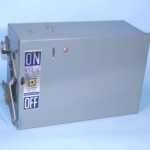
Buy Square D PQ3640 Bus Plugs
All too often our little friend the bus plug ends up making the ultimate sacrifice resulting in a catastrophic failure in the line of duty.
Not long ago we got a call from a customer asking for a bus plug replacement for one of theirs which failed in service. The circumstances surrounding the bus plug failure cannot be discerned.
The bus plug involved was a Square D PQ3640 (3 phase, fusible, 600 volts, 400 amps), the older version of the Square D PBQ style bus plug. One can only speculate as to what happened exactly, but the evidence told of a frightening scenario. A hole the size of an orange was burned completely through the bus plug cover. The inside guts burned beyond recognition, copper splattering along with carbon residue scattered throughout the inside of the bus plug.
Oddly enough the extent of the damage was confined to the bus plug itself and did not affect the bus duct proper. As mentioned many times before, bus plugs often operate under highly stressed conditions seriously compromising their life in service.
