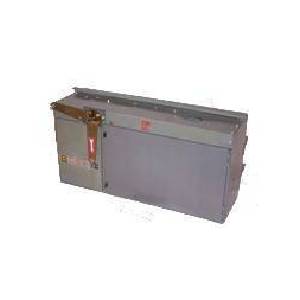
PBQ3640G Square D Bus Plug – Available at www.swgr.com
During a routine Infrared Scan of a large manufacturing facility, our Thermographer found an interesting, but not uncommon, problem. A 400 amp Square D bus plug, PBQ3640G, was lit up like a dim light bulb. That means the entire bus plug looked warm, not just one area of the bus plug. Note, when viewed with infrared, it does not take much of a temperature difference for an object to look dramatically warmer than the area around it. But this was hot enough to indicate there was a problem, an overheating problem that was not localized inside the bus plug. While trying to angle for another view of the bus plug, our Thermographer discovered three different feeder conduits coming out of the 400 amp bus plug. One went to a 400 amp panel board, one went to a 225 amp lighting panel, and one went to a molding machine. As it turned out, there was a lot of load diversity, but the electric heaters on the molding machine were just too much. There was not a problem yet. There were no poor connections causing the heat. But the total load on the 400 amp bus plug was high enough to make the entire bus plug look warm under Infrared. If they continued to add load to the panel board or to the lighting panel, the fuses in the bus plug would have blown. Ignoring the fact not all the individual feeders out of the bus plug were protected, sooner or later they were going to have a problem with the PBQ3640G bus plug. Their solution was to put the molding machine on a new separate bus plug.
During an Infrared Scan, or Thermographic Scan, of the electrical distribution system of a new account, MIDWEST’s Thermographer noted in his report a strange bus plug set up. A 200 amp Cutler Hammer bus plug had a 2 inch pipe installed right in front of the cover. The pipe was 3 inches from the bus plug cover and right near the operating mechanism. The pipe was just kind of hanging there. It didn’t have much support. It went to a huge molding machine near the Square D bus duct. So you couldn’t switch this 200 amp Square D bus plug from the floor and you couldn’t open the cover of the bus plug, if you had to, because of the pipe. Who in their right mind would do this? As it turns out, they had an emergency and had to get a temporary line to the molding machine as fast as possible. Apparently the line carried plastic used in the molding machine and this machine was their main money maker. So they just installed pipe temporarily as quickly as possible. And six years later, the temporary pipe was still there. It more or less had become permanent. Temporary installations evolving into permanent, is not an unusual occurrence. In the real world, production rules. And like it or not, the same rules that caused a temporary pipe installation, also prevent the permanent installation. In the electrical equipment world, this is somewhat self correcting when the equipment gets unhappy with a bang. Bus plugs do fail if they are ignored too long. Whether a GE General Electric, Square D or Cutler Hammer bus plug, it will eventually fail if ignored long enough. When these things happen, those temporary fixes come back to bite you.
Categories: General Bus Plug Information Tags: 200 Amp Bus Plug, 200 Amp Cutler Hammer Bus Plug, 400 Amp Bus Plug, bus plug, Electrical Distribution System, GE, General Electric Bus Plug, Infrared Scan, Square D Bus Duct, Square D Bus Plug, Thermographic Scan
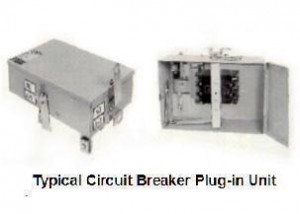
Cutler Hammer 400 Amp Bus Plug
It would be more accurate to say the Square D bus plug became a mouse hotel, but Rat Hotel sounds more dramatic. MIDWEST field services runs into some pretty bizarre circumstances. Some funny, some tragic, and some a little of both. In this case MIDWEST was called to replace a Cutler Hammer 400 amp bus plug that had smoked, code for faulted with some arcing and smoking action. The location was a storage warehouse, damp, with minimum heat. It was easy to spot the damaged bus plug because it was partially discolored, or maybe the dust all over it was just toasted. When MIDWEST opened the bus plug to see how much damage there was and to get the exact catalog number, they discovered the remains of a mouse hotel, or colony, or habitat. A smelly little mess. Apparently mice got into the bus plug through an unplugged knockout on the top side of the old bus plug. It wouldn’t make any difference if this was a 400 amp Squared D bus plug or 400 GE General Electric Bus plug, the problem was caused by the missing knockout closure. A few cents cost a couple thousand dollars before the job was all done. The mice got in through the knockout opening, built nests, and seemed to be doing okay until one of them “crossed the phases,” so to speak. There was one toasted mouse, plus other fatalities, and burnt up debris in the bus plug. The guys removed the bus plug, installed a replacement from MIDWEST’s Switchgear Services, and then brought the damaged bus plug back to the shop. The only remaining problem was finding a volunteer to cleanup and check out the damaged bus plug to see if it was worth full reconditioning. It wasn’t. Rats
SB323R General Electric Bus Plugs For Sale by MIDWEST
On MIDWEST’s list of “Ten things we will not do with bus plugs” is “We will not sell a bus plug that we have tested only.” In other words, we are not going to take a Square D bus plug and just test it and say it is okay. We are not going to take a Cutler Hammer bus plug and sell it without reconditioning it. We are not going to sell a GE General Electric bus plug unless we have reconditioned it and tested it first. We are not going to sell an ITE bus plug after doing only a “smoke test,” as one really old time electrical contractor was fond of asking us. An old timer’s really scary minimum specification. When he turned it on, he just didn’t want to see any smoke. That was all he was concerned with. So he said. Actually we worked with him for decades and he always came back because he knew we did everything, including reconditioning and testing the bus plugs, anyway. We are not going to sell a Siemens bus plug as is, even for temporary use. We are not going to sell a Westinghouse bus plug after reconditioning and testing, if it still does not pass our final quality control inspection. All these statements are a repeat of the basic same “We Will Not Test Only” from the list of ten things we will not do with bus plugs. Sometimes it can be enlightening to say one thing six different ways, if it is making an important point. For quality and safety, pleonasm may be your friend.
Categories: General Bus Plug Information Tags: bus plugs, Cutler Hammer Bus Plug, GE Bus Plug, General Electric Bus Plugs, ITE Bus Plugs, Recondition Bus Plugs, Reconditioning Bus Plugs, Siemens Bus Plug, Square D Bus Plug, Testing Bus Plugs, Westinghouse Bus Plug
200 Amp PKA36200 Square D Bus Plug For Sale
About the craziest bus plug MIDWEST’s field services have seen was a circuit breaker style bus plug that had the circuit breaker removed and replaced with wire jumpers. Apparently this was done as an extreme emergency temporary fix. It was a 200 amp bus plug. To do this, the entire bus duct must have been turned off, otherwise the jumpers would have had to be installed hot, which would be crazy. The circuit breaker had been removed and insulated building wire used to connect the line side copper bars, of the 200 amp bus plug, to the feeder cables. The jumpers were connected to the feeder cables using taped up split bolts. The feeder went to the main fused switch for a very large molding machine, so there was fault protection at the machine. But the line side of the main switch could have had an extremely high arc flash hazard level, since the only protection was the main breaker for the entire 1200 amp bus duct. It could have been a Square D bus plug or a Cutler Hammer bus plug. Actually it wasn’t either, but the manufacturer of the bus plug doesn’t make any difference. MIDWEST’s Field Services runs into some of these nightmares now and then. The danger of temporary fixes is they often are forgotten and take on a permanent life within the power system. For temporary repairs, we suggest attaching yellow warning banner ribbon, or other safety measures, until the permanent repairs can be made. In this case though, the temporary fix was too dangerous and should not have been done.
Categories: General Bus Plug Information Tags: 200 Amp Bus Plug, Arc Flash Hazard, bus duct, bus plug, Circuit Breaker Style Bus Plug, Cutler Hammer Bus Plug, Fault Protection, Feeder Cables, Field Services, Main Breaker, Main Fused Switch, Square D Bus Plug, Yellow Warning Banner Ribbon