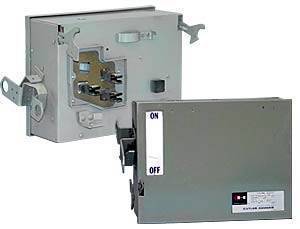
Cutler Hammer Bus Plugs For Sale – Cat. #CP2HD465
Sometimes the biggest challenge MIDWEST runs into, when reconditioning old bus plugs and obsolete bus plugs, is rust. Ironically this biggest challenge usually has the easiest solution, scrap out the bus plug. Sometimes healthy parts can be harvested from the rusted bus plugs, but care has to be taken to assure the recovered parts have not also been damaged by rust. The problem with rust is that it can be very insidious. Let’s say we want to recondition a Square D bus plug, Siemens Bus Plug or Cutler Hammer bus plug. It doesn’t make any difference. The rust doesn’t care. The problem is, we frequently don’t know the extent of the rusting until we have disassembled the bus plug and started the metal refinishing. The surface preparation may reveal severe structural rusting that was not fully apparent cosmetically. Now we’re not talking about full blown metal failure where you could push your finger through the metal. That’s obvious. We are referring to non cosmetic deterioration that prevents professional surface reconditioning. And this is not always visually apparent. It might not even be discovered if a company just repaints on old ITE or Westinghouse bus plug, for example. MIDWEST is very carful of equipment from facilities that have been out of service and unheated for any period of time. Extensive moisture damage can occur and not be visible until MIDWEST begins the full reconditioning process. This is another reason we recondition and test our equipment. There can be hidden defects. Some structural, some functional, some electrical, and any of them could turn a bus plug into a piece of scrap metal.
Categories: General Bus Plug Information Tags: Bus Plugs Damaged by Rust, Cutler Hammer Bus Plug, ITE Bus Plugs, MIDWEST Electrical Testing, obsolete bus plugs, old bus plugs, reconditioned bus plugs, Rusted Bus Plugs, Siemens Bus Plugs, square d bus plugs, Westinghouse Bus Plugs
MIDWEST was asked how we can tell if a bus plug has been water damaged. What if a brand new bus plug is exposed to water, say rain. How can we tell after it has already dried off? If it’s new, how would MIDWEST even know it was exposed to rain or water? The answer goes to the heart of why MIDWEST fully reconditions bus plugs. If a bus plug has been exposed to water, we would know as soon as we disassemble it for reconditioning. The old or new bus plug hardware, nuts and bolts and washers, would have some rust. The exposed surfaces of bolt holes would have rust at the edges. This is more obvious than you might think. In addition, between the inside of the new bus plug enclosure and attached interior parts, we find dust that has the visual pattern of water exposure. Like spilling water on a surface that had just a little dust on it. After the water evaporates, you can still see the pattern of the water exposure on the surface. Usually all this is pretty obvious to the engineering technician doing the work, if they are actually reconditioning the replacement bus plugs. But, if a company is just giving it a shoe shine, meaning a little inside cleaning with a little outside painting, they may never detect the water damage. Even an insulation resistance test pole to pole and pole to ground may not reveal the damage. But it is there and it shortens the reliable life expectancy of the bus plug. Rust especially is insidious when it starts at support hardware. MIDWEST’s best suggestion is to buy fully reconditioned equipment if you are buying obsolete bus plugs, used bus plugs, or new surplus bus plugs. This is true whether buying Square D bus plugs, Siemens bus plugs, ITE bus plugs or any other manufacturer’s product.
Categories: General Bus Plug Information, Questions Asked By Our Customers Tags: Bus Plug Parts, Fully Reconditioned Bus Plugs, Insulation Resistance Test, ITE Bus Plugs, new bus plugs, New Surplus Bus Plugs, obsolete bus plugs, old bus plugs, Replacement Bus Plugs, Siemens Bus Plugs, square d bus plugs, used bus plugs, Water Damaged Bus Plugs