
Cutler Hammer 400 Amp Bus Plug
It would be more accurate to say the Square D bus plug became a mouse hotel, but Rat Hotel sounds more dramatic. MIDWEST field services runs into some pretty bizarre circumstances. Some funny, some tragic, and some a little of both. In this case MIDWEST was called to replace a Cutler Hammer 400 amp bus plug that had smoked, code for faulted with some arcing and smoking action. The location was a storage warehouse, damp, with minimum heat. It was easy to spot the damaged bus plug because it was partially discolored, or maybe the dust all over it was just toasted. When MIDWEST opened the bus plug to see how much damage there was and to get the exact catalog number, they discovered the remains of a mouse hotel, or colony, or habitat. A smelly little mess. Apparently mice got into the bus plug through an unplugged knockout on the top side of the old bus plug. It wouldn’t make any difference if this was a 400 amp Squared D bus plug or 400 GE General Electric Bus plug, the problem was caused by the missing knockout closure. A few cents cost a couple thousand dollars before the job was all done. The mice got in through the knockout opening, built nests, and seemed to be doing okay until one of them “crossed the phases,” so to speak. There was one toasted mouse, plus other fatalities, and burnt up debris in the bus plug. The guys removed the bus plug, installed a replacement from MIDWEST’s Switchgear Services, and then brought the damaged bus plug back to the shop. The only remaining problem was finding a volunteer to cleanup and check out the damaged bus plug to see if it was worth full reconditioning. It wasn’t. Rats
MIDWEST was asked how we can tell if a bus plug has been water damaged. What if a brand new bus plug is exposed to water, say rain. How can we tell after it has already dried off? If it’s new, how would MIDWEST even know it was exposed to rain or water? The answer goes to the heart of why MIDWEST fully reconditions bus plugs. If a bus plug has been exposed to water, we would know as soon as we disassemble it for reconditioning. The old or new bus plug hardware, nuts and bolts and washers, would have some rust. The exposed surfaces of bolt holes would have rust at the edges. This is more obvious than you might think. In addition, between the inside of the new bus plug enclosure and attached interior parts, we find dust that has the visual pattern of water exposure. Like spilling water on a surface that had just a little dust on it. After the water evaporates, you can still see the pattern of the water exposure on the surface. Usually all this is pretty obvious to the engineering technician doing the work, if they are actually reconditioning the replacement bus plugs. But, if a company is just giving it a shoe shine, meaning a little inside cleaning with a little outside painting, they may never detect the water damage. Even an insulation resistance test pole to pole and pole to ground may not reveal the damage. But it is there and it shortens the reliable life expectancy of the bus plug. Rust especially is insidious when it starts at support hardware. MIDWEST’s best suggestion is to buy fully reconditioned equipment if you are buying obsolete bus plugs, used bus plugs, or new surplus bus plugs. This is true whether buying Square D bus plugs, Siemens bus plugs, ITE bus plugs or any other manufacturer’s product.
Categories: General Bus Plug Information, Questions Asked By Our Customers Tags: Bus Plug Parts, Fully Reconditioned Bus Plugs, Insulation Resistance Test, ITE Bus Plugs, new bus plugs, New Surplus Bus Plugs, obsolete bus plugs, old bus plugs, Replacement Bus Plugs, Siemens Bus Plugs, square d bus plugs, used bus plugs, Water Damaged Bus Plugs
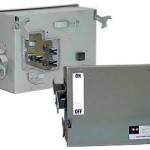
Cutler Hammer CP2HD366 Bus Plugs For Sale by MIDWEST
Much of the demand for reconditioned and new surplus bus plugs is because the user has to replace bus plugs that are defective. One of the worst things that happen is the bus plug operating mechanism breaks when you try to open or close it. It is very dangerous if the bus plug is half open or one pole opened and the other two are half closed yet. This type of failure is due to the lack of maintenance, specifically the lack of exercising the bus plug operating mechanism periodically. The other enemies are dirt, moisture, heat, and, as we have said many times, fork lifts. Sometimes folks are very surprised that so many reconditioned bus plugs are used to replace damaged or defective bus plugs rather than just for additional load or expansion.
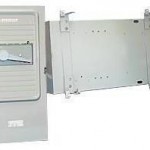
Federal Pacific LSP1432 Bus Plugs For Sale by MIDWEST
For every Cutler Hammer CP2HD366 bus plug purchased for an expansion project, we might also replace a Federal Pacific LSP1432SN bus plug because the customer’s existing bus plug failed to operate properly. When it comes to bus plugs, run to failure is the standard operating mode. The perception is they don’t need maintenance because the never do anything. They just sit on the bus duct. And that is true, but it is also the reason they eventually may fail to operate properly when needed.
The only real pattern may be the use of newer style replacement bus plugs for expansion projects than for replacement of defective equipment
MIDWEST’s Switchgear Shop received an unusual request for blue Square D bus plugs and black General Electric bus plugs. Plus, we were asked if we could paint ITE and Cutler Hammer bus plugs other colors and if we could put a unique label on each bus plug. Of course the answer was yes, but this was different. We have reconditioned Westinghouse bus plugs and Cutler Hammer Bus Plugs that were already painted black and we had to repaint them gray. We had some Square D bus plugs and General Electric Bus Plugs that were a 1950’s kitchen cream color and looked like they had been repainted every ten years. But this was the first time that a customer requested a specific color, other than the manufacturer’s original color, which is usually gray.
They had a lot of 30 amp and 60 amp bus plugs. Quite a few 100 amp bus plugs and a couple 200 amp bus plugs and one large 400 amp bus plug. But what was really unusual was their reason for the color coding and labeling. It appears that, in some states, bus duct and bus plugs that are used only on a specific manufacturing machine or production process, are exempt from state tax. If they buy replacement bus plugs or have service on the existing bus plugs, the replacements and service is non taxable. If the bus plugs or bus duct are used on something other than a specific manufacturing machine or process, service and equipment is taxable. They wanted the bus plugs for a specific process to be all the same color. They also wanted the bus plugs to be painted the same color as the bus duct and to be labeled for the specific manufacturing machine or process. We are not state tax experts, but, as they explained it, it seemed to make sense.
Categories: Questions Asked By Our Customers Tags: 100 Amp Bus Plugs, 200 Amp. 400 Amp, 30 Amp Bus Plugs, 60 Amp Bus Plugs, bus duct, Cutler Hammer Bus Plugs, General Electric Bus Plugs, ITE Bus Plugs, Painted Bus Plugs, reconditioned bus plugs, Replacement Bus Plugs, square d bus plugs, Westinghouse Bus Plugs
Previously MIDWEST discussed the problem of making certain the disconnect fingers lineup properly when you replace a bus plug. We really didn’t answer the question of how to make sure replacement bus plugs are connected properly. Here are a couple suggestions. Put a very thin film of proper contact lubricant on the contact surface of the old bus plug disconnect fingers. Install the bus plug on to the bus duct. Note the position of the replaced bus plug and how it went into place. Then remove the bus plug and closely inspect the contact surface of the disconnect fingers. The film of contact lubricant should reveal that the disconnect fingers properly slid, ie wiped, on to the bus bar in the bus duct. Remove any excess lubricant. In addition, one can inspect the bus bars of the bus duct and see visible evidence that the disconnect fingers of the replacement bus plug actually wiped the surfaces of the bus bars correctly. After having verified the bus plug had been properly installed, install it again in the same manner as the first time. All this should not be necessary, but sometimes old or obsolete bus plugs are difficult to tell if they connected properly. It can be especially difficult when installing some large bus plugs. The physical effort to get them in place impedes the ability to sense if they went into place properly. Follow the manufacturer’s instructions on the possible use of contact lubricant. Regardless, too much lubricant is a mistake because it collects dust. Also, if new, reconditioned or repaired bus plugs are installed in a previously empty space on the bus duct, you should be able to see the contact wipe marks on the bus bar the first time the bus plug is installed or see new wipe marks on the disconnect fingers of the bus plug itself. All this is a simple way to give greater confidence the bus plug is installed properly. For safety reasons, MIDWEST strongly recommends this only be done on de-energized bus duct.
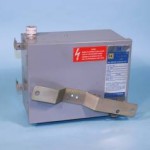
Buy Square D Bus Plug
Maintenance mechanics and maintenance electricians are very self reliant people. They have the ability to get things done, often with limited resources, and they have a lot of common sense in the maintenance world, the real world. When it comes to installing replacement electrical bus plugs, their common sense may tell them, if it fits, it’s connected right. This is not always true. The problem, when installing replacement or new bus plugs is that it is very hard to see the actual disconnect finger connections when sliding the bus plug into place on the bus duct. Installing an old bus plug from a platform lift, much less from ladders, can be a real challenge. One can’t always get the lift right under the bus duct. It’s hard and sometimes impossible to see well enough to make sure the replacement bus plug disconnect fingers line up properly with the bus duct bus bar. And some bus plugs are very heavy. They may take two people to install. It can be a challenge. Using Thermographic Scanning, Infrared Scanning, MIDWEST sometimes finds overheating at the disconnect fingers that connect the bus plug to the bus duct. When we check it out, we find that one or more of the fingers has slid under the bus bar inside the bus duct. The actual contact surface may be only 25% of what it should be and the contact pressure may be very little if the disconnect finger assembly breaks and the only real connection occurs because it is jammed between the bus bar and the bus plug phase assembly. The big worry is for a short circuit between the bus bar of the bus duct. So, for old or new replacement bus plugs, just because the bus plug enclosure fits on to the bus duct, does not mean the bus plug is properly connected to the bus duct. It can be a challenge, but care must be taken when installing bus plugs. One can not rely on alignment alone to assure the proper connection is made.
For arc flash safety reasons, MIDWEST recommends turning off the bus duct before replacing a bus plug or installing a new bus plug.
A foundry called MIDWEST for another replacement bus plug. They said this was the third one he bought from us in the last two years. He thought it was strange that he suddenly had so many failures and had to call us for replacement bus plugs. The man that called was a foundry maintenance mechanic. These men are the salt of the earth. They can fix just about anything with just about nothing. So we pay pretty good attention to their problems. In this case he complained that their bus plugs must be junk because they were suddenly having so many failures. He was sure something was wrong right from the manufacturer. They never had any problems and suddenly they were all failing. We checked our records and all the replacement bus plugs were for old equipment manufactured in the 1960s. They actually had very good luck with their bus plugs until the last couple years.
We had a little confirmation bias going. The maintenance mechanic thought there must be something wrong with the bus plugs. Why? Well, because the bus plugs were failing, so there had to be something wrong with them. Makes sense, kind of. The reality was that the equipment was getting very old, it was dirty, was seldom exercised, and therefore was mechanically less reliable. We explained that electrical equipment ages and as it gets older the frequency of failure will increase, sometimes rapidly, depending on the condition. We see a very low failure rate for bus plugs in a facility that isn’t very old and is clean. For similar facilities that are much older or much dirtier, the failure rate is higher, and increases as the facilities age. But all this is trumped by the condition of the facility and the load on the bus duct and bus plugs. In a foundry, all bets may be off. In a foundry, when equipment suddenly starts to fail, the sudden increase in failure rate is usually due to condition and not merely age. The failures are a warning that it is time for cleaning and maintenance.