We asked MIDWEST’s Switchgear Shop for an example of a replacement bus plug problem or defect that would not be picked up by standardized reconditioning and testing procedures. Procedures that might be found in published data. We were looking for something that went directly to the value of experience. The value of quality workmanship. Here’s a quick example from one of MIDWEST’s switchgear Engineering Technicians.
He spoke of a Federal Pacific bus plug, catalog number LSP 1436SN, 600 volt, 400 amp, just as an example. He said it could just as well be a Cutler Hammer Bus Plug catalog number HD 1364N, or a replacement Square D bus plug or Westinghouse bus plug. It didn’t make a difference. A service company could simply test, or repair or completely recondition a bus plug. Then perform the tests that look for current or voltage related problems. Do the quality control physical and mechanical inspection. The reconditioned Square D bus plug could look and perform so well that you might think it was brand new. But as part of the quality control, veteran Engineering Technicians
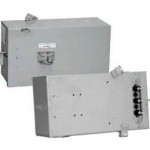
Cutler Hammer HD1364N Bus Plug For Sale by MIDWEST
know to double check the nameplate of the reconditioned bus plug with what they actually have. They said this could very easily be missed, because the nameplate is always correct, almost. The last error he found was a bus plug that had a neutral indicated in the catalog number on the nameplate, like the two just mentioned, but actually did not have the neutral bus. It had been removed. It came into the Switchgear Shop that way, as was determined by inspecting other bus plugs in the same lot. Just a detail, a really big detail. So standardized tests can not replace experience and quality workmanship.
MIDWEST had an emergency call from a manufacture because they blew up a large 800 amp bus plug and their production was down. They were the primary ‘just in time’ supplier of some parts to a larger manufacturer. They couldn’t afford a major loss of production because they would then become the secondary supplier or even worse. We had a replacement reconditioned bus plug but they wanted someone to look at their bus duct system and the other old bus plugs because something just didn’t seem right when the 800 amp bus plug failed.
When we inspected the bus duct, we had to do a double take on what we saw. The brackets supporting the splice connection at the ends of each section of bus duct were melted away in some areas. And some of the hangers and supports also had damage. It was as if someone had taken a welder or cutting torch and melted away parts of the bus duct support brackets and other supports and bolts along the length of the bus duct. This was a four wire system. But you might think of it as a five wire. A, B, and C phase, plus neutral, and ground. It was apparent they had an unprotected fault from phase to ground, a ground fault. The ground, in this case, was the metal enclosure and supports for the bus duct. The bus duct was protected by an old 2000 amp fused bolted pressure switch. There was no ground fault protection on the old system. Before the 2000 amp fuse blew, a lot of welding and melting took place. Fortunately only one replacement bus plug was needed and one section of bus duct had to be replaced. The arcing and melting damage to steel brackets and supports, although visually dramatic, was not enough to prevent them from getting back on as soon as the damaged section of bus duct and damaged bus plug were replaced. They intended to complete other structural repairs later, maybe. At the time, their only concern was to get production back up as soon as possible, even if it was only temporarily. We all know how stressful production schedules can be. The cause of the problem was failed supports on their old obsolete bus plug. It lasted a long time, but eventually it sagged enough for one phase to go to ground, the metal enclosure. And after a few moments of 277 volt arc welding, they had a mess.