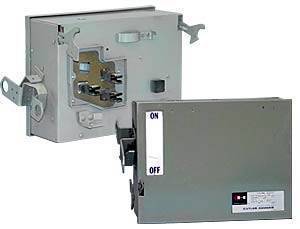
Cutler Hammer Bus Plugs For Sale – Cat. #CP2HD465
Sometimes the biggest challenge MIDWEST runs into, when reconditioning old bus plugs and obsolete bus plugs, is rust. Ironically this biggest challenge usually has the easiest solution, scrap out the bus plug. Sometimes healthy parts can be harvested from the rusted bus plugs, but care has to be taken to assure the recovered parts have not also been damaged by rust. The problem with rust is that it can be very insidious. Let’s say we want to recondition a Square D bus plug, Siemens Bus Plug or Cutler Hammer bus plug. It doesn’t make any difference. The rust doesn’t care. The problem is, we frequently don’t know the extent of the rusting until we have disassembled the bus plug and started the metal refinishing. The surface preparation may reveal severe structural rusting that was not fully apparent cosmetically. Now we’re not talking about full blown metal failure where you could push your finger through the metal. That’s obvious. We are referring to non cosmetic deterioration that prevents professional surface reconditioning. And this is not always visually apparent. It might not even be discovered if a company just repaints on old ITE or Westinghouse bus plug, for example. MIDWEST is very carful of equipment from facilities that have been out of service and unheated for any period of time. Extensive moisture damage can occur and not be visible until MIDWEST begins the full reconditioning process. This is another reason we recondition and test our equipment. There can be hidden defects. Some structural, some functional, some electrical, and any of them could turn a bus plug into a piece of scrap metal.
Categories: General Bus Plug Information Tags: Bus Plugs Damaged by Rust, Cutler Hammer Bus Plug, ITE Bus Plugs, MIDWEST Electrical Testing, obsolete bus plugs, old bus plugs, reconditioned bus plugs, Rusted Bus Plugs, Siemens Bus Plugs, square d bus plugs, Westinghouse Bus Plugs
MIDWEST was asked how we can tell if a bus plug has been water damaged. What if a brand new bus plug is exposed to water, say rain. How can we tell after it has already dried off? If it’s new, how would MIDWEST even know it was exposed to rain or water? The answer goes to the heart of why MIDWEST fully reconditions bus plugs. If a bus plug has been exposed to water, we would know as soon as we disassemble it for reconditioning. The old or new bus plug hardware, nuts and bolts and washers, would have some rust. The exposed surfaces of bolt holes would have rust at the edges. This is more obvious than you might think. In addition, between the inside of the new bus plug enclosure and attached interior parts, we find dust that has the visual pattern of water exposure. Like spilling water on a surface that had just a little dust on it. After the water evaporates, you can still see the pattern of the water exposure on the surface. Usually all this is pretty obvious to the engineering technician doing the work, if they are actually reconditioning the replacement bus plugs. But, if a company is just giving it a shoe shine, meaning a little inside cleaning with a little outside painting, they may never detect the water damage. Even an insulation resistance test pole to pole and pole to ground may not reveal the damage. But it is there and it shortens the reliable life expectancy of the bus plug. Rust especially is insidious when it starts at support hardware. MIDWEST’s best suggestion is to buy fully reconditioned equipment if you are buying obsolete bus plugs, used bus plugs, or new surplus bus plugs. This is true whether buying Square D bus plugs, Siemens bus plugs, ITE bus plugs or any other manufacturer’s product.
Categories: General Bus Plug Information, Questions Asked By Our Customers Tags: Bus Plug Parts, Fully Reconditioned Bus Plugs, Insulation Resistance Test, ITE Bus Plugs, new bus plugs, New Surplus Bus Plugs, obsolete bus plugs, old bus plugs, Replacement Bus Plugs, Siemens Bus Plugs, square d bus plugs, used bus plugs, Water Damaged Bus Plugs

Square D PQ3206 Bus Plug
It is not unusual for MIDWEST to get a call because a company is having numerous problems with their old bus plugs. Things go along okay for years and then one year they have one failure after another. It seems to make no difference who the manufacturer is. They could be old Square D bus plugs, GE General Electric bus plugs, Westinghouse bus plugs, Cutler Hammer bus plugs or ITE bus plugs. The problem seems not to care who the manufacturer is. When this pattern appears, it is usually because a chronic mechanical or environmental problem has been present for many years and has been getting progressively worse. Soon or later the mechanical problem or contaminate reaches a critical stage and the bus plugs collectively start to fail. Usually the failure seems to be caused by overheating, or by mechanical failure between the bus duct and bus plugs, or by moisture. The problem isn’t just moisture or dirt. It’s the accumulation of dirt over many years or the presence of moisture over many years. This means there is a chronic condition causing you to replace bus plugs. One typically doesn’t have to suddenly replace Square D bus plugs or replace Cutler Hammer bus plugs because of normal operating conditions. And replacing Westinghouse bus plugs one after the other without addressing the root cause, will not make the problem go away. So if you find yourself having to repair or replace numerous bus plugs, look for a chronic cause. If you just don’t find something, then look for a recent acute change that would affect all the bus plugs.
XLVB322 ITE Bus Plug
Once in a while MIDWEST gets phone calls that are just scary. For example, a maintenance electrician called to ask what he should do. He needed to turn power off to a production machine. It was fed directly from an old bus plug. But the bus plug handle was broken so he couldn’t switch the bus plug. He tried using a vice grip, but the whole bus plug was moving and it still would not turn off. Production said they could not turn off the whole line just for one lousy switch. He said the bus plug was obsolete and he just wanted to get it out of there. It was kind of hanging at an angle and the pipe for the feeder going out the top was pulled out. He thought he and another guy could use a lift and pull it off live. He thought that might be okay because they would make sure there was no load on it. He said he had worked on broken bus plugs before.
This man was in a big jam between making a bad decision and doing what his boss wanted. He needed help. Our answer was simple and we told him we would send a letter if he needed. There was danger of serious injury or death if they tried to remove that live bus plug from a live bus duct. The bus duct would have to be turned off. The danger of shock hazard and arc blast hazard was too great under the circumstances. In addition, the situational danger was extreme because they would be working from a platform lift with no way to escaped from shock or arc blast. Plus they could be knocked right off the platform. And they were in a position that no one could immediately help them.
We were sure his boss did not fully understand the level of danger and just saw the problem as simply mechanical. We have been through this before. Once everyone understands how dangerous it is, they work out a safe solution, like turn the power off on third shift.
The big danger is beginning to think you can do something that you know is too dangerous. Sometimes, the longer you think about it, the more you convince yourself that maybe this time it would be okay. You’ll just be careful. When you start that line of thought, you just have to stop yourself.
If you know there is a danger of serious injury or death, you are not allowed to do it.
Categories: General Bus Plug Information Tags: arc blast hazard, broken bus plug handle, broken bus plugs, bus plug handle, bus plugs, danger of death, danger of serious injury, obsolete bus plugs, old bus plugs, replacement bus plug handle, shock hazard, used bus plugs
Buy FVK363R General Electric Bus Plugs
MIDWEST receives many requests from folks that want to sell us their used bus plugs. These requests come from all over the country. Usually we ask for a little biography on their old bus plugs. If we are interested, we may ask them to send us some digital pictures of what they have. To recondition bus plugs, there is a huge difference in the cost between bus plugs that look like new bus plugs and those that have been painted several times and are damaged. Refurbishing damaged bus plugs is a waste of time. Along with all this, there is a need to have a sense of humor. Just about all the folks that call MIDWEST are great people, but they sure don’t know our business. Here is a recent quick example. We received a call from someone wanting to sell us several pallets of like new bus plugs. They described them; Gave us some catalog numbers; And said they just want to get rid of them. We asked for some digital pictures and they were happy to accommodate. When we reviewed the pictures, all their used bus plugs looked just great. Perfect candidates for refurbished bus plugs. But the pallets were outside on a nice sunshiny day. Good light for great pictures. But it rains outside and bus plugs do not like rain. We called the owners and they said their like new bus plugs were located in an area that was always warm and seldom rained. Seldom doesn’t mean never. It means occasionally does. Occasionally means at least once and at least once means rust. And rust means disaster for bus plugs. MIDWEST is not interested in rusty old bus plugs, even if they look like new bus plugs.