Archive

Posts Tagged ‘new bus plugs’

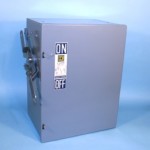
Square D PQ3603G Bus Plug Is It New or Used

September 21st, 2011 2 comments


Every day MIDWEST’s Switchgear Division receives interesting calls, mostly about technical stuff. Often just plain old problem solving. And sometimes an emergency request for a replacement bus plug. Every once in a while we are asked whether the bus plug we sold was new or used. They couldn’t tell the difference. An example is a call about a Square D PQ3603G bus plug. The customer thought we made a mistake and sent them a new bus plug instead of a used PQ3603G. He was a bit surprised when we told him it was used, but had been reconditioned by MIDWEST. The reconditioning process is a full detailed disassembly, reconditioning of components, reassembly and final quality control testing and inspection. Thirty years ago, the common practice for some companies may have been to just wipe a used bus plug off and send it out the door. Those days should be long gone. Unfortunately there are suppliers that still don’t do much more than cosmetics. MIDWEST has a huge advantage.  We are a full service electrical testing and switchgear maintenance company and have been for over 30 year. In addition to high current and high voltage test equipment, we have test stations to simulate normal installation and operation of electrical equipment. Reconditioning a used Square D PQ3603G bus plug to look like new is routine work at MIDWEST.  But it is always nice to get a compliment from our customers.  We passed it on to the Switchgear Services Shop.  We have received similar compliments about other equipment, such as fused panel board switches, circuit breakers, transformers, etc.

Water Damaged Bus Plugs – How Do You Know

March 23rd, 2011 Comments off

MIDWEST was asked how we can tell if a bus plug has been water damaged. What if a brand new bus plug is exposed to water, say rain. How can we tell after it has already dried off? If it’s new, how would MIDWEST even know it was exposed to rain or water? The answer goes to the heart of why MIDWEST fully reconditions bus plugs. If a bus plug has been exposed to water, we would know as soon as we disassemble it for reconditioning. The old or new bus plug hardware, nuts and bolts and washers, would have some rust. The exposed surfaces of bolt holes would have rust at the edges. This is more obvious than you might think. In addition, between the inside of the new bus plug enclosure and attached interior parts, we find dust that has the visual pattern of water exposure. Like spilling water on a surface that had just a little dust on it. After the water evaporates, you can still see the pattern of the water exposure on the surface. Usually all this is pretty obvious to the engineering technician doing the work, if they are actually reconditioning the replacement bus plugs. But, if a company is just giving it a shoe shine, meaning a little inside cleaning with a little outside painting, they may never detect the water damage. Even an insulation resistance test pole to pole and pole to ground may not reveal the damage. But it is there and it shortens the reliable life expectancy of the bus plug. Rust especially is insidious when it starts at support hardware. MIDWEST’s best suggestion is to buy fully reconditioned equipment if you are buying obsolete bus plugs, used bus plugs, or new surplus bus plugs. This is true whether buying Square D bus plugs, Siemens bus plugs, ITE bus plugs or any other manufacturer’s product.    

Need a Square D PQ3620G NOW

December 16th, 2010 Comments off


PQ3620G Square D Bus Plug For Sale

PQ3620G Square D Bus Plug For Sale

Sometimes you couldn’t write the script for the strange things that happen in the real world.  At least in our world of reconditioning old used bus plugs and selling them to folks that tell us they couldn’t tell the difference from new.  The technical world seems so boring to outsiders, but MIDWEST has its share of action. For example, a large food processing facility called at 6:15 PM on a Monday night, in a screaming panic, because they needed a replacement 200 amp bus plug and they needed it right away. They couldn’t get a new one immediately and the electrical suppliers for most of the US were already closed for the day.  The cracking in his voice changed to audible relief when we told him we had a fully reconditioned Square D PQ3620G bus plug, boxed and ready for shipping pickup. It was set to go to another customer, but it was part of an order for over 100 bus plugs and there was no urgency for it to ship. It was a shipping scramble but the food processing plant had their like new Square D bus plug the next morning. What’s the chance MIDWEST would have a Square D PQ3620G bus plug sitting at the shipping dock, ready to go, and someone calls and needs it “right now.”  The answer to that question is that it’s much more common than one would ever guess. It seems improbable, but it happens fairly often. The odds may be higher because of the number of bus plugs, transformers and circuit breakers we ship.  But it’s always a nice thrill for MIDWEST to defy the odds. And it gives the Engineers something to argue about, the odds versus reality.


Bus Plugs the Most Colorful Electrical Equipment

October 8th, 2010 1 comment

MIDWEST was asked what electrical equipment was the most colorful.  Certainly a strange question, But the answer may seem even stranger.  The most colorful equipment is electrical bus duct and bus plugs. We’ve seen a thousand manufacturing plants over the years and many, especially the older ones, have painted their old electrical bus duct and bus plugs specific colors to identify the specific electrical system or the specific load being fed. Here are a few examples.  One plant painted the 480 volt bus duct and bus plugs blue and painted all their old 240 volt system orange.  It would be hard to mix these systems up. Another plant, a huge facility with over a thousand old Square D and Westinghouse bus plugs, painted everything black. It was pretty impressive, until you tried to read some of the labels on the obsolete bus plugs. Some facilities will paint a particular bus run a specific color to identify it as belonging to a specific manufacturing process. They want to separate the process load from general building load.  Blue seems to be the choice of colors for equipment feeding specific processes or manufacturing cells.  Critical processes may use red.  Some may paint their GE General Electric bus plugs one color and the Cutler Hammer or Westinghouse bus plugs a different color. And then there are those facilities that had a color code many years ago, but have added other manufacturers’ equipment since then.  And now you find different old colored bus plugs on the same bus duct with plain grey new bus plugs.  We have seen some pretty strange stuff. There are some facilities that were former manufacturing plants that had their own electrical engineering staff and maintenance electricians working all three shifts. Everything was well maintained. Things were labeled. Equipment, including old and new bus duct and bus plugs, were maintained and repaired or replaced as needed. They even had up to date electrical drawings. Those were the days.  Now some of those same facilities are multiple occupancy buildings with light assembly, storage, office space and, too frequently, abandoned space. And the colorful electrical distribution systems all seem to have become one color. We’ll call it sad grey. 

Bus Duct Capacity and Connected Load

August 13th, 2010 Comments off

MIDWEST was asked why the total capacity of all the bus plugs connected to a 1600 amp bus duct was over 2500 amps. The particular facility had one 400 amp bus plug, four 200 amp, eight 100 amp, and twelve 30 to 60 amp bus plugs on the old bus duct.  These were mostly very old bus plugs and a few reconditioned or new bus plugs. Purchasing wanted to order two new 60 amp bus plugs but didn’t know how it was possible to have over 2500 amps connected to only a 1600 amp bus duct and then add more. Actually the equipment he wanted was no longer manufactured, so he would have to use old reconditioned or refurbished bus plugs. It was a maintenance man asking purchasing the question.  This was a case were the maintenance man was doing production equipment repair one day and electrical maintenance the next. But he was not an electrician by trade.  MIDWEST explained.  The size of the bus plugs is nominal. The actual fuse or breaker in the bus plug may have a lower rating. For example, a 100 amp bus plug may have a 60 amp fuse. Or 250 amp fuses in a 400 amp bus plug.  In addition, all connected load is not on all at the same time. There is a diversity factor. The diversity of an old or new bus duct system might result in only 50% loading. It would not be unusual for a 2000 amp bus duct to have less than 1200 amps on it. We get extremely nervous if the load approaches 80%. We see a huge increase in problems when this equipment is operating anywhere near full rating.  When we infrared scan a bus duct that is heavily loaded, the whole bus duct and many of the bus plugs just seem to light up under infrared. So usually old and new bus plugs and bus ducts are not loaded to full rating, but when they are, bad things start to happen. If the load is not known, it may be easy to spot measure the load on the bus plug feeders. Do this safely at the load. Do not measure load at the bus plugs. That would be extremely dangerous.  Always, safety first.

Bus Plugs, New vs. Used

May 12th, 2009 Comments off

By Walter Powell, Professional Engineer, MIDWEST


Here we go again.  The question asked was “Why would I ever buy a used bus plug?”  It isn’t the question that caused a loud groan, it’s the distain with which the question was asked, by someone who had no idea what a new or used bus plug was.  In their defense, they were just ‘processing’ an order to “Get one of these!”  Actually, these days it is unusual to deal directly with an official purchasing agent or buyer. Usually we deal with electricians, engineers who actually work for a living (Sorry for the bias), and frequently a real live official maintenance supervisor who calls at 5:15 PM to order that bus plug that he has to have the next day.  He’s calling after 5 because that is the first time all day that he has had a chance to take a breath without being interrupted.  These are the people that really keep the wheels moving in a manufacturing plant.


“Why buy used instead of new?” The short answer is:  You wouldn’t buy a used bus plug unless you had to.  Why in the world would you buy used if you don’t need to?  Obviously there are exceptions, such as classic cars, books, wine, art… you get the idea.  But in the world of industry, decisions affecting the day-to-day operation just aren’t that simple.  Decisions have to be practical and frequently are based on the needs right now.  Not tomorrow or next week.  Get it done and move on.   So here is the litany to answer the question.


The “Positives” of buying a New Bus Plug:     Made with all new material; Full reliable life expectancy; Should be trouble free; Manufacturer’s new equipment warranty; No worn or deteriorated parts; Should operate per new product specifications; May have design improvements making it more reliable or safer; and It sure looks good.      


The “Negatives of buying a New Bus Plug:     Delivery time; May require a conversion kit to fit in place of the old or obsolete product; and Cost.


The “Positives” of buying a Used Bus Plug:     Immediate availability; Replacement for something obsolete, just no longer available new; Minimum down time with an exact replacement; and Cost.


The “Negatives” of buying a Used Bus Plug:     Deteriorated parts; Poor quality control of supplier; No mfg’s original warranty; shorter reliable life expectancy; and poor appearance.


So what does one recommend?  Try this!  If you can, buy new.  But if you can only get a used bus plug quick enough to take care of your problem? If you just can’t wait for a new bus plug, then MIDWEST, suggests you get a used bus plug from a company that properly reconditions the bus plugs and also performs standard quality control tests and performs special “performance tests” at full current and voltage. This is extremely important.  A used bus plug just purchased “as is” from a reseller or equipment list may be “as is, buyer beware.”  Ask exactly what the supplier does to the used bus plugs they sell.  


You might ask what makes us such an “Expert.”  Its experience, training, education, experience, and finally more experience.  You wouldn’t ask a police officer a tax question.  You would go to an accountant, someone you perceive to be an expert in his or her field.  And you wouldn’t ask an account to protect you from a thug. You would ask the expert at protecting people from thugs.  And you would base you perception of “who is an expert” on their training and experience, and their willingness to help.  So, when making a decision about new and used electrical bus plugs, you would want to go to an “expert.”  Go to the manufacturer for new bus plugs and go to the experts, such as MIDWEST, www.swgr.com, for reconditioned bus plugs.  One of the nice things about real experts, especially in our electrical world, they are always happy to help by just answering your questions.