Archive

Posts Tagged ‘ITE Bus Plugs’

Rust, Old Bus Plugs Biggest Challenge
May 5th, 2011 Comments off


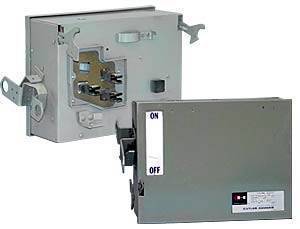
Cutler Hammer Bus Plugs For Sale - Cat. #CP2HD465

Cutler Hammer Bus Plugs For Sale – Cat. #CP2HD465

Sometimes the biggest challenge MIDWEST runs into, when reconditioning old bus plugs and obsolete bus plugs, is rust. Ironically this biggest challenge usually has the easiest solution, scrap out the bus plug. Sometimes healthy parts can be harvested from the rusted bus plugs, but care has to be taken to assure the recovered parts have not also been damaged by rust. The problem with rust is that it can be very insidious. Let’s say we want to recondition a Square D bus plug, Siemens Bus Plug or Cutler Hammer bus plug. It doesn’t make any difference. The rust doesn’t care. The problem is, we frequently don’t know the extent of the rusting until we have disassembled the bus plug and started the metal refinishing. The surface preparation may reveal severe structural rusting that was not fully apparent cosmetically. Now we’re not talking about full blown metal failure where you could push your finger through the metal. That’s obvious. We are referring to non cosmetic deterioration that prevents professional surface reconditioning. And this is not always visually apparent. It might not even be discovered if a company just repaints on old ITE or Westinghouse bus plug, for example. MIDWEST is very carful of equipment from facilities that have been out of service and unheated for any period of time. Extensive moisture damage can occur and not be visible until MIDWEST begins the full reconditioning process. This is another reason we recondition and test our equipment. There can be hidden defects. Some structural, some functional, some electrical, and any of them could turn a bus plug into a piece of scrap metal.


Will Not Test Only – From Bus Plug List of 10 Things We Will Not Do

March 28th, 2011 Comments off


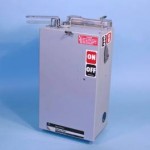
SB323R General Electric Bus Plugs For Sale by MIDWEST

SB323R General Electric Bus Plugs For Sale by MIDWEST

On MIDWEST’s list of “Ten things we will not do with bus plugs” is “We will not sell a bus plug that we have tested only.” In other words, we are not going to take a Square D bus plug and just test it and say it is okay. We are not going to take a Cutler Hammer bus plug and sell it without reconditioning it.  We are not going to sell a GE General Electric bus plug unless we have reconditioned it and tested it first. We are not going to sell an ITE bus plug after doing only a “smoke test,” as one really old time electrical contractor was fond of asking us. An old timer’s really scary minimum specification. When he turned it on, he just didn’t want to see any smoke. That was all he was concerned with. So he said. Actually we worked with him for decades and he always came back because he knew we did everything, including reconditioning and testing the bus plugs, anyway. We are not going to sell a Siemens bus plug as is, even for temporary use. We are not going to sell a Westinghouse bus plug after reconditioning and testing, if it still does not pass our final quality control inspection. All these statements are a repeat of the basic same “We Will Not Test Only” from the list of ten things we will not do with bus plugs. Sometimes it can be enlightening to say one thing six different ways, if it is making an important point. For quality and safety, pleonasm may be your friend.


Water Damaged Bus Plugs – How Do You Know

March 23rd, 2011 Comments off

MIDWEST was asked how we can tell if a bus plug has been water damaged. What if a brand new bus plug is exposed to water, say rain. How can we tell after it has already dried off? If it’s new, how would MIDWEST even know it was exposed to rain or water? The answer goes to the heart of why MIDWEST fully reconditions bus plugs. If a bus plug has been exposed to water, we would know as soon as we disassemble it for reconditioning. The old or new bus plug hardware, nuts and bolts and washers, would have some rust. The exposed surfaces of bolt holes would have rust at the edges. This is more obvious than you might think. In addition, between the inside of the new bus plug enclosure and attached interior parts, we find dust that has the visual pattern of water exposure. Like spilling water on a surface that had just a little dust on it. After the water evaporates, you can still see the pattern of the water exposure on the surface. Usually all this is pretty obvious to the engineering technician doing the work, if they are actually reconditioning the replacement bus plugs. But, if a company is just giving it a shoe shine, meaning a little inside cleaning with a little outside painting, they may never detect the water damage. Even an insulation resistance test pole to pole and pole to ground may not reveal the damage. But it is there and it shortens the reliable life expectancy of the bus plug. Rust especially is insidious when it starts at support hardware. MIDWEST’s best suggestion is to buy fully reconditioned equipment if you are buying obsolete bus plugs, used bus plugs, or new surplus bus plugs. This is true whether buying Square D bus plugs, Siemens bus plugs, ITE bus plugs or any other manufacturer’s product.    

When Bus Plugs Start to Fail Frequently

January 10th, 2011 Comments off
 
Square D PQ3206 Bus Plug

Square D PQ3206 Bus Plug

It is not unusual for MIDWEST to get a call because a company is having numerous problems with their old bus plugs. Things go along okay for years and then one year they have one failure after another. It seems to make no difference who the manufacturer is. They could be old Square D bus plugs, GE General Electric bus plugs, Westinghouse bus plugs, Cutler Hammer bus plugs or ITE bus plugs. The problem seems not to care who the manufacturer is.  When this pattern appears, it is usually because a chronic mechanical or environmental problem has been present for many years and has been getting progressively worse. Soon or later the mechanical problem or contaminate reaches a critical stage and the bus plugs collectively start to fail. Usually the failure seems to be caused by overheating, or by mechanical failure between the bus duct and bus plugs, or by moisture.  The problem isn’t just moisture or dirt. It’s the accumulation of dirt over many years or the presence of moisture over many years. This means there is a chronic condition causing you to replace bus plugs. One typically doesn’t have to suddenly replace Square D bus plugs or replace Cutler Hammer bus plugs because of normal operating conditions. And replacing Westinghouse bus plugs one after the other without addressing the root cause, will not make the problem go away.  So if you find yourself having to repair or replace numerous bus plugs, look for a chronic cause. If you just don’t find something, then look for a recent acute change that would affect all the bus plugs.


Bus Plugs Painted to be Not Taxable

January 3rd, 2011 Comments off

MIDWEST’s Switchgear Shop received an unusual request for blue Square D bus plugs and black General Electric bus plugs. Plus, we were asked if we could paint ITE and Cutler Hammer bus plugs other colors and if we could put a unique label on each bus plug. Of course the answer was yes, but this was different. We have reconditioned Westinghouse bus plugs and Cutler Hammer Bus Plugs that were already painted black and we had to repaint them gray.  We had some Square D bus plugs and General Electric Bus Plugs that were a 1950’s kitchen cream color and looked like they had been repainted every ten years. But this was the first time that a customer requested a specific color, other than the manufacturer’s original color, which is usually gray.


They had a lot of 30 amp and 60 amp bus plugs. Quite a few 100 amp bus plugs and a couple 200 amp bus plugs and one large 400 amp bus plug. But what was really unusual was their reason for the color coding and labeling. It appears that, in some states, bus duct and bus plugs that are used only on a specific manufacturing machine or production process, are exempt from state tax. If they buy replacement bus plugs or have service on the existing bus plugs, the replacements and service is non taxable.  If the bus plugs or bus duct are used on something other than a specific manufacturing machine or process, service and equipment is taxable. They wanted the bus plugs for a specific process to be all the same color. They also wanted the bus plugs to be painted the same color as the bus duct and to be labeled for the specific manufacturing machine or process.  We are not state tax experts, but, as they explained it, it seemed to make sense.

Infrared Scanning Bus Plugs when You Can Not Open the Cover

December 10th, 2010 Comments off
 
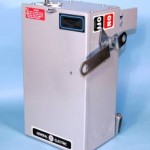
General Electric AC323R Bus Plug Available from MIDWEST

General Electric AC323R Bus Plug Available from MIDWEST

Sometimes you just can not safely perform an electrical maintenance service per the written specification. For example, in today’s world of real concern for arc flash hazards, safely opening the cover of an energized bus plug, to perform an Infrared Scan, may not be possible. It may not be safely justified because of the high risk. So one argument is whether or not one can actually tell if a bus plug is hot because of overloading or because of a poor connection that is overheating. Is it a load problem or a connection problem?  Is there a problem at all?

Because our Thermographers are all required to work on bus plugs in our switchgear shop, they are very familiar with the interior of most bus plugs. They may have totally reconditioned a specific Square D or Bull Dog 100 amp bus plug. Or they may have repaired many ITE, GE General Electric or Cutler Hammer 60 amp bus plugs. Therefore they know where the interior switch or breaker is located. They may know exactly where the conductors connect to the bus plug feeder terminals.  This knowledge and experience is a big advantage, but the Infrared task is still difficult. The indications of overheating, whether load or connection related, may be very subtle because the interior heat must be re-emitted by the bus plug enclosure, greatly dampening the heat pattern.

Again, knowledge of the bus plug allows the Thermographer to turn art into science, at least to some degree. The thermographer may compare a suspect old bus plug to an identical bus plug nearby. Comparing the feeder conduit helps identify the possible ampacity of an old bus plug.  Comparing the heat pattern of the different plane surfaces of a suspect old or new Cutler Hammer or Square D bus plug may give additional information to help determine the existence and cause of heating.


Our thermographers have special safe ammeters to measure the load on a bus plug feeder, where practical and safe. Knowing the actual load, say on a feeder from an old Federal Pacific bus plug, is extremely helpful in determining if the suspected heating is load related or connection related. It is extremely difficult, if even possible, to determine the presence of overheating, much less the cause, by just looking at one plane of the energized bus plug with even a very sensitive Infrared Scanner.


It is the combination of the Thermographer’s experience and equipment knowledge that makes scanning energized bus plugs still very useful.  This same experience and knowledge aid in determining the possible cause of a suspected problem manifested by heat.