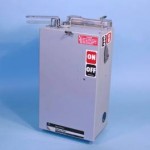
SB323R General Electric Bus Plugs For Sale by MIDWEST
On MIDWEST’s list of “Ten things we will not do with bus plugs” is “We will not sell a bus plug that we have tested only.” In other words, we are not going to take a Square D bus plug and just test it and say it is okay. We are not going to take a Cutler Hammer bus plug and sell it without reconditioning it. We are not going to sell a GE General Electric bus plug unless we have reconditioned it and tested it first. We are not going to sell an ITE bus plug after doing only a “smoke test,” as one really old time electrical contractor was fond of asking us. An old timer’s really scary minimum specification. When he turned it on, he just didn’t want to see any smoke. That was all he was concerned with. So he said. Actually we worked with him for decades and he always came back because he knew we did everything, including reconditioning and testing the bus plugs, anyway. We are not going to sell a Siemens bus plug as is, even for temporary use. We are not going to sell a Westinghouse bus plug after reconditioning and testing, if it still does not pass our final quality control inspection. All these statements are a repeat of the basic same “We Will Not Test Only” from the list of ten things we will not do with bus plugs. Sometimes it can be enlightening to say one thing six different ways, if it is making an important point. For quality and safety, pleonasm may be your friend.
Categories: General Bus Plug Information Tags: bus plugs, Cutler Hammer Bus Plug, GE Bus Plug, General Electric Bus Plugs, ITE Bus Plugs, Recondition Bus Plugs, Reconditioning Bus Plugs, Siemens Bus Plug, Square D Bus Plug, Testing Bus Plugs, Westinghouse Bus Plug
MIDWEST’s Switchgear Shop received an unusual request for blue Square D bus plugs and black General Electric bus plugs. Plus, we were asked if we could paint ITE and Cutler Hammer bus plugs other colors and if we could put a unique label on each bus plug. Of course the answer was yes, but this was different. We have reconditioned Westinghouse bus plugs and Cutler Hammer Bus Plugs that were already painted black and we had to repaint them gray. We had some Square D bus plugs and General Electric Bus Plugs that were a 1950’s kitchen cream color and looked like they had been repainted every ten years. But this was the first time that a customer requested a specific color, other than the manufacturer’s original color, which is usually gray.
They had a lot of 30 amp and 60 amp bus plugs. Quite a few 100 amp bus plugs and a couple 200 amp bus plugs and one large 400 amp bus plug. But what was really unusual was their reason for the color coding and labeling. It appears that, in some states, bus duct and bus plugs that are used only on a specific manufacturing machine or production process, are exempt from state tax. If they buy replacement bus plugs or have service on the existing bus plugs, the replacements and service is non taxable. If the bus plugs or bus duct are used on something other than a specific manufacturing machine or process, service and equipment is taxable. They wanted the bus plugs for a specific process to be all the same color. They also wanted the bus plugs to be painted the same color as the bus duct and to be labeled for the specific manufacturing machine or process. We are not state tax experts, but, as they explained it, it seemed to make sense.
Categories: Questions Asked By Our Customers Tags: 100 Amp Bus Plugs, 200 Amp. 400 Amp, 30 Amp Bus Plugs, 60 Amp Bus Plugs, bus duct, Cutler Hammer Bus Plugs, General Electric Bus Plugs, ITE Bus Plugs, Painted Bus Plugs, reconditioned bus plugs, Replacement Bus Plugs, square d bus plugs, Westinghouse Bus Plugs
Here’s another odd but very dangerous circumstance that MIDWEST ran into during the field data collection for an Arc Flash Hazard analysis. The customer had an old Square D bus duct run in the oldest part of their plant. It was actually a complex made up of several buildings, the oldest being a wood structure going back seventy years. They had mostly Square D and General Electric bus duct and bus plugs, and a small run of ITE. The old part of the plant was used for storage. All the manufacturing equipment had long ago been removed. There were very few Square D bus plugs still being used in the bus duct in this area. There were maybe a dozen bus plugs that were still installed but no longer in use. In most cases, the pipe and wire feeder had been removed. But we found one 100 amp bus plug, no longer used, had a conduit going into a small room full of junk. We had been told the bus plug was off and the fuses probably removed. They didn’t know where the conduit went. When we checked, and we always check, we found the bus plug closed and hot, the feeder energized. The electrician was pretty surprised. We traced the conduit to a back small storage area, dark, no lighting, where it terminated in a 6 by 6 junction box on the wall right next to the door. This circuit was “deadly hot” because the cover was missing and the conductors were sticking out of the box, wrapped with the frayed remains of old cloth type tape. This was a deadly accident just waiting to happen. When MIDWEST recommended turning off the old bus plug; removing the fuses; and removing the conductors and conduit from the bus plug, they balked. Thought just turning it off was okay. But, since this was an abandoned circuit, not to be used again, we always recommend removing it. We consider this a safe work practice that eliminates the possibility of something “deadly hot” injuring or killing someone in the future.
MIDWEST was asked by a manufacturing plant that used Siemens bus plugs in their facility, why they had not only Siemens bus plugs, but also used ITE Siemens, Square D and Cutler Hammer bus plugs. And most of his main switchgear and circuit breakers were GE General Electric. His purchasing department wanted maintenance to pick one electrical equipment manufacturer and stick with them. Purchasing figured they could get better prices that way.
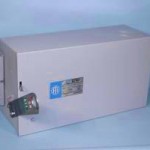
ITE Bus Plugs Cat. No. RV424
First we explained that each type of electrical equipment they had, probably represented a time period or an expansion project. For example, that 100,000 square foot addition in 1968 may have been all Square D. The electrical contractor may have got his best pricing from Square D and therefore bought Square D bus plugs and bus duct. The contractor on a later project may have used Cutler Hammer. Later yet, Siemens. This was not unusual. Or this may have happened because of different delivery dates. Or a particular manufacturer of bus plugs may have fallen out of favor with contractors because of quality problems or high prices.
All this could be avoided by specifying a specific manufacturer. But single sourcing one manufacturer of electrical switchgear may result in higher prices. The manufacturer would have a lock on the sales. The manufacturer’s sales rep would usually figure this out pretty quick. If you put an alternate in your specification, you basically have the same environment as open source bidding. Sometimes a particular electrical bus duct and bus plug manufacturer has a lock on a customer’s business because of the purchasing department or maintenance department at that time. The head of maintenance for ten years just may be more familiar with or favor GE General Electric bus plugs. Or purchasing may be hooked on Eaton Cutler Hammer bus plugs. So it goes sometimes. But it can be very difficult to continually single source the electrical equipment you purchase for many years and decades. There are just too many variables and they change over time. There is not a problem having equipment from different electrical equipment manufacturers, as long as replacement bus plugs or other equipment and parts are readily available. Delivery is sometimes a problem in today’s ‘just in time’ world. MIDWEST’s reconditioned electrical switchgear, including bus plugs, is one solution to the availability problem.
There are situations where using only one manufacturer of electrical switchgear may be important and required. For example, Mission Critical facilities, remote access facilities that require many spare components, continuous process facilities, and, of course, facilities that are actually subsidiaries or are owned by a specific electrical equipment manufacturer.
Categories: General Bus Plug Information Tags: bus duct, bus plugs, Cutler Hammer, electrical switchgear, GE, General Electric Bus Plugs, ITE, Mission Critical facilites, Siemens, Square D, used bus plugs