Archive

Posts Tagged ‘General Electric’

Bus Plugs: We’ve got what you need – All Manufacturer’s

February 23rd, 2015 Comments off

Bus Plugs:  We’ve got what you need.  MIDWEST sells reconditioned, used and new Bus Plugs.   All manufacturer’s available – Square D, ITE, General Electric, Westinghouse, Cutler Hammer, Bull Dog, Continental, Federal Pacific, Gould, Siemens, etc.  Call today 800.803.9256!  http://www.swgr.com/store/Bus-Plug-Home.aspx

Bus Plugs – Where are they used

May 23rd, 2012 Comments off
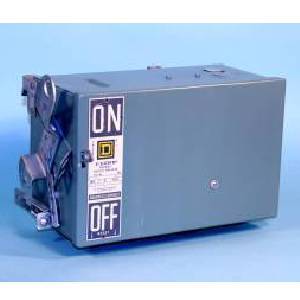
PFA34100GN Square D 100 Amp Bus Plug For Sale by MIDWEST

PFA34100GN Square D 100 Amp Bus Plug For Sale by MIDWEST

MIDWEST is frequently asked where and how bus duct and bus plugs are used. Often the person asking works at a commercial facility, office, or processing company where the electrical power is distributed using just pipe and wire.  There may be no large open manufacturing areas. Here are a couple examples of facilities that use bus duct and bus plugs to distribute power around the facility. A metal fabricating plant may use Square 800 amp bus duct to distribute power throughout an open manufacturing area where they have machines they move around from time to time.  Part or the whole process may be rearranged depending on the product at the time. A Square D 100 amp bus plug,  PFA34100GN, may feed a 100 amp welding plug or the power and control compartment of a milling machine. There might be 25 or more bus plugs on the bus duct. And they could easily add new bus duct and new bus plugs to accommodate expansion.  Another example might be a very large open area or high bay facility for heavy manufacturing using a 2000 amp Square D bus duct with over a hundred bus plugs on it.  The bus plugs provide building power to power panels and lighting panels and to production equipment and process equipment. Bus duct is a very efficient way to get a lot of power to a large area where the power distribution keeps changing. Unlike office and commercial facilities, manufacturing plants have a need to put a lot of power to different areas that sometimes require additions and changes. Unlike fixed pipe and wire, the power capacity and flexibility of Square D or GE General Electric, Siemens, or Cutler Hammer bus plugs and bus duct is perfect for these environments.

Bus Plug Connection or Load Problem Using Infrared

November 24th, 2010 Comments off

MIDWEST frequently is asked how we can tell if an overheating problem in an electrical bus plug, found using Infrared Thermography, is a connection problem or a load problem. Especially when the bus plug cover can not safely be opened.  Overheating from a load problem usually displays a paintbrush effect on the bus plug enclosure. Large and continuous areas may display a higher temperature pattern. Looking at the electrical bus plug from different angles may still display a wide pattern of overheating and no indication of a spot source. This is difficult, even for an experienced Thermographer. MIDWEST’s Thermographers have the advantage of extensive training and experience reconditioning, maintaining, repairing and testing bus plugs in our switchgear shop. With this experience, they know the location of the internal components of the various bus plugs, whether Square D, Cutler Hammer, GE General Electric, Westinghouse, ITE Bulldog, or Federal Pacific. The combination of this knowledge and experience and their understanding of Infrared Thermography, gives them the tools they need to best differentiate between overheating due to load and overheating due to a poor connection or contact.


A connection problem may display a more localized heat pattern that sometimes can be confirmed by Infrared Scanning the bus plug from different angles.  The heat pattern at each angle may confirm the heat is coming from the same somewhat specific location.  With the cover closed, it is very difficult to identify the exact location. It might be the fuse clip or the lug for a feeder cable or the switch or breaker contact.


Finally, when possible, measuring the load on the bus plug feeder, when safe, and comparing it to the bus plug rating can help validate whether the problem is load or connection. Only when safe, the bus plug cover may be opened and an accurate scan of the inside of the bus plug performed.  It is not always possible to determine the exact cause of overheating in a bus plug, but these are some of the tools that increase our success.

Bus Plug Clearance Safety

September 24th, 2010 Comments off
 
Square D Bus Plugs Cat. No. PQ4620

Square D Bus Plugs Cat. No. PQ4620

We ran across blogging information about safe clearances for bus plugs. There was interest in the correct code requirements for various size bus plugs, 2000 amp bus plugs to 400 amp bus plugs to 60 amp bus plugs. Sometimes code requirements are the only hammer the electrician may have to force others to be safe. We’ve dealt with used, obsolete, and new bus plugs for decades and we have one big rule for experienced electrical personal who work around this stuff for a living. “If it seems unsafe, it is unsafe.”  As far as inexperienced or non electrical folks, stay away from electrical power bus plugs. They are not your friend.

 Would it make sense to tell an experienced electrician, who feels that a 200 amp Square D bus plug is unsafe to fool with, that he actually would be safe just because it meets code. Nonsense. We would trust the extra caution of experience, over code, any day, especially when the code is defined as a minimum safety standard.  Having said this, we would also caution against listening to the type of experience that says something is safe, even though it does not meet code, just because the experienced person has done it many time before and nothing ever happed.  Experience or not, just don’t work on or around anybody’s bus plugs hot. Whether Square D, Cutler Hammer, GE General Electric, or Siemens bus plugs, do not work on bus plugs energized.


Sometimes the criticism of the location of electrical bus duct and bus plugs is heaped on the electrical contractor that installed it. Having worked in electrical contracting in a past life and worked in manufacturing plants for decades, we often find the electrical bus duct and bus plugs are ignored when other equipment is installed near them.  Space is a premium, so newly installed pipe or duct or hangers can go only a foot or two from the bus duct or plug.  And after 20 years, there isn’t enough room left for an electrician to safely work around bus duct or plugs, regardless of code or experience.  So don’t!