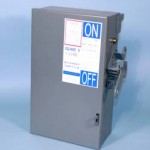
Swapping Bus Plugs is not for Thrill Seekers
For sake of convenience, economy of effort, or sheer tempting of fate, some mortal souls choose to swap out a bus plug on an energized bus duct. Imagine being up 20 feet in the air on a scissors lift and grabbing hold of a 200 amp bus plug and trying to yank the thing out of a hot bus duct, wearing no face shield, no arc flash or shock protection, and on top of all that, being under the gun to get it done before you go on your coffee break. No, this is not the Moscow circus. Some folks still do this.
Bus plugs connect to the bus bar in bus duct using spring loaded finger clusters. The bus plug is attached and removed from the bus bar by force of movement (F = MA, plus the added force needed to overcome the spring loaded tension of the finger clusters). The bus plug enclosure proper is mounted to the hanging bus duct enclosure by clamps holding the bus plug in place. The old bus plug is removed, the bus duct is inspected to make sure everything is copasetic and the new bus plug is put in place. The entire routine is fairly straightforward, on a de-energized and locked out circuit. On a live circuit, ladies and gentlemen hold on to your hats. Things unexpected can occur. Assumptions made may prove untrue. Working on a live circuit without proper arc flash or shock protection puts you in a place you really don’t want to be. Questions we’d like to ask: Is a person working under such live conditions aware of how much arcing fault current can take place? Are they aware that a fault might last much longer than a fault on a normal feeder? Are they aware that the blast could blow them off the lift; Are they aware that they have both hands in contact with a potential shock hazard and a shock could “cross their heart;” Are they aware that an arcing fault on many bus ducts is too dangerous even with the maximum protective clothing under NFPA 70E? Be safe, don’t rush, and MIDWEST recommends turning off the bus duct.