Archive

Posts Tagged ‘Cutler Hammer Bus Plug’

Rust, Old Bus Plugs Biggest Challenge
May 5th, 2011 Comments off


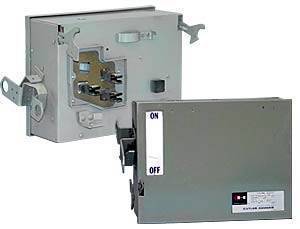
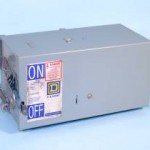
Cutler Hammer Bus Plugs For Sale - Cat. #CP2HD465

Cutler Hammer Bus Plugs For Sale – Cat. #CP2HD465

Sometimes the biggest challenge MIDWEST runs into, when reconditioning old bus plugs and obsolete bus plugs, is rust. Ironically this biggest challenge usually has the easiest solution, scrap out the bus plug. Sometimes healthy parts can be harvested from the rusted bus plugs, but care has to be taken to assure the recovered parts have not also been damaged by rust. The problem with rust is that it can be very insidious. Let’s say we want to recondition a Square D bus plug, Siemens Bus Plug or Cutler Hammer bus plug. It doesn’t make any difference. The rust doesn’t care. The problem is, we frequently don’t know the extent of the rusting until we have disassembled the bus plug and started the metal refinishing. The surface preparation may reveal severe structural rusting that was not fully apparent cosmetically. Now we’re not talking about full blown metal failure where you could push your finger through the metal. That’s obvious. We are referring to non cosmetic deterioration that prevents professional surface reconditioning. And this is not always visually apparent. It might not even be discovered if a company just repaints on old ITE or Westinghouse bus plug, for example. MIDWEST is very carful of equipment from facilities that have been out of service and unheated for any period of time. Extensive moisture damage can occur and not be visible until MIDWEST begins the full reconditioning process. This is another reason we recondition and test our equipment. There can be hidden defects. Some structural, some functional, some electrical, and any of them could turn a bus plug into a piece of scrap metal.


Will Not Test Only – From Bus Plug List of 10 Things We Will Not Do

March 28th, 2011 Comments off


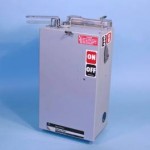
SB323R General Electric Bus Plugs For Sale by MIDWEST

SB323R General Electric Bus Plugs For Sale by MIDWEST

On MIDWEST’s list of “Ten things we will not do with bus plugs” is “We will not sell a bus plug that we have tested only.” In other words, we are not going to take a Square D bus plug and just test it and say it is okay. We are not going to take a Cutler Hammer bus plug and sell it without reconditioning it.  We are not going to sell a GE General Electric bus plug unless we have reconditioned it and tested it first. We are not going to sell an ITE bus plug after doing only a “smoke test,” as one really old time electrical contractor was fond of asking us. An old timer’s really scary minimum specification. When he turned it on, he just didn’t want to see any smoke. That was all he was concerned with. So he said. Actually we worked with him for decades and he always came back because he knew we did everything, including reconditioning and testing the bus plugs, anyway. We are not going to sell a Siemens bus plug as is, even for temporary use. We are not going to sell a Westinghouse bus plug after reconditioning and testing, if it still does not pass our final quality control inspection. All these statements are a repeat of the basic same “We Will Not Test Only” from the list of ten things we will not do with bus plugs. Sometimes it can be enlightening to say one thing six different ways, if it is making an important point. For quality and safety, pleonasm may be your friend.


Circuit Breaker Style Bus Plug Shorted with Wire

March 11th, 2011 2 comments


200 Amp PKA36200 Square D Bus Plug For Sale

200 Amp PKA36200 Square D Bus Plug For Sale

About the craziest bus plug MIDWEST’s field services have seen was a circuit breaker style bus plug that had the circuit breaker removed and replaced with wire jumpers. Apparently this was done as an extreme emergency temporary fix. It was a 200 amp bus plug. To do this, the entire bus duct must have been turned off, otherwise the jumpers would have had to be installed hot, which would be crazy.  The circuit breaker had been removed and insulated building wire used to connect the line side copper bars, of the 200 amp bus plug, to the feeder cables. The jumpers were connected to the feeder cables using taped up split bolts. The feeder went to the main fused switch for a very large molding machine, so there was fault protection at the machine. But the line side of the main switch could have had an extremely high arc flash hazard level, since the only protection was the main breaker for the entire 1200 amp bus duct. It could have been a Square D bus plug or a Cutler Hammer bus plug. Actually it wasn’t either, but the manufacturer of the bus plug doesn’t make any difference. MIDWEST’s Field Services runs into some of these nightmares now and then. The danger of temporary fixes is they often are forgotten and take on a permanent life within the power system. For temporary repairs, we suggest attaching yellow warning banner ribbon, or other safety measures, until the permanent repairs can be made. In this case though, the temporary fix was too dangerous and should not have been done.


Bus Plug Neutral – You see it on the nameplate, but its not there

January 31st, 2011 Comments off

We asked MIDWEST’s Switchgear Shop for an example of a replacement bus plug problem or defect that would not be picked up by standardized reconditioning and testing procedures.  Procedures that might be found in published data. We were looking for something that went directly to the value of experience. The value of quality workmanship.  Here’s a quick example from one of MIDWEST’s switchgear Engineering Technicians.


He spoke of a Federal Pacific bus plug, catalog number LSP 1436SN, 600 volt, 400 amp, just as an example. He said it could just as well be a Cutler Hammer Bus Plug catalog number HD 1364N, or a replacement Square D bus plug or Westinghouse bus plug. It didn’t make a difference.  A service company could simply test, or repair or completely recondition a bus plug. Then perform the tests that look for current or voltage related problems. Do the quality control physical and mechanical inspection. The reconditioned Square D bus plug could look and perform so well that you might think it was brand new. But as part of the quality control, veteran Engineering Technicians

Cutler Hammer HD1364N Bus Plug For Sale by MIDWEST

Cutler Hammer HD1364N Bus Plug For Sale by MIDWEST

 know to double check the nameplate of the reconditioned bus plug with what they actually have. They said this could very easily be missed, because the nameplate is always correct, almost. The last error he found was a bus plug that had a neutral indicated in the catalog number on the nameplate, like the two just mentioned, but actually did not have the neutral bus. It had been removed. It came into the Switchgear Shop that way, as was determined by inspecting other bus plugs in the same lot. Just a detail, a really big detail. So standardized tests can not replace experience and quality workmanship.      


Infrared Scanning Bus Plugs when You Can Not Open the Cover

December 10th, 2010 Comments off
 
General Electric AC323R Bus Plug Available from MIDWEST

General Electric AC323R Bus Plug Available from MIDWEST

Sometimes you just can not safely perform an electrical maintenance service per the written specification. For example, in today’s world of real concern for arc flash hazards, safely opening the cover of an energized bus plug, to perform an Infrared Scan, may not be possible. It may not be safely justified because of the high risk. So one argument is whether or not one can actually tell if a bus plug is hot because of overloading or because of a poor connection that is overheating. Is it a load problem or a connection problem?  Is there a problem at all?

Because our Thermographers are all required to work on bus plugs in our switchgear shop, they are very familiar with the interior of most bus plugs. They may have totally reconditioned a specific Square D or Bull Dog 100 amp bus plug. Or they may have repaired many ITE, GE General Electric or Cutler Hammer 60 amp bus plugs. Therefore they know where the interior switch or breaker is located. They may know exactly where the conductors connect to the bus plug feeder terminals.  This knowledge and experience is a big advantage, but the Infrared task is still difficult. The indications of overheating, whether load or connection related, may be very subtle because the interior heat must be re-emitted by the bus plug enclosure, greatly dampening the heat pattern.

Again, knowledge of the bus plug allows the Thermographer to turn art into science, at least to some degree. The thermographer may compare a suspect old bus plug to an identical bus plug nearby. Comparing the feeder conduit helps identify the possible ampacity of an old bus plug.  Comparing the heat pattern of the different plane surfaces of a suspect old or new Cutler Hammer or Square D bus plug may give additional information to help determine the existence and cause of heating.


Our thermographers have special safe ammeters to measure the load on a bus plug feeder, where practical and safe. Knowing the actual load, say on a feeder from an old Federal Pacific bus plug, is extremely helpful in determining if the suspected heating is load related or connection related. It is extremely difficult, if even possible, to determine the presence of overheating, much less the cause, by just looking at one plane of the energized bus plug with even a very sensitive Infrared Scanner.


It is the combination of the Thermographer’s experience and equipment knowledge that makes scanning energized bus plugs still very useful.  This same experience and knowledge aid in determining the possible cause of a suspected problem manifested by heat.