Archive

Posts Tagged ‘bus plugs’

Bus Plug Video Fanatics

May 17th, 2010 Comments off

MIDWEST’s Switchgear Shop was asked if they had a simple video of reconditioning a bus plug.  The answer was, “Not yet, but give us a couple weeks.”  They figured the customer asked, so they had the green light to make a video.  This was truly a collaboration of Techies.  Three weeks later they had two hours of video of everything to do with reconditioning an old used bus plug.  They figured they had it all covered, disassembly, stripping, cleaning, replacing hardware, painting, reassembly, labeling, testing, and final QC checkout.  Everyone was pleased until they were given the task of reducing their famous bus plug video from 2 hours to 5 minutes.  Ouch! This seemed impossible to them.  There was a lot of work, and therefore video, to reconditioning old used and sometimes obsolete bus plugs.  The problem was solved by having just one person work on the editing.


In the end, everyone was pleased until Engineering viewed the video and went crazy because all the final testing and QC was edited out.  The video is now back for re-editing.  You can’t please everyone, especially fanatics.

Bus Plugs – Bath Tub Phenomenon

May 10th, 2010 Comments off


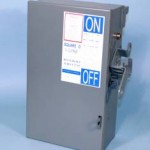
PQ3206 Square D Bus Plug

Buy PQ3206 Square D Bus Plug

MIDWEST was asked if the reliable life expectancy of bus plugs followed the classic bathtub curve.  In other words, the rate of failure of bus plugs would be high when they are first put into service, ie new bus plugs.  Then the failure rate would remain very low until the bus plug was very old, near the end of its reliable life.  At that time the failure rate would rise again, similar to the rate when new.  If one plotted the curve of the failure rate, it would have the shape of a bathtub.  MIDWEST had two answers to the question. The first answer was “We don’t know, ask the manufacturer.”  Our second answer was more important, “The failure rate is related to environment and not age.”  We know the causes of old or new bus plug failures. New, old, and very old, obsolete bus plugs fail if they are overloaded, overheated.  Bus plugs fail if they are in an area with a lot of vibration or physical movement.  All bus plugs fail early in wet areas.  The enclosure eventually just rusts away. New bus plugs fail if they are not properly installed. This is much more common than one might think. Old and new bus plugs fail if they get very dirty and vibrate and overheat.  There isn’t much to a bus plug.  So, if you install them properly and keep them dry, clean, no vibration, and under loaded, they will last for decades and you do not need to worry about the bathtub phenomenon. Sounds like a good idea for all electrical equipment.

Dangerous Sagging Bus Plug

April 26th, 2010 Comments off

A maintenance electrician asked MIDWEST what he should do about a 200 amp Square D Bus Plug that was sagging several inches down from the overhead bus duct.  He said the conduit from the bus plug was poorly supported and was pulling it down.  His supervisor wanted him to try and fix it on the fly. That made him really uncomfortable and he wanted MIDWEST’s recommendations.


This problem has nothing to do with the manufacturer. It could have been a General Electric or Westinghouse bus plug just as easy. The problem is the installation, not the equipment.  We have seen this all too often when doing Infrared Scans of overhead bus duct and bus plugs.


First of all we recommended in the strongest terms that no one try to fix this problem without shutting the power off.  We mean shut off the power to the bus duct, not just shut off the bus plug.  The connection of the disconnect fingers on the back of the bus plug to the bus duct is the most vulnerable to failure and will do the most damage if it faults while the system is on. Besides possibly getting someone seriously injured or killed, you could lose a section of bus duct and have a protracted power outage. The danger to the maintenance electrician is too great to even consider adjusting the bus plug energized. 


As far as just leaving well enough alone, we don’t buy that either.  This is what MIDWEST calls an incipient failure, a failure that will happen sometime in the future.  When, we are not sure.  But it will certainly happen. Our experience is these things happen on July 4th or Thanksgiving Day.  That’s just the way things seem to go sometimes.


The danger of catastrophic damage to equipment and, more important, the danger to a maintenance electrician trying to adjust the bus plug while it is hot, is just too great.  We would categorize the idea of doing this hot as “Crazy.” Besides, you are not allowed to do something that has the danger of serious injury or death.


Turn all the power off and properly plumb and support the bus plug. We also recommend removing the bus plug and checking it for damage, before reinstalling it correctly.  Do it right and no one gets hurt, always a good idea.

Swapping Bus Plugs is not for Thrill Seekers

April 19th, 2010 Comments off

For sake of convenience, economy of effort, or sheer tempting of fate, some mortal souls choose to swap out a bus plug on an energized bus duct. Imagine being up 20 feet in the air on a scissors lift and grabbing hold of a 200 amp bus plug and trying to yank the thing out of a hot bus duct, wearing no face shield, no arc flash or shock protection, and on top of all that, being under the gun to get it done before you go on your coffee break. No, this is not the Moscow circus. Some folks still do this.


Bus plugs connect to the bus bar in bus duct using spring loaded finger clusters. The bus plug is attached and removed from the bus bar by force of movement (F = MA, plus the added force needed to overcome the spring loaded tension of the finger clusters). The bus plug enclosure proper is mounted to the hanging bus duct enclosure by clamps holding the bus plug in place. The old bus plug is removed, the bus duct is inspected to make sure everything is copasetic and the new bus plug is put in place. The entire routine is fairly straightforward, on a de-energized and locked out circuit. On a live circuit, ladies and gentlemen hold on to your hats. Things unexpected can occur. Assumptions made may prove untrue. Working on a live circuit without proper arc flash or shock protection puts you in a place you really don’t want to be. Questions we’d like to ask: Is a person working under such live conditions aware of how much arcing fault current can take place?  Are they aware that a fault might last much longer than a fault on a normal feeder?  Are they aware that the blast could blow them off the lift;  Are they aware that they have both hands in contact with a potential shock hazard and a shock could “cross their heart;” Are they aware that an arcing fault on many bus ducts is too dangerous even with the maximum protective clothing under NFPA 70E? Be safe, don’t rush, and MIDWEST recommends turning off the bus duct. 

Strange Bus Plug Locations

April 5th, 2010 Comments off

Two of the strangest locations we have seen with bus duct and bus plugs were in former manufacturing facilities that had been converted to very nice office spaces.  One facility converted a building to their executive offices.  Very fancy with lots of wood, glass and dramatic lighting. Had plush carpeting everywhere and actually very nice wall paintings and art. You would never guess the six feet above the ceiling was just jam packed with extremely old building infrastructure.  Old and new heating ducts, sprinkler system, communication wires, conduits, a mass of abandoned pipes and cables, abandoned light fixtures, old dirty wood structure supporting an old wood roof, and a complete bus duct distribution system chuck full of old and obsolete bus plugs and just a few new bus plugs.  There were two totally different worlds separated by fancy ceiling tile.  It was like standing in 2010 and looking up into 1940.


Another facility was set up the same way, but this facility was only about 25 years old.  The most dramatic feature of this facility was that the space above the office ceiling was about 20 feet to the roof.  When you looked above the ceiling tile, you found a massive open area.  The bus duct in this area was about midway between the roof and the office ceiling tile. From one vantage point, you could just about see the entire bus duct system and all the bus plugs.  In addition there were no really old bus plugs. An eerie feature was all the threaded rod hanging from the roof supports down to the ceiling below. It was a massive lost space hidden above a normal office environment. 


These were two strange places for bus duct and bus plugs, which are usually found in exposed manufacturing or commercial buildings.

Infrared Scanning Enclosed Bus Duct and Bus Plugs

March 29th, 2010 4 comments

We were asked by a maintenance supervisor if it made sense to infrared scan the bus duct in his manufacturing plant. He suggested it was a waste of time because the conductors in his bus duct were totally enclosed.  MIDWEST hears this question a lot. He had a mixture of old bus duct and bus plugs and new. He was especially concerned with the new bus duct and bus plugs because he was adding more and more load and they had a lot of trouble adding some of the new bus plugs because of their location above production machines. 


As we have said many times, infrared scanning is the best service possible for finding current related problems in bus duct and attached bus plugs.  The Infrared Scanner is so sensitive, it can find warm bus splices and overheating bus plug connections long before they turn into a full blown critical hot connection or arcing failure.  This is true for obsolete bus plugs and duct, even when it has been operating for decades without any problem. The real challenge with infrared scanning is when the bus is over production equipment and in very had to see locations.  Still, for an experienced Thermographer, these challenges are easily overcome. 


So, whether vented or enclosed, feeder or plug in bus duct, Infrared Scanning is the least expensive and most useful maintenance service available. 

Bus Plugs Hot Stick

January 29th, 2010 Comments off

MIDWEST received this request.  “I’m a new totally green electrical maintenance apprentice and I think the old guys are hosing me…again.  We have an old long wooden stick in the corner of the shop. Maybe 10 foot long, all beat up.  They’re telling me its safety equipment for bus plugs. I didn’t even know what a bus or buss plug was until I looked it up. But what’s the stick for.  Thanks, Jimmy”


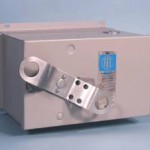
Jimmy, the stick is used on bus plugs.  And it could be considered safety equipment.  The stick should have a hook on the end of it.  It is used to reach the on off handle of bus plugs located up high.  Look up pictures of old Bulldog, used Square D, Westinghouse, Cutler Hammer, GE General Electric, ITE, and even Federal Pacific bus plugs.  Manufacturing plants used bus plugs in many of their facilities. By the way, the correct spelling is bus plug, not buss plug. You should be able to find a picture showing a metal on off handle with a hole in the end. Using the stick, an electrician could safely open or close a bus plug by inserting the hook, on the end of the stick, into the hole in the end of the on off handle. Usually bus plugs are located overhead and can not be reached from the floor. By pushing or pulling the stick, while standing on the floor, you could reach and turn the bus plug on or off. A bus plug functions as a switch.  They usually have a breaker or set of fuses inside. The wooden stick also gives the electrician some protection from electrical shock. Although, old sticks often have not been tested for shock protection.  Warning, operating bus plugs can be dangerous.  Leave this work to experienced electricians. 

A Practical Discussion about Bus Duct and Bus Plugs

July 21st, 2009 Comments off

BOS14321 ITE Bus Plugs

BOS14321 ITE Bus Plugs

A conversation on electrical bus duct and bus plugs is influenced and biased by the experience and expertise of the individuals.  One may be perceived as an expert in their field, based on their knowledge as an academic, a design engineer, electrical consultant, or based on their experience as an electrician installing the equipment.  And, of course, these experts may disagree with each other.  As an example, what a design engineer calls busway, an electrician will call bus duct.  In MIDWEST’s world, it is bus duct.  We think busway is some sort of road, a highway for buses. 


MIDWEST frequently is asked by our customers for our bus duct and bus plug recommendations based on our practical and technical expertise.  And customers usually want ‘a short answer.’  This is where we are most comfortable. 


The following is a ‘comfortable discussion’ about the use of bus duct and bus plugs.  This is not a training manual or how-to instruction.  The purpose is to give you some of the thoughts and decisions involved in the use of bus duct, ie busway, and bus plugs.


There is service bus, feeder bus, and plug in bus duct.  Service bus duct typically takes power from the main outdoor transformer to the main indoor switchboard.  Feeder bus typically takes power from the main switchboard to another area of the facility. Plug-in bus duct distributes power in an area by allowing you to tap into the bus duct, using bus plugs that feed individual machines, motors, panels, disconnects, etc.  In this discussion, we are mainly talking about plug-in bus duct and bus plugs.


When deciding whether or not to use a plug in bus duct to distribute power in a facility, we suggest a few other considerations, besides, of course, the cost difference between bus duct with bus plugs and pipe-and-wire feeders.


Do you want a centralized distribution system or a de-centralize system?  An example of a centralized system would be a 1200 amp panel board with 12 molded case circuit breakers sized between 100 amps and 600 amps.  Each circuit breaker powers a feeder to an individual machine, disconnect, motor, or subpanel.  So there are 12 conduits coming out of the 1200 switchboard and going to 12 separate loads.  A decentralized distribution system would be a 1200 amp bus duct going from the main 1200 amp switchboard, right through the middle of a production area, hanging from the trusses, and having 12 bus plugs attached to it.  Each bus plug is used to feed 12 separate loads, such as a 225 amp panel, a 25 hp motor.  4 molding machines, a step down transformer, and four other production machines spread around the production area.  Instead of 12 feeders from the main switchboard, there would be one bus duct and 12 short drops, ie feeders, from overhead bus plugs, attached to the bus duct.


Here are engineering concerns to consider when deciding whether to use bus duct and bus plugs or separate pipe and wire feeders from a main switchboard.


Consider FMEA.  Failure Mode and Effects Analysis.  In other words, what are the most common, ie probable, equipment failures that would interrupt electrical power?  And what would be the consequence of each failure mode?


In your facility, are there special safety concerns if you use feeders or if you use bus duct and bus plugs?  Electrical shock or fault hazards?  Overhead crane or fork truck hazards? Vibration, moisture, oil mist, foundry dust, low clearance, extreme temperature differences?  


Do you move production machines now and then, rearrange the layout, or add machines?  If so, the bus duct with bus plugs works very well.  It is very easy to change the electrical distribution.


Is the production equipment fixed in place, for example a process machine, like a paper machine in a paper mill?  If so, then separate pipe and wire feeders from a single switchboard would be best.


Do you need to turn the ‘source’ power off to a machine, panel, or motor in order to do regular maintenance or perform other periodic tasks?  If so, separate feeders would be best.  Turning power off from a bus plug should not be considered an everyday function.  In addition, it is hard to lockout and tag out a bus plug.


Is there a lot of vibration, moisture, airborne dust or machine oils etc?  Bus plugs actually have “disconnect fingers” that pinch on to the main busbar inside the overhead bus duct.  The tension on the disconnect fingers, which maintains pinch contact with the busbar, is caused by springs on the disconnect fingers.  These connections, disconnect fingers, are vulnerable under harsh conditions.  In FMEA, the disconnect fingers on bus plugs are the most vulnerable component of the system.  And, if they fail, they may destroy the bus in the bus duct, shutting down the power to everything connected to the bus duct.  In addition, the connections between sections of bus duct can be vulnerable to vibration and temperature extremes.  These are the two most frequent deficiencies MIDWEST finds when Infrared Scanning bus duct and bus plugs.  But under normal operating conditions, we see few problems.


Can the bus duct be installed high enough not to be a hazard to anyone below?  No shock hazard or arcing fault hazard to someone below?  The bus duct must be properly grounded such that, under a fault condition, the metal enclosure isn’t the only fault current carrying path. We have seen faulted bus duct where every bolted connection between sections of the enclosure were melted from the arcing fault current.


In all cases, whether feeders or bus duct, proper grounding is extremely important to the safety of personnel.  There is “indirect contact” shock hazard if you touch something metal, conductive, when one of the phases has faulted to the metal enclosure.  There is “direct contact” shock hazard if you touch an energized conductor.  And remember, if current just over 0.03 amps (30 milliamps) passes through your body, especially through your chest, say between your hands, it is a serious hazard if it isn’t interrupted quickly.  Current passing through your body can be lethal at very low levels.


MIDWEST believes bus plugs can not safely be removed or install while the bus duct is energized.  Our recommended procedure is to de-energize the main bus, lock out and tag out, remove or relocate the bus plug, and then safely re-energize the system.


In general, bus duct is very useful in facilities where the loads change and are relocated a lot.  If the loads are fixed and seldom change, we recommend typical pipe and wire feeders.  In either case, the equipment must be installed such that there is no shock, burn, blast, or operating procedure danger to personnel.