Infrared Scanning Bus Plugs when You Can Not Open the Cover
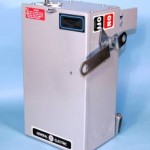
General Electric AC323R Bus Plug Available from MIDWEST
Sometimes you just can not safely perform an electrical maintenance service per the written specification. For example, in today’s world of real concern for arc flash hazards, safely opening the cover of an energized bus plug, to perform an Infrared Scan, may not be possible. It may not be safely justified because of the high risk. So one argument is whether or not one can actually tell if a bus plug is hot because of overloading or because of a poor connection that is overheating. Is it a load problem or a connection problem? Is there a problem at all?
Because our Thermographers are all required to work on bus plugs in our switchgear shop, they are very familiar with the interior of most bus plugs. They may have totally reconditioned a specific Square D or Bull Dog 100 amp bus plug. Or they may have repaired many ITE, GE General Electric or Cutler Hammer 60 amp bus plugs. Therefore they know where the interior switch or breaker is located. They may know exactly where the conductors connect to the bus plug feeder terminals. This knowledge and experience is a big advantage, but the Infrared task is still difficult. The indications of overheating, whether load or connection related, may be very subtle because the interior heat must be re-emitted by the bus plug enclosure, greatly dampening the heat pattern.
Again, knowledge of the bus plug allows the Thermographer to turn art into science, at least to some degree. The thermographer may compare a suspect old bus plug to an identical bus plug nearby. Comparing the feeder conduit helps identify the possible ampacity of an old bus plug. Comparing the heat pattern of the different plane surfaces of a suspect old or new Cutler Hammer or Square D bus plug may give additional information to help determine the existence and cause of heating.
Our thermographers have special safe ammeters to measure the load on a bus plug feeder, where practical and safe. Knowing the actual load, say on a feeder from an old Federal Pacific bus plug, is extremely helpful in determining if the suspected heating is load related or connection related. It is extremely difficult, if even possible, to determine the presence of overheating, much less the cause, by just looking at one plane of the energized bus plug with even a very sensitive Infrared Scanner.
It is the combination of the Thermographer’s experience and equipment knowledge that makes scanning energized bus plugs still very useful. This same experience and knowledge aid in determining the possible cause of a suspected problem manifested by heat.