Archive

Posts Tagged ‘bus plug’

Bus Plugs: We’ve got what you need – All Manufacturer’s

February 23rd, 2015 Comments off

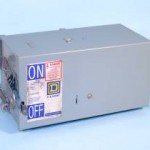
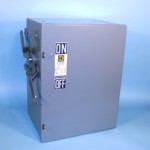
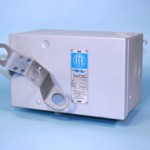
Bus Plugs:  We’ve got what you need.  MIDWEST sells reconditioned, used and new Bus Plugs.   All manufacturer’s available – Square D, ITE, General Electric, Westinghouse, Cutler Hammer, Bull Dog, Continental, Federal Pacific, Gould, Siemens, etc.  Call today 800.803.9256!  http://www.swgr.com/store/Bus-Plug-Home.aspx

Crazy Arc Blasted Bus Plug

July 25th, 2012 1 comment

MIDWEST was in a manufacturing facility collecting data for an Arc Flash Hazard Analysis project.  While reviewing one of two main 1600 amp bus ducts through the facility, we came across something our Engineering Technicians thought was pretty crazy.  Crazy, but interesting.  One of the bus ducts had a bus plug with black soot on the side from an apparent internal fault.  It was an ITE BOS14353 bus plug and the soot had been blasted out of the seams of the cover and conduit box connectors and between the bus plug and bus duct.  The cover didn’t look like it was bent, but there was a lot of black stuff on the sides of the ITE bus plug.  We asked the maintenance man if he saw that and he said “Oh, ya,” they had a fault at the bus plug, but it didn’t trip the main breaker for the bus duct so they refed the machine from a different bus plug.  They couldn’t turn off half of production for one machine.  They didn’t touch the blasted bus plug, which was wise since they wouldn’t turn off the bus duct.  The feeder from the bus plug fed a fused disconnect mounted separately from the machine.  So they just turned off the disconnect switch, attached the LOTO, and refed the machine from a different BOS14353 bus plug to a new separate fused disconnect.  MIDWEST reconditions ITE BOS14353, General Electric FVK363, Square D PFA36100, ITE UV363, or Westinghouse ITAP363 bus plugs every day.  We know from shop experience and field service experience that the blasted bus plug was a ticking time bomb.  Sooner or later, it was just a matter of time, there was going to be another fault at that bus plug.  Probably at the connection to the bus duct.  Sooner could be an hour and later could be a couple years.  But the big concern was not for the bus plug, it was for a fault in the bus duct itself.  The black soot gets everywhere and the bus duct is very vulnerable.  If it faults, half their plant could be down for possibly days.  By shifting the attention from the bus plug to the bus duct, maintenance got an outage within days to remove the bus plug and clean up the bus duct.  A wise and safe decision.

400 Amp Bus Plug Blocked by 2″ Pipe

May 23rd, 2011 Comments off

During an Infrared Scan, or Thermographic Scan, of the electrical distribution system of a new account, MIDWEST’s Thermographer noted in his report a strange bus plug set up. A 200 amp Cutler Hammer bus plug had a 2 inch pipe installed right in front of the cover. The pipe was 3 inches from the bus plug cover and right near the operating mechanism. The pipe was just kind of hanging there. It didn’t have much support. It went to a huge molding machine near the Square D bus duct. So you couldn’t switch this 200 amp Square D bus plug from the floor and you couldn’t open the cover of the bus plug, if you had to, because of the pipe.  Who in their right mind would do this?  As it turns out, they had an emergency and had to get a temporary line to the molding machine as fast as possible. Apparently the line carried plastic used in the molding machine and this machine was their main money maker. So they just installed pipe temporarily as quickly as possible. And six years later, the temporary pipe was still there. It more or less had become permanent.  Temporary installations evolving into permanent, is not an unusual occurrence. In the real world, production rules.  And like it or not, the same rules that caused a temporary pipe installation, also prevent the permanent installation. In the electrical equipment world, this is somewhat self correcting when the equipment gets unhappy with a bang.  Bus plugs do fail if they are ignored too long.  Whether a GE General Electric, Square D or Cutler Hammer bus plug, it will eventually fail if ignored long enough. When these things happen, those temporary fixes come back to bite you.  

Bus Plug Becomes Rat Hotel

April 25th, 2011 Comments off


Cutler Hammer 400 Amp Bus Plug

Cutler Hammer 400 Amp Bus Plug

It would be more accurate to say the Square D bus plug became a mouse hotel, but Rat Hotel sounds more dramatic. MIDWEST field services runs into some pretty bizarre circumstances. Some funny, some tragic, and some a little of both. In this case MIDWEST was called to replace a Cutler Hammer 400 amp bus plug that had smoked, code for faulted with some arcing and smoking action. The location was a storage warehouse, damp, with minimum heat. It was easy to spot the damaged bus plug because it was partially discolored, or maybe the dust all over it was just toasted. When MIDWEST opened the bus plug to see how much damage there was and to get the exact catalog number, they discovered the remains of a mouse hotel, or colony, or habitat. A smelly little mess. Apparently mice got into the bus plug through an unplugged knockout on the top side of the old bus plug. It wouldn’t make any difference if this was a 400 amp Squared D bus plug or 400 GE General Electric Bus plug, the problem was caused by the missing knockout closure. A few cents cost a couple thousand dollars before the job was all done. The mice got in through the knockout opening, built nests, and seemed to be doing okay until one of them “crossed the phases,” so to speak. There was one toasted mouse, plus other fatalities, and burnt up debris in the bus plug. The guys removed the bus plug, installed a replacement from MIDWEST’s Switchgear Services, and then brought the damaged bus plug back to the shop. The only remaining problem was finding a volunteer to cleanup and check out the damaged bus plug to see if it was worth full reconditioning.  It wasn’t. Rats


Circuit Breaker Style Bus Plug Shorted with Wire

March 11th, 2011 2 comments


200 Amp PKA36200 Square D Bus Plug For Sale

200 Amp PKA36200 Square D Bus Plug For Sale

About the craziest bus plug MIDWEST’s field services have seen was a circuit breaker style bus plug that had the circuit breaker removed and replaced with wire jumpers. Apparently this was done as an extreme emergency temporary fix. It was a 200 amp bus plug. To do this, the entire bus duct must have been turned off, otherwise the jumpers would have had to be installed hot, which would be crazy.  The circuit breaker had been removed and insulated building wire used to connect the line side copper bars, of the 200 amp bus plug, to the feeder cables. The jumpers were connected to the feeder cables using taped up split bolts. The feeder went to the main fused switch for a very large molding machine, so there was fault protection at the machine. But the line side of the main switch could have had an extremely high arc flash hazard level, since the only protection was the main breaker for the entire 1200 amp bus duct. It could have been a Square D bus plug or a Cutler Hammer bus plug. Actually it wasn’t either, but the manufacturer of the bus plug doesn’t make any difference. MIDWEST’s Field Services runs into some of these nightmares now and then. The danger of temporary fixes is they often are forgotten and take on a permanent life within the power system. For temporary repairs, we suggest attaching yellow warning banner ribbon, or other safety measures, until the permanent repairs can be made. In this case though, the temporary fix was too dangerous and should not have been done.


Bus Plug Connection or Load Problem Using Infrared

November 24th, 2010 Comments off

MIDWEST frequently is asked how we can tell if an overheating problem in an electrical bus plug, found using Infrared Thermography, is a connection problem or a load problem. Especially when the bus plug cover can not safely be opened.  Overheating from a load problem usually displays a paintbrush effect on the bus plug enclosure. Large and continuous areas may display a higher temperature pattern. Looking at the electrical bus plug from different angles may still display a wide pattern of overheating and no indication of a spot source. This is difficult, even for an experienced Thermographer. MIDWEST’s Thermographers have the advantage of extensive training and experience reconditioning, maintaining, repairing and testing bus plugs in our switchgear shop. With this experience, they know the location of the internal components of the various bus plugs, whether Square D, Cutler Hammer, GE General Electric, Westinghouse, ITE Bulldog, or Federal Pacific. The combination of this knowledge and experience and their understanding of Infrared Thermography, gives them the tools they need to best differentiate between overheating due to load and overheating due to a poor connection or contact.


A connection problem may display a more localized heat pattern that sometimes can be confirmed by Infrared Scanning the bus plug from different angles.  The heat pattern at each angle may confirm the heat is coming from the same somewhat specific location.  With the cover closed, it is very difficult to identify the exact location. It might be the fuse clip or the lug for a feeder cable or the switch or breaker contact.


Finally, when possible, measuring the load on the bus plug feeder, when safe, and comparing it to the bus plug rating can help validate whether the problem is load or connection. Only when safe, the bus plug cover may be opened and an accurate scan of the inside of the bus plug performed.  It is not always possible to determine the exact cause of overheating in a bus plug, but these are some of the tools that increase our success.

Bus Plug Clearance Safety

September 24th, 2010 Comments off
 
Square D Bus Plugs Cat. No. PQ4620

Square D Bus Plugs Cat. No. PQ4620

We ran across blogging information about safe clearances for bus plugs. There was interest in the correct code requirements for various size bus plugs, 2000 amp bus plugs to 400 amp bus plugs to 60 amp bus plugs. Sometimes code requirements are the only hammer the electrician may have to force others to be safe. We’ve dealt with used, obsolete, and new bus plugs for decades and we have one big rule for experienced electrical personal who work around this stuff for a living. “If it seems unsafe, it is unsafe.”  As far as inexperienced or non electrical folks, stay away from electrical power bus plugs. They are not your friend.

 Would it make sense to tell an experienced electrician, who feels that a 200 amp Square D bus plug is unsafe to fool with, that he actually would be safe just because it meets code. Nonsense. We would trust the extra caution of experience, over code, any day, especially when the code is defined as a minimum safety standard.  Having said this, we would also caution against listening to the type of experience that says something is safe, even though it does not meet code, just because the experienced person has done it many time before and nothing ever happed.  Experience or not, just don’t work on or around anybody’s bus plugs hot. Whether Square D, Cutler Hammer, GE General Electric, or Siemens bus plugs, do not work on bus plugs energized.


Sometimes the criticism of the location of electrical bus duct and bus plugs is heaped on the electrical contractor that installed it. Having worked in electrical contracting in a past life and worked in manufacturing plants for decades, we often find the electrical bus duct and bus plugs are ignored when other equipment is installed near them.  Space is a premium, so newly installed pipe or duct or hangers can go only a foot or two from the bus duct or plug.  And after 20 years, there isn’t enough room left for an electrician to safely work around bus duct or plugs, regardless of code or experience.  So don’t! 

Arc Welding Faulted Bus Plug and Bus Duct

September 10th, 2010 Comments off

MIDWEST had an emergency call from a manufacture because they blew up a large 800 amp bus plug and their production was down. They were the primary ‘just in time’ supplier of some parts to a larger manufacturer. They couldn’t afford a major loss of production because they would then become the secondary supplier or even worse.  We had a replacement reconditioned bus plug but they wanted someone to look at their bus duct system and the other old bus plugs because something just didn’t seem right when the 800 amp bus plug failed. 


When we inspected the bus duct, we had to do a double take on what we saw. The brackets supporting the splice connection at the ends of each section of bus duct were melted away in some areas. And some of the hangers and supports also had damage. It was as if someone had taken a welder or cutting torch and melted away parts of the bus duct support brackets and other supports and bolts along the length of the bus duct. This was a four wire system.  But you might think of it as a five wire.  A, B, and C phase, plus neutral, and ground.  It was apparent they had an unprotected fault from phase to ground, a ground fault. The ground, in this case, was the metal enclosure and supports for the bus duct. The bus duct was protected by an old 2000 amp fused bolted pressure switch. There was no ground fault protection on the old system. Before the 2000 amp fuse blew, a lot of welding and melting took place.  Fortunately only one replacement bus plug was needed and one section of bus duct had to be replaced. The arcing and melting damage to steel brackets and supports, although visually dramatic, was not enough to prevent them from getting back on as soon as the damaged section of bus duct and damaged bus plug were replaced. They intended to complete other structural repairs later, maybe. At the time, their only concern was to get production back up as soon as possible, even if it was only temporarily. We all know how stressful production schedules can be. The cause of the problem was failed supports on their old obsolete bus plug. It lasted a long time, but eventually it sagged enough for one phase to go to ground, the metal enclosure.  And after a few moments of 277 volt arc welding, they had a mess. 

Bus Plug Eureka Moment

August 25th, 2010 Comments off
 
XLVB321 ITE Bus Plug

XLVB321 ITE Bus Plug

Having spent forty years of an Electrical Engineering career in Industrial Research and Development, I feel extremely comfortable in an Electrical Engineering Power Laboratory.  There were few pieces of electrical test equipment that I did not know intimately and use on a regular basis.  Working with 240 and 480 Volt, three phase equipment was quite normal.  And in a Research and Development laboratory, the power wiring was always in a state of flux.  Wiring could be changed minute to minute, hour to hour.  Virtually all power connections were considered transient. 

 So, it came as a surprise when someone used the term “bus plug” to me.  At first, it sounded like somebody from the transit company had an all electric powered school bus, and they had to find a suitable wall outlet to plug into.  Close, but no cigar?   Actually, this wasn’t even close.


Embarrassingly, I had to ask what a bus plug was.   Well, the guru from MIDWEST asked me where did I get my power?  Well, I said, there usually was a distribution network of rectangular gray metal conduits that contained the three phase power busbars that spidered to every lab bench.  I knew these were called bus ducts.  Then the guru asked how did I connect to it?  Well, I said, there are these boxes that attach to the bus ducts.  Each bench’s power comes from these boxes.  Inside, there are usually fuses, and a switch.  The switch usually was just a metal arm with a hole in it that came out of the box.  To turn them on and off, we had long poles with a hook on the end that captured the hole in the arm.  I used these all the time.  Most of the lab benches had these long poles right next to them.  But, the only time I ever saw the interior was when a fuse had been blown inside the box; even then, it was usually a technician’s job to climb up a twelve foot ladder and replace the fuse.  But, a few times, usually at 3 am, I was the one that climbed the ladder.


And the MIDWEST guru said, those boxes are called bus plugs.  Eureka!!!  I’d been using them forever, and just didn’t know what they are named.  It was explained that in order to tap the power from the bus duct conductors, spring loaded fingers touch the internal conductors.  It was also explained that these bus plugs could more or less be snapped onto the bus ducts most anywhere.  


And I said, “Well, now I know exactly what a bus plug is.“   
Replacement Bus Plugs Properly Installed

June 18th, 2010 Comments off

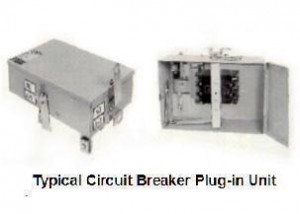
Previously MIDWEST discussed the problem of making certain the disconnect fingers lineup properly when you replace a bus plug.  We really didn’t answer the question of how to make sure replacement bus plugs are connected properly.  Here are a couple suggestions. Put a very thin film of proper contact lubricant on the contact surface of the old bus plug disconnect fingers.  Install the bus plug on to the bus duct. Note the position of the replaced bus plug and how it went into place. Then remove the bus plug and closely inspect the contact surface of the disconnect fingers.  The film of contact lubricant should reveal that the disconnect fingers properly slid, ie wiped, on to the bus bar in the bus duct. Remove any excess lubricant. In addition, one can inspect the bus bars of the bus duct and see visible evidence that the disconnect fingers of the replacement bus plug actually wiped the surfaces of the bus bars correctly.  After having verified the bus plug had been properly installed, install it again in the same manner as the first time.  All this should not be necessary, but sometimes old or obsolete bus plugs are difficult to tell if they connected properly. It can be especially difficult when installing some large bus plugs.  The physical effort to get them in place impedes the ability to sense if they went into place properly. Follow the manufacturer’s instructions on the possible use of contact lubricant. Regardless, too much lubricant is a mistake because it collects dust.  Also, if new, reconditioned or repaired bus plugs are installed in a previously empty space on the bus duct, you should be able to see the contact wipe marks on the bus bar the first time the bus plug is installed or see new wipe marks on the disconnect fingers of the bus plug itself.  All this is a simple way to give greater confidence the bus plug is installed properly.  For safety reasons, MIDWEST strongly recommends this only be done on de-energized bus duct.