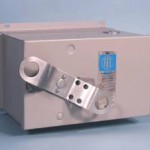
BOS14321 ITE Bus Plugs
A conversation on electrical bus duct and bus plugs is influenced and biased by the experience and expertise of the individuals. One may be perceived as an expert in their field, based on their knowledge as an academic, a design engineer, electrical consultant, or based on their experience as an electrician installing the equipment. And, of course, these experts may disagree with each other. As an example, what a design engineer calls busway, an electrician will call bus duct. In MIDWEST’s world, it is bus duct. We think busway is some sort of road, a highway for buses.
MIDWEST frequently is asked by our customers for our bus duct and bus plug recommendations based on our practical and technical expertise. And customers usually want ‘a short answer.’ This is where we are most comfortable.
The following is a ‘comfortable discussion’ about the use of bus duct and bus plugs. This is not a training manual or how-to instruction. The purpose is to give you some of the thoughts and decisions involved in the use of bus duct, ie busway, and bus plugs.
There is service bus, feeder bus, and plug in bus duct. Service bus duct typically takes power from the main outdoor transformer to the main indoor switchboard. Feeder bus typically takes power from the main switchboard to another area of the facility. Plug-in bus duct distributes power in an area by allowing you to tap into the bus duct, using bus plugs that feed individual machines, motors, panels, disconnects, etc. In this discussion, we are mainly talking about plug-in bus duct and bus plugs.
When deciding whether or not to use a plug in bus duct to distribute power in a facility, we suggest a few other considerations, besides, of course, the cost difference between bus duct with bus plugs and pipe-and-wire feeders.
Do you want a centralized distribution system or a de-centralize system? An example of a centralized system would be a 1200 amp panel board with 12 molded case circuit breakers sized between 100 amps and 600 amps. Each circuit breaker powers a feeder to an individual machine, disconnect, motor, or subpanel. So there are 12 conduits coming out of the 1200 switchboard and going to 12 separate loads. A decentralized distribution system would be a 1200 amp bus duct going from the main 1200 amp switchboard, right through the middle of a production area, hanging from the trusses, and having 12 bus plugs attached to it. Each bus plug is used to feed 12 separate loads, such as a 225 amp panel, a 25 hp motor. 4 molding machines, a step down transformer, and four other production machines spread around the production area. Instead of 12 feeders from the main switchboard, there would be one bus duct and 12 short drops, ie feeders, from overhead bus plugs, attached to the bus duct.
Here are engineering concerns to consider when deciding whether to use bus duct and bus plugs or separate pipe and wire feeders from a main switchboard.
Consider FMEA. Failure Mode and Effects Analysis. In other words, what are the most common, ie probable, equipment failures that would interrupt electrical power? And what would be the consequence of each failure mode?
In your facility, are there special safety concerns if you use feeders or if you use bus duct and bus plugs? Electrical shock or fault hazards? Overhead crane or fork truck hazards? Vibration, moisture, oil mist, foundry dust, low clearance, extreme temperature differences?
Do you move production machines now and then, rearrange the layout, or add machines? If so, the bus duct with bus plugs works very well. It is very easy to change the electrical distribution.
Is the production equipment fixed in place, for example a process machine, like a paper machine in a paper mill? If so, then separate pipe and wire feeders from a single switchboard would be best.
Do you need to turn the ‘source’ power off to a machine, panel, or motor in order to do regular maintenance or perform other periodic tasks? If so, separate feeders would be best. Turning power off from a bus plug should not be considered an everyday function. In addition, it is hard to lockout and tag out a bus plug.
Is there a lot of vibration, moisture, airborne dust or machine oils etc? Bus plugs actually have “disconnect fingers” that pinch on to the main busbar inside the overhead bus duct. The tension on the disconnect fingers, which maintains pinch contact with the busbar, is caused by springs on the disconnect fingers. These connections, disconnect fingers, are vulnerable under harsh conditions. In FMEA, the disconnect fingers on bus plugs are the most vulnerable component of the system. And, if they fail, they may destroy the bus in the bus duct, shutting down the power to everything connected to the bus duct. In addition, the connections between sections of bus duct can be vulnerable to vibration and temperature extremes. These are the two most frequent deficiencies MIDWEST finds when Infrared Scanning bus duct and bus plugs. But under normal operating conditions, we see few problems.
Can the bus duct be installed high enough not to be a hazard to anyone below? No shock hazard or arcing fault hazard to someone below? The bus duct must be properly grounded such that, under a fault condition, the metal enclosure isn’t the only fault current carrying path. We have seen faulted bus duct where every bolted connection between sections of the enclosure were melted from the arcing fault current.
In all cases, whether feeders or bus duct, proper grounding is extremely important to the safety of personnel. There is “indirect contact” shock hazard if you touch something metal, conductive, when one of the phases has faulted to the metal enclosure. There is “direct contact” shock hazard if you touch an energized conductor. And remember, if current just over 0.03 amps (30 milliamps) passes through your body, especially through your chest, say between your hands, it is a serious hazard if it isn’t interrupted quickly. Current passing through your body can be lethal at very low levels.
MIDWEST believes bus plugs can not safely be removed or install while the bus duct is energized. Our recommended procedure is to de-energize the main bus, lock out and tag out, remove or relocate the bus plug, and then safely re-energize the system.
In general, bus duct is very useful in facilities where the loads change and are relocated a lot. If the loads are fixed and seldom change, we recommend typical pipe and wire feeders. In either case, the equipment must be installed such that there is no shock, burn, blast, or operating procedure danger to personnel.