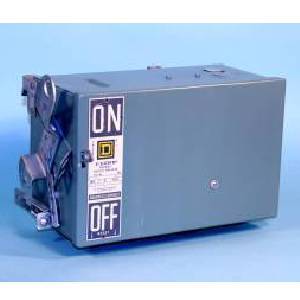
PFA34100GN Square D 100 Amp Bus Plug For Sale by MIDWEST
MIDWEST is frequently asked where and how bus duct and bus plugs are used. Often the person asking works at a commercial facility, office, or processing company where the electrical power is distributed using just pipe and wire. There may be no large open manufacturing areas. Here are a couple examples of facilities that use bus duct and bus plugs to distribute power around the facility. A metal fabricating plant may use Square 800 amp bus duct to distribute power throughout an open manufacturing area where they have machines they move around from time to time. Part or the whole process may be rearranged depending on the product at the time. A Square D 100 amp bus plug, PFA34100GN, may feed a 100 amp welding plug or the power and control compartment of a milling machine. There might be 25 or more bus plugs on the bus duct. And they could easily add new bus duct and new bus plugs to accommodate expansion. Another example might be a very large open area or high bay facility for heavy manufacturing using a 2000 amp Square D bus duct with over a hundred bus plugs on it. The bus plugs provide building power to power panels and lighting panels and to production equipment and process equipment. Bus duct is a very efficient way to get a lot of power to a large area where the power distribution keeps changing. Unlike office and commercial facilities, manufacturing plants have a need to put a lot of power to different areas that sometimes require additions and changes. Unlike fixed pipe and wire, the power capacity and flexibility of Square D or GE General Electric, Siemens, or Cutler Hammer bus plugs and bus duct is perfect for these environments.
200 Amp PKA36200 Square D Bus Plug For Sale
About the craziest bus plug MIDWEST’s field services have seen was a circuit breaker style bus plug that had the circuit breaker removed and replaced with wire jumpers. Apparently this was done as an extreme emergency temporary fix. It was a 200 amp bus plug. To do this, the entire bus duct must have been turned off, otherwise the jumpers would have had to be installed hot, which would be crazy. The circuit breaker had been removed and insulated building wire used to connect the line side copper bars, of the 200 amp bus plug, to the feeder cables. The jumpers were connected to the feeder cables using taped up split bolts. The feeder went to the main fused switch for a very large molding machine, so there was fault protection at the machine. But the line side of the main switch could have had an extremely high arc flash hazard level, since the only protection was the main breaker for the entire 1200 amp bus duct. It could have been a Square D bus plug or a Cutler Hammer bus plug. Actually it wasn’t either, but the manufacturer of the bus plug doesn’t make any difference. MIDWEST’s Field Services runs into some of these nightmares now and then. The danger of temporary fixes is they often are forgotten and take on a permanent life within the power system. For temporary repairs, we suggest attaching yellow warning banner ribbon, or other safety measures, until the permanent repairs can be made. In this case though, the temporary fix was too dangerous and should not have been done.
Categories: General Bus Plug Information Tags: 200 Amp Bus Plug, Arc Flash Hazard, bus duct, bus plug, Circuit Breaker Style Bus Plug, Cutler Hammer Bus Plug, Fault Protection, Feeder Cables, Field Services, Main Breaker, Main Fused Switch, Square D Bus Plug, Yellow Warning Banner Ribbon
MIDWEST was asked by a retired electrician why we bother disassembling a bus plug to recondition it. He worked for a contractor for years and they serviced bus plugs and bus duct a few times. But all they had to do was clean them off and operate them a couple
ITE RV366 Bus Plugs Available at www.swgr.com
times. They never found any problems. They didn’t bother removing them from the bus duct. He said he worked on GE General Electric bus plugs, Square D bus plugs and westinghouse bus plugs. He wanted to know what we would find that they didn’t. The obvious area of concern would be the disconnect fingers on the back of the bus plugs. These are not visible unless you remove the bus plug from the bus duct. It’s not unusual for disconnect fingers to be misaligned, bent or damaged by overheating due to improper fit on to the bus duct. In addition, we often find fuse holder supports or operating mechanism supports actually broken. A broken support for an operating mechanism is a disaster waiting to happen. It’s especially dangerous because it will fail right when you are operating the bus plug. And that’s a bad place to be if you are the one switching the bus plug. The concern is for the safety of the person doing the switching. It’s easy to repair or replace equipment. But it’s not so easy to repair or replace people or body parts.
Square D PBQ4640 Bus Plugs Available at www.swgr.com
Whether it’s an ITE RV366 bus plug or RV364 or Square D PBQ4640 bus plug, any bus plug can have these defects. Many defects are more related to the installation and environment than to the particular manufacturer. The big deal is we know all the things that can go wrong with electrical bus plugs and most of these failures can not be found with a quick visual inspection of an installed bus plug by someone inexperienced, who has never tore one apart, or repaired one after it has broken or failed mechanically or electrically.
Categories: General Bus Plug Information Tags: bus duct, Bus Plug Defects, bus plug disconnect fingers, Bus Plug Safety, disconnect fingers, Electrical Bus Plugs, GE Bus Plugs, Installing Bus Plugs, ITE RV364. Square D PBQ4640, ITE RV366, Operating a Bus Plug, reconditioned bus plugs, square d bus plugs, Westinghouse Bus Plugs
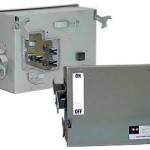
Cutler Hammer CP2HD366 Bus Plugs For Sale by MIDWEST
Much of the demand for reconditioned and new surplus bus plugs is because the user has to replace bus plugs that are defective. One of the worst things that happen is the bus plug operating mechanism breaks when you try to open or close it. It is very dangerous if the bus plug is half open or one pole opened and the other two are half closed yet. This type of failure is due to the lack of maintenance, specifically the lack of exercising the bus plug operating mechanism periodically. The other enemies are dirt, moisture, heat, and, as we have said many times, fork lifts. Sometimes folks are very surprised that so many reconditioned bus plugs are used to replace damaged or defective bus plugs rather than just for additional load or expansion.
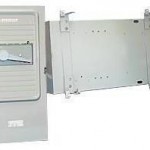
Federal Pacific LSP1432 Bus Plugs For Sale by MIDWEST
For every Cutler Hammer CP2HD366 bus plug purchased for an expansion project, we might also replace a Federal Pacific LSP1432SN bus plug because the customer’s existing bus plug failed to operate properly. When it comes to bus plugs, run to failure is the standard operating mode. The perception is they don’t need maintenance because the never do anything. They just sit on the bus duct. And that is true, but it is also the reason they eventually may fail to operate properly when needed.
The only real pattern may be the use of newer style replacement bus plugs for expansion projects than for replacement of defective equipment

Square D PQ3206 Bus Plug
It is not unusual for MIDWEST to get a call because a company is having numerous problems with their old bus plugs. Things go along okay for years and then one year they have one failure after another. It seems to make no difference who the manufacturer is. They could be old Square D bus plugs, GE General Electric bus plugs, Westinghouse bus plugs, Cutler Hammer bus plugs or ITE bus plugs. The problem seems not to care who the manufacturer is. When this pattern appears, it is usually because a chronic mechanical or environmental problem has been present for many years and has been getting progressively worse. Soon or later the mechanical problem or contaminate reaches a critical stage and the bus plugs collectively start to fail. Usually the failure seems to be caused by overheating, or by mechanical failure between the bus duct and bus plugs, or by moisture. The problem isn’t just moisture or dirt. It’s the accumulation of dirt over many years or the presence of moisture over many years. This means there is a chronic condition causing you to replace bus plugs. One typically doesn’t have to suddenly replace Square D bus plugs or replace Cutler Hammer bus plugs because of normal operating conditions. And replacing Westinghouse bus plugs one after the other without addressing the root cause, will not make the problem go away. So if you find yourself having to repair or replace numerous bus plugs, look for a chronic cause. If you just don’t find something, then look for a recent acute change that would affect all the bus plugs.
MIDWEST’s Switchgear Shop received an unusual request for blue Square D bus plugs and black General Electric bus plugs. Plus, we were asked if we could paint ITE and Cutler Hammer bus plugs other colors and if we could put a unique label on each bus plug. Of course the answer was yes, but this was different. We have reconditioned Westinghouse bus plugs and Cutler Hammer Bus Plugs that were already painted black and we had to repaint them gray. We had some Square D bus plugs and General Electric Bus Plugs that were a 1950’s kitchen cream color and looked like they had been repainted every ten years. But this was the first time that a customer requested a specific color, other than the manufacturer’s original color, which is usually gray.
They had a lot of 30 amp and 60 amp bus plugs. Quite a few 100 amp bus plugs and a couple 200 amp bus plugs and one large 400 amp bus plug. But what was really unusual was their reason for the color coding and labeling. It appears that, in some states, bus duct and bus plugs that are used only on a specific manufacturing machine or production process, are exempt from state tax. If they buy replacement bus plugs or have service on the existing bus plugs, the replacements and service is non taxable. If the bus plugs or bus duct are used on something other than a specific manufacturing machine or process, service and equipment is taxable. They wanted the bus plugs for a specific process to be all the same color. They also wanted the bus plugs to be painted the same color as the bus duct and to be labeled for the specific manufacturing machine or process. We are not state tax experts, but, as they explained it, it seemed to make sense.
Categories: Questions Asked By Our Customers Tags: 100 Amp Bus Plugs, 200 Amp. 400 Amp, 30 Amp Bus Plugs, 60 Amp Bus Plugs, bus duct, Cutler Hammer Bus Plugs, General Electric Bus Plugs, ITE Bus Plugs, Painted Bus Plugs, reconditioned bus plugs, Replacement Bus Plugs, square d bus plugs, Westinghouse Bus Plugs
MIDWEST was asked by a manufacturing plant that used Siemens bus plugs in their facility, why they had not only Siemens bus plugs, but also used ITE Siemens, Square D and Cutler Hammer bus plugs. And most of his main switchgear and circuit breakers were GE General Electric. His purchasing department wanted maintenance to pick one electrical equipment manufacturer and stick with them. Purchasing figured they could get better prices that way.
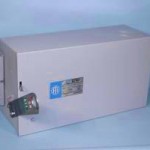
ITE Bus Plugs Cat. No. RV424
First we explained that each type of electrical equipment they had, probably represented a time period or an expansion project. For example, that 100,000 square foot addition in 1968 may have been all Square D. The electrical contractor may have got his best pricing from Square D and therefore bought Square D bus plugs and bus duct. The contractor on a later project may have used Cutler Hammer. Later yet, Siemens. This was not unusual. Or this may have happened because of different delivery dates. Or a particular manufacturer of bus plugs may have fallen out of favor with contractors because of quality problems or high prices.
All this could be avoided by specifying a specific manufacturer. But single sourcing one manufacturer of electrical switchgear may result in higher prices. The manufacturer would have a lock on the sales. The manufacturer’s sales rep would usually figure this out pretty quick. If you put an alternate in your specification, you basically have the same environment as open source bidding. Sometimes a particular electrical bus duct and bus plug manufacturer has a lock on a customer’s business because of the purchasing department or maintenance department at that time. The head of maintenance for ten years just may be more familiar with or favor GE General Electric bus plugs. Or purchasing may be hooked on Eaton Cutler Hammer bus plugs. So it goes sometimes. But it can be very difficult to continually single source the electrical equipment you purchase for many years and decades. There are just too many variables and they change over time. There is not a problem having equipment from different electrical equipment manufacturers, as long as replacement bus plugs or other equipment and parts are readily available. Delivery is sometimes a problem in today’s ‘just in time’ world. MIDWEST’s reconditioned electrical switchgear, including bus plugs, is one solution to the availability problem.
There are situations where using only one manufacturer of electrical switchgear may be important and required. For example, Mission Critical facilities, remote access facilities that require many spare components, continuous process facilities, and, of course, facilities that are actually subsidiaries or are owned by a specific electrical equipment manufacturer.
Categories: General Bus Plug Information Tags: bus duct, bus plugs, Cutler Hammer, electrical switchgear, GE, General Electric Bus Plugs, ITE, Mission Critical facilites, Siemens, Square D, used bus plugs
MIDWEST had an emergency call from a manufacture because they blew up a large 800 amp bus plug and their production was down. They were the primary ‘just in time’ supplier of some parts to a larger manufacturer. They couldn’t afford a major loss of production because they would then become the secondary supplier or even worse. We had a replacement reconditioned bus plug but they wanted someone to look at their bus duct system and the other old bus plugs because something just didn’t seem right when the 800 amp bus plug failed.
When we inspected the bus duct, we had to do a double take on what we saw. The brackets supporting the splice connection at the ends of each section of bus duct were melted away in some areas. And some of the hangers and supports also had damage. It was as if someone had taken a welder or cutting torch and melted away parts of the bus duct support brackets and other supports and bolts along the length of the bus duct. This was a four wire system. But you might think of it as a five wire. A, B, and C phase, plus neutral, and ground. It was apparent they had an unprotected fault from phase to ground, a ground fault. The ground, in this case, was the metal enclosure and supports for the bus duct. The bus duct was protected by an old 2000 amp fused bolted pressure switch. There was no ground fault protection on the old system. Before the 2000 amp fuse blew, a lot of welding and melting took place. Fortunately only one replacement bus plug was needed and one section of bus duct had to be replaced. The arcing and melting damage to steel brackets and supports, although visually dramatic, was not enough to prevent them from getting back on as soon as the damaged section of bus duct and damaged bus plug were replaced. They intended to complete other structural repairs later, maybe. At the time, their only concern was to get production back up as soon as possible, even if it was only temporarily. We all know how stressful production schedules can be. The cause of the problem was failed supports on their old obsolete bus plug. It lasted a long time, but eventually it sagged enough for one phase to go to ground, the metal enclosure. And after a few moments of 277 volt arc welding, they had a mess.
MIDWEST was asked why the total capacity of all the bus plugs connected to a 1600 amp bus duct was over 2500 amps. The particular facility had one 400 amp bus plug, four 200 amp, eight 100 amp, and twelve 30 to 60 amp bus plugs on the old bus duct. These were mostly very old bus plugs and a few reconditioned or new bus plugs. Purchasing wanted to order two new 60 amp bus plugs but didn’t know how it was possible to have over 2500 amps connected to only a 1600 amp bus duct and then add more. Actually the equipment he wanted was no longer manufactured, so he would have to use old reconditioned or refurbished bus plugs. It was a maintenance man asking purchasing the question. This was a case were the maintenance man was doing production equipment repair one day and electrical maintenance the next. But he was not an electrician by trade. MIDWEST explained. The size of the bus plugs is nominal. The actual fuse or breaker in the bus plug may have a lower rating. For example, a 100 amp bus plug may have a 60 amp fuse. Or 250 amp fuses in a 400 amp bus plug. In addition, all connected load is not on all at the same time. There is a diversity factor. The diversity of an old or new bus duct system might result in only 50% loading. It would not be unusual for a 2000 amp bus duct to have less than 1200 amps on it. We get extremely nervous if the load approaches 80%. We see a huge increase in problems when this equipment is operating anywhere near full rating. When we infrared scan a bus duct that is heavily loaded, the whole bus duct and many of the bus plugs just seem to light up under infrared. So usually old and new bus plugs and bus ducts are not loaded to full rating, but when they are, bad things start to happen. If the load is not known, it may be easy to spot measure the load on the bus plug feeders. Do this safely at the load. Do not measure load at the bus plugs. That would be extremely dangerous. Always, safety first.
For sake of convenience, economy of effort, or sheer tempting of fate, some mortal souls choose to swap out a bus plug on an energized bus duct. Imagine being up 20 feet in the air on a scissors lift and grabbing hold of a 200 amp bus plug and trying to yank the thing out of a hot bus duct, wearing no face shield, no arc flash or shock protection, and on top of all that, being under the gun to get it done before you go on your coffee break. No, this is not the Moscow circus. Some folks still do this.
Bus plugs connect to the bus bar in bus duct using spring loaded finger clusters. The bus plug is attached and removed from the bus bar by force of movement (F = MA, plus the added force needed to overcome the spring loaded tension of the finger clusters). The bus plug enclosure proper is mounted to the hanging bus duct enclosure by clamps holding the bus plug in place. The old bus plug is removed, the bus duct is inspected to make sure everything is copasetic and the new bus plug is put in place. The entire routine is fairly straightforward, on a de-energized and locked out circuit. On a live circuit, ladies and gentlemen hold on to your hats. Things unexpected can occur. Assumptions made may prove untrue. Working on a live circuit without proper arc flash or shock protection puts you in a place you really don’t want to be. Questions we’d like to ask: Is a person working under such live conditions aware of how much arcing fault current can take place? Are they aware that a fault might last much longer than a fault on a normal feeder? Are they aware that the blast could blow them off the lift; Are they aware that they have both hands in contact with a potential shock hazard and a shock could “cross their heart;” Are they aware that an arcing fault on many bus ducts is too dangerous even with the maximum protective clothing under NFPA 70E? Be safe, don’t rush, and MIDWEST recommends turning off the bus duct.