A Practical Discussion about Bus Duct and Bus Plugs
July 21st, 2009 Comments off

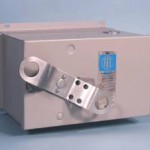
BOS14321 ITE Bus Plugs

BOS14321 ITE Bus Plugs

A conversation on electrical bus duct and bus plugs is influenced and biased by the experience and expertise of the individuals.  One may be perceived as an expert in their field, based on their knowledge as an academic, a design engineer, electrical consultant, or based on their experience as an electrician installing the equipment.  And, of course, these experts may disagree with each other.  As an example, what a design engineer calls busway, an electrician will call bus duct.  In MIDWEST’s world, it is bus duct.  We think busway is some sort of road, a highway for buses. 


MIDWEST frequently is asked by our customers for our bus duct and bus plug recommendations based on our practical and technical expertise.  And customers usually want ‘a short answer.’  This is where we are most comfortable. 


The following is a ‘comfortable discussion’ about the use of bus duct and bus plugs.  This is not a training manual or how-to instruction.  The purpose is to give you some of the thoughts and decisions involved in the use of bus duct, ie busway, and bus plugs.


There is service bus, feeder bus, and plug in bus duct.  Service bus duct typically takes power from the main outdoor transformer to the main indoor switchboard.  Feeder bus typically takes power from the main switchboard to another area of the facility. Plug-in bus duct distributes power in an area by allowing you to tap into the bus duct, using bus plugs that feed individual machines, motors, panels, disconnects, etc.  In this discussion, we are mainly talking about plug-in bus duct and bus plugs.


When deciding whether or not to use a plug in bus duct to distribute power in a facility, we suggest a few other considerations, besides, of course, the cost difference between bus duct with bus plugs and pipe-and-wire feeders.


Do you want a centralized distribution system or a de-centralize system?  An example of a centralized system would be a 1200 amp panel board with 12 molded case circuit breakers sized between 100 amps and 600 amps.  Each circuit breaker powers a feeder to an individual machine, disconnect, motor, or subpanel.  So there are 12 conduits coming out of the 1200 switchboard and going to 12 separate loads.  A decentralized distribution system would be a 1200 amp bus duct going from the main 1200 amp switchboard, right through the middle of a production area, hanging from the trusses, and having 12 bus plugs attached to it.  Each bus plug is used to feed 12 separate loads, such as a 225 amp panel, a 25 hp motor.  4 molding machines, a step down transformer, and four other production machines spread around the production area.  Instead of 12 feeders from the main switchboard, there would be one bus duct and 12 short drops, ie feeders, from overhead bus plugs, attached to the bus duct.


Here are engineering concerns to consider when deciding whether to use bus duct and bus plugs or separate pipe and wire feeders from a main switchboard.


Consider FMEA.  Failure Mode and Effects Analysis.  In other words, what are the most common, ie probable, equipment failures that would interrupt electrical power?  And what would be the consequence of each failure mode?


In your facility, are there special safety concerns if you use feeders or if you use bus duct and bus plugs?  Electrical shock or fault hazards?  Overhead crane or fork truck hazards? Vibration, moisture, oil mist, foundry dust, low clearance, extreme temperature differences?  


Do you move production machines now and then, rearrange the layout, or add machines?  If so, the bus duct with bus plugs works very well.  It is very easy to change the electrical distribution.


Is the production equipment fixed in place, for example a process machine, like a paper machine in a paper mill?  If so, then separate pipe and wire feeders from a single switchboard would be best.


Do you need to turn the ‘source’ power off to a machine, panel, or motor in order to do regular maintenance or perform other periodic tasks?  If so, separate feeders would be best.  Turning power off from a bus plug should not be considered an everyday function.  In addition, it is hard to lockout and tag out a bus plug.


Is there a lot of vibration, moisture, airborne dust or machine oils etc?  Bus plugs actually have “disconnect fingers” that pinch on to the main busbar inside the overhead bus duct.  The tension on the disconnect fingers, which maintains pinch contact with the busbar, is caused by springs on the disconnect fingers.  These connections, disconnect fingers, are vulnerable under harsh conditions.  In FMEA, the disconnect fingers on bus plugs are the most vulnerable component of the system.  And, if they fail, they may destroy the bus in the bus duct, shutting down the power to everything connected to the bus duct.  In addition, the connections between sections of bus duct can be vulnerable to vibration and temperature extremes.  These are the two most frequent deficiencies MIDWEST finds when Infrared Scanning bus duct and bus plugs.  But under normal operating conditions, we see few problems.


Can the bus duct be installed high enough not to be a hazard to anyone below?  No shock hazard or arcing fault hazard to someone below?  The bus duct must be properly grounded such that, under a fault condition, the metal enclosure isn’t the only fault current carrying path. We have seen faulted bus duct where every bolted connection between sections of the enclosure were melted from the arcing fault current.


In all cases, whether feeders or bus duct, proper grounding is extremely important to the safety of personnel.  There is “indirect contact” shock hazard if you touch something metal, conductive, when one of the phases has faulted to the metal enclosure.  There is “direct contact” shock hazard if you touch an energized conductor.  And remember, if current just over 0.03 amps (30 milliamps) passes through your body, especially through your chest, say between your hands, it is a serious hazard if it isn’t interrupted quickly.  Current passing through your body can be lethal at very low levels.


MIDWEST believes bus plugs can not safely be removed or install while the bus duct is energized.  Our recommended procedure is to de-energize the main bus, lock out and tag out, remove or relocate the bus plug, and then safely re-energize the system.


In general, bus duct is very useful in facilities where the loads change and are relocated a lot.  If the loads are fixed and seldom change, we recommend typical pipe and wire feeders.  In either case, the equipment must be installed such that there is no shock, burn, blast, or operating procedure danger to personnel.
Strange Fusing Inside Bus Plugs

June 26th, 2009 Comments off

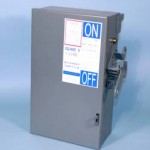
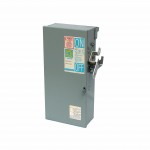
We are a maintenance and engineering service company and sometimes we find some rather strange things when we peek on the inside of a bus plug during an outage or Infared scan.  There are the times a three phase, 100 amp bus plug is fitted with two, 80 amp fuses and one 90 or 95 amp fuse.


This begs the question did the other 80 amp fuse blow and all that was lying around was a 95 amp fuse or was the bus plug moved to that location recently from somewhere else and really there should have been  three, 60 amp fuses in it?   Bus plugs come in many voltage and ampere ratings the common ones are 30 amp, 60 amp, 100 amp, 200 amp, 400 amp, 600 amp and even the monster 800 amp bus plugs.  These amp ratings sizes relate to the amp rating of the live parts.  Fuses come in all physical sizes, voltage ratings and ampere ratings.  Just because a fuse will fit in a fuse holder does not necessarily mean it is correct to use.  It is important to ensure that the voltage rating of the fuse meets or exceeds the voltage rating of the bus plug.  A 600 Volt or 480 Volt fuse in a 480 Volt bus plug is OK.  A set of 240 Volt fuses in a 480 Volt bus plug is not OK.  The next consideration is the amperage of the bus plug.  The live parts, the fuseholder and switch, are sized for the amp rating of the plug.  You can always put in smaller fuses, ideally three of the same size, but don’t exceed the rating of the bus plug and install higher amperage ones.  The fuses may just sit there and the poor fuseholder or switch can become the fused element instead.   Reusing your available bus plugs is acceptable if you pay attention to the voltage and current ratings. 


Maintenance of Your Bus Duct Distribution System

June 16th, 2009 4 comments
Square D Bus Plug

Square D Bus Plug

It is always a good idea to de-energize bus duct before you install or remove a bus plug.  If the plug is heavy it can be difficult to engage or disengage across all three phases at the same time.  The result is you could partially engage one or more of the phases and twist or bend the connection point.  This could result in subsequent hot spots which could lead to failure. 

You also have to consider that this failure would occur on the line side of the bus plug where the current and hazards are much greater rather than the load side, where the amperage would be much lower.  Want easy proof?  Consider 200 amp bus duct with ten, 30 amp bus plugs (each fused at 20 amps).  The problem on the line side of any one of the ten, 30 amp bus plugs is really a problem on a 200 amp piece of equipment.  The same goes for removing a plug with the bus hot.  The plug may be dirty or greasy and harder to control as you try to close it in or withdraw it from energized bus.  Better to move the plug with the bus turned off.

Reconditioned Bus Plugs

June 2nd, 2009 Comments off

Bus plugs that are reclaimed from actual industrial sites usually have many years of accumulated dirt and grime.  We frequently find them painted over to match a ceiling or wall or to indicate that this plug was from the (fill in your color) circuit.  When we find a really clean one from a spotless facility or one that looks like it saw little active service we still take them apart and recondition them on the inside.  Our reconditioned units carry a one year warranty so we have to know we have completely gone through them.  We would hate to take a chance on a shiny one without any scratches on the outside and sell it as-is.  The fine exterior could hide the fact that the fuse holders or other live parts, inside, sustained overheating or mechanical damage.  Then we are forced to take the damaged unit back under warranty.  The only time a piece of inventory leaves our shop in the ‘raw’ condition is if it is being purchased or traded to another company where we know the unit will be reconditioned by them before they sell it.

Existing Facility With Older Bus Plugs – Change out to newer plugs?

May 21st, 2009 Comments off

We recently moved to an existing facility wired with older Bus Duct and are having trouble finding Bus Plugs, new or used in the sizes we need to feed our equipment.  Should we change out the duct to a new brand where the plugs are easier to find?


No, there may be a more cost effective solution.

Assuming you moved to a building where the volts match and the building can supply all of the amperes your machines need.


We have seen where new occupants have decided their best route is to rip out the bus duct and use pipe and wire to connect their machines.  This works out well when there are fewer machines to serve or when even a few are very large.  These machines might otherwise require a bus plug that is rated at or near the capacity of the entire duct.  Other times the location of a machine in relation to the bus plug is less direct than extending from a spare position in the buildings main distribution switchboard or panel board.


After you have considered how long you will use this facility you could look at relocating the existing duct to better suit your needs or you could uses tap boxes or a large bus plug, some pipe and wire and connect to additional lengths of ‘easy to find’ duct and Bus Plugs.  However, pipe and wire direct from the Main Distribution to you machine sometimes can be your best option.

Bus Plugs, New vs. Used

May 12th, 2009 Comments off

By Walter Powell, Professional Engineer, MIDWEST


Here we go again.  The question asked was “Why would I ever buy a used bus plug?”  It isn’t the question that caused a loud groan, it’s the distain with which the question was asked, by someone who had no idea what a new or used bus plug was.  In their defense, they were just ‘processing’ an order to “Get one of these!”  Actually, these days it is unusual to deal directly with an official purchasing agent or buyer. Usually we deal with electricians, engineers who actually work for a living (Sorry for the bias), and frequently a real live official maintenance supervisor who calls at 5:15 PM to order that bus plug that he has to have the next day.  He’s calling after 5 because that is the first time all day that he has had a chance to take a breath without being interrupted.  These are the people that really keep the wheels moving in a manufacturing plant.


“Why buy used instead of new?” The short answer is:  You wouldn’t buy a used bus plug unless you had to.  Why in the world would you buy used if you don’t need to?  Obviously there are exceptions, such as classic cars, books, wine, art… you get the idea.  But in the world of industry, decisions affecting the day-to-day operation just aren’t that simple.  Decisions have to be practical and frequently are based on the needs right now.  Not tomorrow or next week.  Get it done and move on.   So here is the litany to answer the question.


The “Positives” of buying a New Bus Plug:     Made with all new material; Full reliable life expectancy; Should be trouble free; Manufacturer’s new equipment warranty; No worn or deteriorated parts; Should operate per new product specifications; May have design improvements making it more reliable or safer; and It sure looks good.      


The “Negatives of buying a New Bus Plug:     Delivery time; May require a conversion kit to fit in place of the old or obsolete product; and Cost.


The “Positives” of buying a Used Bus Plug:     Immediate availability; Replacement for something obsolete, just no longer available new; Minimum down time with an exact replacement; and Cost.


The “Negatives” of buying a Used Bus Plug:     Deteriorated parts; Poor quality control of supplier; No mfg’s original warranty; shorter reliable life expectancy; and poor appearance.


So what does one recommend?  Try this!  If you can, buy new.  But if you can only get a used bus plug quick enough to take care of your problem? If you just can’t wait for a new bus plug, then MIDWEST, suggests you get a used bus plug from a company that properly reconditions the bus plugs and also performs standard quality control tests and performs special “performance tests” at full current and voltage. This is extremely important.  A used bus plug just purchased “as is” from a reseller or equipment list may be “as is, buyer beware.”  Ask exactly what the supplier does to the used bus plugs they sell.  


You might ask what makes us such an “Expert.”  Its experience, training, education, experience, and finally more experience.  You wouldn’t ask a police officer a tax question.  You would go to an accountant, someone you perceive to be an expert in his or her field.  And you wouldn’t ask an account to protect you from a thug. You would ask the expert at protecting people from thugs.  And you would base you perception of “who is an expert” on their training and experience, and their willingness to help.  So, when making a decision about new and used electrical bus plugs, you would want to go to an “expert.”  Go to the manufacturer for new bus plugs and go to the experts, such as MIDWEST, www.swgr.com, for reconditioned bus plugs.  One of the nice things about real experts, especially in our electrical world, they are always happy to help by just answering your questions.

Bus Plug Hit By Fork Truck

May 8th, 2009 Comments off

We received a question from Fred…Hi from Texas.  I have a problem and I’m looking for a blogger to help me, if possible.  We hit a 200 amp bus plug with a pallet being lifted by our fork truck.  Nothing happened, but it is crooked and I’m worried, because my experience is this stuff will go bad on Memorial Day, the 4th of July.  Just the way things seem to work out.  To check the damage to the bus plug we have to turn a line off and that can only be done on a weekend and that costs overtime, which is invisible these days.  Anybody out there with real experience that can tell me whether or not I should check this out.  I don’t know how bus plugs are made or how they attach the main line.  If I do shut the line down, what should I look for?  What would typically go wrong if you hit one of these things and it moves about 2 inches?  The pipe coming out the top looks okay, but I’m really concerned by how this thing connects to the hanging metal enclosure that runs the length of the room.  Anybody been through this?  Any ammo to take to my supervisor to justify the work?  And what should I look for.  Any help would be appreciated.  Thanks,  Fred Jenson


Answer:  Fred, here are the easy answers.  First, you need to check this out soon.  The main bus duct that this bus plug connects to, could fail with a catastrophic fault that could destroy the main bus duct and the bus plug and possibly get someone hurt.  Recommend to check it out at your first opportunity.  Do you have a spare?  Many electrical problems are actually just mechanical.  So shut her down, Lock it out, Tag it out, Check voltage and then have your best electrician and mechanic investigate the damage.  Take a good look at the connections between the old bus plug and the bus duct.  Be safe Walt

Danger Danger – Bus Plugs

April 29th, 2009 Comments off

Or sorry not me, I have something planned later tonight

By Dan Marchewka


Huh?


Dangerous Waters,  Aguas Peligrosas


A famous actor once said, (I forgot his name) “Do you feel lucky today, Well do you, punk?”


Those allusions may be a little extreme, but are they really?


Older electricians (there are still some around) remember the days of open Frankenstein switches (there are still some in service today), those fabled switches of yore, who take their namesake from Frankenstein movies as electrodes strode across open air circuits and voltage danced freely around the laboratory like gypsies at a wine tasting festival. The Frankenstein switch, open knife blade switches typically mounted on slate boards, were thrown in live by hand. In those days PPE (Personal Protective Equipment) were not yet a distinct part of worker safety. In fact, back then, worker safety was not yet considered part of worker safety.


Where is all this leading? Hang on. Meet the door operated bus plug, a second cousin to the floor operated bus plug. While these two little devices are of the same family and serve the same purpose, the former is the troubled nephew of the clan and is not (skeptics are you listening) for the faint of heart. Older door operated bus plugs such as the Square D Safeflex, for example, (there are others from other manufactures)  were designed such that the door, as in metal door, as in bare metal door handle, were part of the bus plug’s operating mechanism. Now here’s where it gets good. The person opening the bus plug door, say to change out a fuse, balancing himself, (not herself, there weren’t as many women electricians around back then)  up high on the Scizzors lift, believing the load is off, (he knows the end machine has been turned off) was most often not fully appreciative of the surprise he was about to engender. Opening the door, unless he was made of stone, would reveal a startling revelation: A gee-wiz moment, (people don’t say gee-wiz anymore do they?) Ok a holy *hit moment. As anyone who’s done it can testify, opening the door of a door operated bus plug is like prom night but without the tuxedo –you never know what awaits you. The movable contacts of the bus plug switch are part of the bus plug door. While load may be off the circuit the voltage is not. Opening the door breaks the circuit.  So let the word go out to friend and foe alike, the torch has been passed to a new generation of Americans. When conducting this high wire circuit interrupting act be careful to identify the type of bus plug and always wear your appropriate protective equipment.


For you older electricians I know what you are thinking, it was the fun part of the job. Fair enough.


Be safe….and remember, bus plugs are “Dangerfields”…they deserve your respect.


Categories: Uncategorized Tags:

Plugging Away

April 16th, 2009 Comments off
Bus Plug

Bus Plugs For Sale

Definition: As the name suggests a Bus Plug is a type of switch which plugs into a bus as part of a power distribution system.

The purpose of a Bus Plug is to provide a localized power feed to electrical devices.

Bus plugs always contain their own source of circuit protection. Circuit protection can be either in the form of a fuse or a circuit breaker.

Bus plug voltage ratings (USA) range from 120/240, 208/120, 240, 277/480, 480, 600

Bus Plug Ampere ratings (USA) range from 15 to 1600 amps. The most common bus plug ampere ratings fall within the range of 30-200 amps with 30 and 60 amps being the most common size bus plugs in use overall.

Why are bus plugs such a hot item in the used electrical equipment market? The answer can be found in a combination of factors: Bus plugs often operate in environments which are not the most conducive to the long life of electrical devices. The atmosphere in manufacturing facilities can contain quantities and qualities of air contaminants and heat temperatures in great abundance, making for the short life of bus plugs. Oil and various air contaminants accumulates on insulating members of the bus plug causing a decrease in insulation resistance. Low insulation resistance increases the risk of flash over between either phase to phase or phase to ground. High ambient temperatures can lead to “cooking a fuse” where fuse thermal thresholds can be compromised degrading fuse performance.

Bus plug internal contacts contain silver tabs brazed to copper contact arms. Arcing from normal open and closing operations under load causes the silver contact surface to pit leading to increased degrees of contact deterioration.

Bus plug external contact fingers, which make contact to the bus itself, are often the source of bus plug failure. Finger contact surfaces are vulnerable to environmental contaminants. Heat as a result of a resistance thresholds being breached can lead to failure. It is not uncommon for these fingers to completely melt due to high contact temperatures.

Devices called Tap Boxes are part of the bus way power distribution system. Tap boxes are enclosure devices which connect power cable feeds to the Bus Way system. Tap Boxes come in two types: “Plug In Tap Box” and “End Tap Box” types. The former is what it sounds like. It connects to the bus way through a plug in type of connection. End Tap Box’s provide power to the bus way by connecting at either end of a particular line of bus way. Both types of devices are items in demand in the used electrical power distribution market.

One of the things we do here at Midwest is recondition and sell bus plugs. The reconditioning process involves completely disassembling the bus plug. The various component parts are then inspected, cleaned, polished and painted. After reassembly, the reconditioned bus plug is put through a series of tests per Midwest’s Quality Control Program, (QCP). The bus plug contacts are tested for contact resistance. Contact resistance is measured in micro or milli ohms. Because higher ampere rated bus plugs have larger contact surface areas, lower contact resistance values can be expected on higher ampere rated bus plugs. The bus plug is then tested for insulation resistance measuring the integrity of insulating members. Test leads are connected between various conductor and frame locations. Test results for insulation resistance are measured in megohms.

Finally the bus plug is load tested. 80% of rated load current is put through the device as a final check before it goes out the door.

By Jason Honick

Sales representative, Midwest Testing, Switchgear Division