Strange Bus Plug Locations

April 5th, 2010 Comments off

Two of the strangest locations we have seen with bus duct and bus plugs were in former manufacturing facilities that had been converted to very nice office spaces.  One facility converted a building to their executive offices.  Very fancy with lots of wood, glass and dramatic lighting. Had plush carpeting everywhere and actually very nice wall paintings and art. You would never guess the six feet above the ceiling was just jam packed with extremely old building infrastructure.  Old and new heating ducts, sprinkler system, communication wires, conduits, a mass of abandoned pipes and cables, abandoned light fixtures, old dirty wood structure supporting an old wood roof, and a complete bus duct distribution system chuck full of old and obsolete bus plugs and just a few new bus plugs.  There were two totally different worlds separated by fancy ceiling tile.  It was like standing in 2010 and looking up into 1940.


Another facility was set up the same way, but this facility was only about 25 years old.  The most dramatic feature of this facility was that the space above the office ceiling was about 20 feet to the roof.  When you looked above the ceiling tile, you found a massive open area.  The bus duct in this area was about midway between the roof and the office ceiling tile. From one vantage point, you could just about see the entire bus duct system and all the bus plugs.  In addition there were no really old bus plugs. An eerie feature was all the threaded rod hanging from the roof supports down to the ceiling below. It was a massive lost space hidden above a normal office environment. 


These were two strange places for bus duct and bus plugs, which are usually found in exposed manufacturing or commercial buildings.
Infrared Scanning Enclosed Bus Duct and Bus Plugs

March 29th, 2010 4 comments

We were asked by a maintenance supervisor if it made sense to infrared scan the bus duct in his manufacturing plant. He suggested it was a waste of time because the conductors in his bus duct were totally enclosed.  MIDWEST hears this question a lot. He had a mixture of old bus duct and bus plugs and new. He was especially concerned with the new bus duct and bus plugs because he was adding more and more load and they had a lot of trouble adding some of the new bus plugs because of their location above production machines. 


As we have said many times, infrared scanning is the best service possible for finding current related problems in bus duct and attached bus plugs.  The Infrared Scanner is so sensitive, it can find warm bus splices and overheating bus plug connections long before they turn into a full blown critical hot connection or arcing failure.  This is true for obsolete bus plugs and duct, even when it has been operating for decades without any problem. The real challenge with infrared scanning is when the bus is over production equipment and in very had to see locations.  Still, for an experienced Thermographer, these challenges are easily overcome. 


So, whether vented or enclosed, feeder or plug in bus duct, Infrared Scanning is the least expensive and most useful maintenance service available. 

Bus Plugs and the Wright Brothers

March 15th, 2010 Comments off

We were looking for bus plugs and met Orville and Wilber Wright.  Well, sort of.  MIDWEST was in Dayton, Ohio, looking at old used bus plugs in a former manufacturing facility.  A big place.  A thousand bus plugs.  They had used Square D, ITE, and ITE Bull Dog bus plugs. They had used bus duct and bus plugs throughout the entire facility. We found bus plugs in all the manufacturing areas and above the ceilings in the offices, even the executive office. The facility had evolved and expanded over ten decades. There was a century of history in this manufacturing plant.  We found electrical infrastructure every where, behind walls that had been added or moved, above ceilings that had been remodeled many times, hidden in closets, and secreted away in basements long forgotten.  We were especially surprised to find a solemn plaque in front of a very old building, a hundred years old that had been beautifully remodeled inside as executive offices.  We were looking at old electrical bus plugs and transformers in an area of the building, walked out the front door to find the plaque that read, in part, “…these buildings were constructed in 1910 and 1911 to house the factory of Wilbur and Orville Wright’s first airplane company, The Wright Company.”  Now that’s a paradigm shift.  One moment it’s just an old building.  A second later it’s the Beginning of Manned Flight.  Today we have “Human Spaceflight.”  But we also still have bus plugs, some new and some old and some no longer used.

Gold Plated Bus Plugs

March 8th, 2010 Comments off

Once in a while, we get very confusing calls. The confusion may be no one’s fault.  Just two people talking really fast and not realizing they are discussion totally different things. These calls don’t last long, but they can be pretty funny while they do. For example, in one case the call wasn’t for a used bus plug but for using gold plated bus plugs. The conversation was extremely confusing.  The customer was referring to horizontal and vertical mounted bus plugs, surface mounted bus plugs, and cable plug type.  They discussed temperature ranges and then morphed into new universal bus plugs, which we never heard of.  And we’ve heard of them all.  The confusion went on as the customer talked about paralleling and dual stacking.  We thought we were on the right track when they spoke of contact resistance and snap in place connection.  The whole conversation took less the 90 seconds and was turning into total nonsense. They didn’t have a manufacturer or catalog number, just a verbal description. When they brought up gold plating, we knew their bus plugs were not the same as ours.  Because we both were using general words, the specifics that would have tipped us off never came up.  A fast conversation between two people talking about totally different things. They were talking about new universal bus plugs and sockets for computer type connections, 30 volt, 1 amp devices.  We were thinking of 480 volt, 200, 400, or even 600 amp devices for large power distribution.  We call this brain lock. You had to be there.

Does MIDWEST sell old, used, or obsolete bus plugs, circuit breakers or transformers “As Is?”

February 1st, 2010 2 comments

Three answers, NO and NO and NO.  This is a big deal for us. MIDWEST does not sell old, used, or obsolete bus plugs, circuit breakerstransformers or other electrical equipment to an end user, ie the consumer, unless it has been properly serviced, reconditioned, tested, and passed Quality Controls.  We strongly recommend no one buys old electrical equipment “as is.”  That could be very dangerous. There are many “listing” companies and auction type sites that sell “as is.”  For example, eBay does not warranty the used and old electrical equipment sold through their service.  They provide a great service, but they do not provide a warranty on the specific used electrical equipment sold on eBay.  The same may be true with services that just list equipment.  The only people MIDWEST will sell electrical equipment “as it,” are other qualified electrical dealers that have proper Quality Controls.  Old, used, or obsolete circuit breakers, bus plugs, transformers, and switchgear have too many dangerous failure modes to be sold without proper testing.  MIDWEST does not just process orders.  Anybody can do that.  And many do.  We actually have a name for that.  We call it TC, Trained Chimpanzee, work.  You could train a chimpanzee to put old circuit breakers into a box. 


We add value.  Our staff of engineers and technicians service, repair, recondition, and test electrical equipment for a living.  We’ve done it for over 30 years.  That is what we do day after day. And it is what we think others should do if they are going to sell something.  “As Is” is just scary.  When electrical equipment gets unhappy, it can fail with a boom and a flash.  And that can hurt.

Bus Plugs Hot Stick

January 29th, 2010 Comments off

MIDWEST received this request.  “I’m a new totally green electrical maintenance apprentice and I think the old guys are hosing me…again.  We have an old long wooden stick in the corner of the shop. Maybe 10 foot long, all beat up.  They’re telling me its safety equipment for bus plugs. I didn’t even know what a bus or buss plug was until I looked it up. But what’s the stick for.  Thanks, Jimmy”


Jimmy, the stick is used on bus plugs.  And it could be considered safety equipment.  The stick should have a hook on the end of it.  It is used to reach the on off handle of bus plugs located up high.  Look up pictures of old Bulldog, used Square D, Westinghouse, Cutler Hammer, GE General Electric, ITE, and even Federal Pacific bus plugs.  Manufacturing plants used bus plugs in many of their facilities. By the way, the correct spelling is bus plug, not buss plug. You should be able to find a picture showing a metal on off handle with a hole in the end. Using the stick, an electrician could safely open or close a bus plug by inserting the hook, on the end of the stick, into the hole in the end of the on off handle. Usually bus plugs are located overhead and can not be reached from the floor. By pushing or pulling the stick, while standing on the floor, you could reach and turn the bus plug on or off. A bus plug functions as a switch.  They usually have a breaker or set of fuses inside. The wooden stick also gives the electrician some protection from electrical shock. Although, old sticks often have not been tested for shock protection.  Warning, operating bus plugs can be dangerous.  Leave this work to experienced electricians. 

Bus Plug Surprise – Enclosure sliced open 16 inches

October 20th, 2009 Comments off

Our Switchgear Shop claims nothing surprises them anymore.  Well they got a surprise last week.  We received a 400 amp, old bus plug for reconditioning.  It looked in great condition, almost like a new bus plug. The receiving inspection read something like, Good, Good, Good, on and on, and at the end, Junk.  It seems the reason the customer sent in this bus plug was because it looked like the Titanic.  It had an 18 inch slice along one side of the enclosure.  Very clean, very deep and perfectly straight.  We have no clue how they did this.  But we suspect a fork truck was involved. MIDWEST gets a few old bus plugs that have lost a battle with a fork truck. So our guys took a picture and added this one to our “Wall of Horror.”

Swapping Bus Plugs Between Manufacturers

October 12th, 2009 Comments off

Bus Plugs usually can not be swapped out from manufacturer to manufacturer much like your old beta movies will not play in a VHS videotape player or recorder. To put in the language of today the new Blu Ray movies will not play in a DVD player.  Enough about film and on to bus plugs.  Companies are often bought and sold so there are instances where the manufacturer of bus plugs purchases a company that makes its own bus plugs.  The buyer will put their name on the bought out company’s product and so you are buying the same old bus plugs as before only they come in a box with a different logo.  Then there are few swaps between bus ducts from one given manufacturer.


The way they fasten, the amp rating of the bus duct, the actual live conductor material ( aluminum or copper), the spacing of conductors, is the duct three wire of four wire can result in the lack of interchangeability even within a given product line.  The manufacturers of the duct and the bus plugs would not invite competition from other manufacturers and would try to keep market share by making duct that could only accept their brand of bus plugs.  The one time you can mix and match duct of different manufacturer is using duct with tap boxes and running ducts from different manufacturers in series.  You have to make sure that the upstream duct has ample capacity to pass current to the downstream duct.  Then each length or span of duct uses the appropriate bus plugs from that manufacturer.

Why Do Bus Plugs Have a Short Life Expectancy?

September 16th, 2009 Comments off

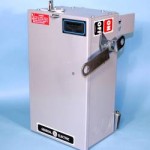
General Electric Bus Plug

General Electric Bus Plug

I was asked by a customer why bus plugs have such a short life expectancy.  He said they had to replace bus plugs every year.  They perform an annual Infrared Scan of their electrical system and every year they find bad bus plugs.  He said they never have trouble with their circuit breakers.  His words, “How come?”


One could do a fancy analysis of the failure modes of bus plugs and correlate the most probable failure modes to their load and environment.  Come up with a probability of failure.  Assign that probability to the number of bus plugs they have and decide if they have an unusually high failure rate.  We have performed Failure Mode and Effects Analyses (FMEA) on electrical systems, a long and egregious task.  What we found was that we ended up with some of the basic information we would have by just having an experienced Power Field Service Engineer or Technician walk through their facility and write down their evaluations, expectations and recommendations.  We also found that we generated a lot of information that had no value or was not accurate based on real life experience. The “walk through” takes an hour or two for a fairly large facility, as compared to 80 hours of engineering time for a failure mode and effects analysis on a small facility.  The important question may be “Which procedure provides the best results?”  My opinion is the value of the walk through will far surpass the value of FMEA.  The exception may be a mission critical facility, in which case one may wish to do both, a professional walk through and a FMEA.


Now back to the point and the simple answer.  Bus plugs fail frequently because of (1) vibration, (2) heavy loading (3) dirt and (4) no maintenance.  That’s it. Nothing sophisticated. They never get cleaned, much less maintained.  Seldom get exercised.  Move a bit or a lot or vibrate, as they hang from bus duct connected to the ceiling and are themselves connected, typically by conduit, to equipment on the floor.  And frequently load just keeps getting added to an old bus plug.  The biggest problem is the connection of the disconnect fingers to the bus duct, especially where vibration and load (ie heat) are a factor.


Bus plugs in a clean, quiet, steady load facility, like a commercial building, seldom have problems. Our Thermographers have said Infrared Scanning bus duct with many bus plugs, in a dirty, loud, congested manufacturing facility, sometimes is like looking at a string of lights through the Infrared Scanner.

Feeder Busway or Plug-In Busway

August 14th, 2009 Comments off

Sometimes details can really cause big mistakes.  A manufacturing plant electrical supervisor wanted to replace 1200 amp feeder bus with 1600 amp.  He had the voltage, amperage, distance, corners, end tap box, and other little details all taken care of and all he wanted was the cost and delivery time for new feeder bus.  He was very busy and wasn’t interested in playing twenty questions. His preparation was exactly what MIDWEST likes to see.  He had emailed www.swgr.com his requirements. When MIDWEST’s Switchgear Division called, is was easy confirmation from there.  But when we asked for the catalog number of his existing Square D feeder bus, we knew right away that it wasn’t feeder bus duct or feeder busyway.  It was actually plug in bus duct, plug in busway.  It took a 12 second conversation to get it right and he was very glad we did.  The error here wasn’t just technical. It was also due to a common human factor.  He, like so many today, was just so busy, he didn’t have the uninterrupted time to think of all the details.  We know, when it comes to bus duct and bus plugs, one has to double check everything.  Kind of like the carpenter’s advise, measure twice, cut once.  Double check everything.