Infrared Scanning Bus Plugs when You Can Not Open the Cover
December 10th, 2010 Comments off
 
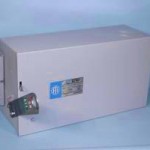
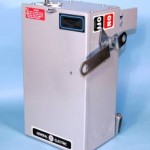
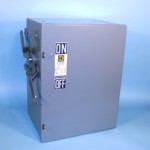
General Electric AC323R Bus Plug Available from MIDWEST

General Electric AC323R Bus Plug Available from MIDWEST

Sometimes you just can not safely perform an electrical maintenance service per the written specification. For example, in today’s world of real concern for arc flash hazards, safely opening the cover of an energized bus plug, to perform an Infrared Scan, may not be possible. It may not be safely justified because of the high risk. So one argument is whether or not one can actually tell if a bus plug is hot because of overloading or because of a poor connection that is overheating. Is it a load problem or a connection problem?  Is there a problem at all?

Because our Thermographers are all required to work on bus plugs in our switchgear shop, they are very familiar with the interior of most bus plugs. They may have totally reconditioned a specific Square D or Bull Dog 100 amp bus plug. Or they may have repaired many ITE, GE General Electric or Cutler Hammer 60 amp bus plugs. Therefore they know where the interior switch or breaker is located. They may know exactly where the conductors connect to the bus plug feeder terminals.  This knowledge and experience is a big advantage, but the Infrared task is still difficult. The indications of overheating, whether load or connection related, may be very subtle because the interior heat must be re-emitted by the bus plug enclosure, greatly dampening the heat pattern.

Again, knowledge of the bus plug allows the Thermographer to turn art into science, at least to some degree. The thermographer may compare a suspect old bus plug to an identical bus plug nearby. Comparing the feeder conduit helps identify the possible ampacity of an old bus plug.  Comparing the heat pattern of the different plane surfaces of a suspect old or new Cutler Hammer or Square D bus plug may give additional information to help determine the existence and cause of heating.


Our thermographers have special safe ammeters to measure the load on a bus plug feeder, where practical and safe. Knowing the actual load, say on a feeder from an old Federal Pacific bus plug, is extremely helpful in determining if the suspected heating is load related or connection related. It is extremely difficult, if even possible, to determine the presence of overheating, much less the cause, by just looking at one plane of the energized bus plug with even a very sensitive Infrared Scanner.


It is the combination of the Thermographer’s experience and equipment knowledge that makes scanning energized bus plugs still very useful.  This same experience and knowledge aid in determining the possible cause of a suspected problem manifested by heat.
Bus Plug Connection or Load Problem Using Infrared

November 24th, 2010 Comments off

MIDWEST frequently is asked how we can tell if an overheating problem in an electrical bus plug, found using Infrared Thermography, is a connection problem or a load problem. Especially when the bus plug cover can not safely be opened.  Overheating from a load problem usually displays a paintbrush effect on the bus plug enclosure. Large and continuous areas may display a higher temperature pattern. Looking at the electrical bus plug from different angles may still display a wide pattern of overheating and no indication of a spot source. This is difficult, even for an experienced Thermographer. MIDWEST’s Thermographers have the advantage of extensive training and experience reconditioning, maintaining, repairing and testing bus plugs in our switchgear shop. With this experience, they know the location of the internal components of the various bus plugs, whether Square D, Cutler Hammer, GE General Electric, Westinghouse, ITE Bulldog, or Federal Pacific. The combination of this knowledge and experience and their understanding of Infrared Thermography, gives them the tools they need to best differentiate between overheating due to load and overheating due to a poor connection or contact.


A connection problem may display a more localized heat pattern that sometimes can be confirmed by Infrared Scanning the bus plug from different angles.  The heat pattern at each angle may confirm the heat is coming from the same somewhat specific location.  With the cover closed, it is very difficult to identify the exact location. It might be the fuse clip or the lug for a feeder cable or the switch or breaker contact.


Finally, when possible, measuring the load on the bus plug feeder, when safe, and comparing it to the bus plug rating can help validate whether the problem is load or connection. Only when safe, the bus plug cover may be opened and an accurate scan of the inside of the bus plug performed.  It is not always possible to determine the exact cause of overheating in a bus plug, but these are some of the tools that increase our success.

Broken Handle Bus Plug

November 10th, 2010 Comments off
 
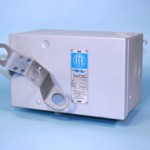
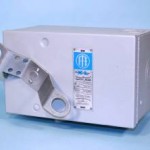
XLVB322 ITE Bus Plug

XLVB322 ITE Bus Plug

Once in a while MIDWEST gets phone calls that are just scary.  For example, a maintenance electrician called to ask what he should do. He needed to turn power off to a production machine. It was fed directly from an old bus plug. But the bus plug handle was broken so he couldn’t switch the bus plug. He tried using a vice grip, but the whole bus plug was moving and it still would not turn off. Production said they could not turn off the whole line just for one lousy switch. He said the bus plug was obsolete and he just wanted to get it out of there. It was kind of hanging at an angle and the pipe for the feeder going out the top was pulled out. He thought he and another guy could use a lift and pull it off live. He thought that might be okay because they would make sure there was no load on it.  He said he had worked on broken bus plugs before.

This man was in a big jam between making a bad decision and doing what his boss wanted. He needed help. Our answer was simple and we told him we would send a letter if he needed. There was danger of serious injury or death if they tried to remove that live bus plug from a live bus duct. The bus duct would have to be turned off. The danger of shock hazard and arc blast hazard was too great under the circumstances. In addition, the situational danger was extreme because they would be working from a platform lift with no way to escaped from shock or arc blast. Plus they could be knocked right off the platform. And they were in a position that no one could immediately help them.


We were sure his boss did not fully understand the level of danger and just saw the problem as simply mechanical. We have been through this before. Once everyone understands how dangerous it is, they work out a safe solution, like turn the power off on third shift.


The big danger is beginning to think you can do something that you know is too dangerous. Sometimes, the longer you think about it, the more you convince yourself that maybe this time it would be okay. You’ll just be careful. When you start that line of thought, you just have to stop yourself.


If you know there is a danger of serious injury or death, you are not allowed to do it.

Obsolete Bus Plug with Deadly Hot Feeder

November 1st, 2010 Comments off

Here’s another odd but very dangerous circumstance that MIDWEST ran into during the field data collection for an Arc Flash Hazard analysis.  The customer had an old Square D bus duct run in the oldest part of their plant. It was actually a complex made up of several buildings, the oldest being a wood structure going back seventy years.  They had mostly Square D and General Electric bus duct and bus plugs, and a small run of ITE.  The old part of the plant was used for storage.  All the manufacturing equipment had long ago been removed. There were very few Square D bus plugs still being used in the bus duct in this area. There were maybe a dozen bus plugs that were still installed but no longer in use. In most cases, the pipe and wire feeder had been removed. But we found one 100 amp bus plug, no longer used, had a conduit going into a small room full of junk. We had been told the bus plug was off and the fuses probably removed. They didn’t know where the conduit went. When we checked, and we always check, we found the bus plug closed and hot, the feeder energized. The electrician was pretty surprised. We traced the conduit to a back small storage area, dark, no lighting, where it terminated in a 6 by 6 junction box on the wall right next to the door. This circuit was “deadly hot” because the cover was missing and the conductors were sticking out of the box, wrapped with the frayed remains of old cloth type tape. This was a deadly accident just waiting to happen.  When MIDWEST recommended turning off the old bus plug; removing the fuses; and removing the conductors and conduit from the bus plug, they balked. Thought just turning it off was okay. But, since this was an abandoned circuit, not to be used again, we always recommend removing it. We consider this a safe work practice that eliminates the possibility of something “deadly hot” injuring or killing someone in the future.

Bus Plugs the Most Colorful Electrical Equipment

October 8th, 2010 1 comment

MIDWEST was asked what electrical equipment was the most colorful.  Certainly a strange question, But the answer may seem even stranger.  The most colorful equipment is electrical bus duct and bus plugs. We’ve seen a thousand manufacturing plants over the years and many, especially the older ones, have painted their old electrical bus duct and bus plugs specific colors to identify the specific electrical system or the specific load being fed. Here are a few examples.  One plant painted the 480 volt bus duct and bus plugs blue and painted all their old 240 volt system orange.  It would be hard to mix these systems up. Another plant, a huge facility with over a thousand old Square D and Westinghouse bus plugs, painted everything black. It was pretty impressive, until you tried to read some of the labels on the obsolete bus plugs. Some facilities will paint a particular bus run a specific color to identify it as belonging to a specific manufacturing process. They want to separate the process load from general building load.  Blue seems to be the choice of colors for equipment feeding specific processes or manufacturing cells.  Critical processes may use red.  Some may paint their GE General Electric bus plugs one color and the Cutler Hammer or Westinghouse bus plugs a different color. And then there are those facilities that had a color code many years ago, but have added other manufacturers’ equipment since then.  And now you find different old colored bus plugs on the same bus duct with plain grey new bus plugs.  We have seen some pretty strange stuff. There are some facilities that were former manufacturing plants that had their own electrical engineering staff and maintenance electricians working all three shifts. Everything was well maintained. Things were labeled. Equipment, including old and new bus duct and bus plugs, were maintained and repaired or replaced as needed. They even had up to date electrical drawings. Those were the days.  Now some of those same facilities are multiple occupancy buildings with light assembly, storage, office space and, too frequently, abandoned space. And the colorful electrical distribution systems all seem to have become one color. We’ll call it sad grey. 

Bus Plug Clearance Safety

September 24th, 2010 Comments off
 
Square D Bus Plugs Cat. No. PQ4620

Square D Bus Plugs Cat. No. PQ4620

We ran across blogging information about safe clearances for bus plugs. There was interest in the correct code requirements for various size bus plugs, 2000 amp bus plugs to 400 amp bus plugs to 60 amp bus plugs. Sometimes code requirements are the only hammer the electrician may have to force others to be safe. We’ve dealt with used, obsolete, and new bus plugs for decades and we have one big rule for experienced electrical personal who work around this stuff for a living. “If it seems unsafe, it is unsafe.”  As far as inexperienced or non electrical folks, stay away from electrical power bus plugs. They are not your friend.

 Would it make sense to tell an experienced electrician, who feels that a 200 amp Square D bus plug is unsafe to fool with, that he actually would be safe just because it meets code. Nonsense. We would trust the extra caution of experience, over code, any day, especially when the code is defined as a minimum safety standard.  Having said this, we would also caution against listening to the type of experience that says something is safe, even though it does not meet code, just because the experienced person has done it many time before and nothing ever happed.  Experience or not, just don’t work on or around anybody’s bus plugs hot. Whether Square D, Cutler Hammer, GE General Electric, or Siemens bus plugs, do not work on bus plugs energized.


Sometimes the criticism of the location of electrical bus duct and bus plugs is heaped on the electrical contractor that installed it. Having worked in electrical contracting in a past life and worked in manufacturing plants for decades, we often find the electrical bus duct and bus plugs are ignored when other equipment is installed near them.  Space is a premium, so newly installed pipe or duct or hangers can go only a foot or two from the bus duct or plug.  And after 20 years, there isn’t enough room left for an electrician to safely work around bus duct or plugs, regardless of code or experience.  So don’t! 

Having Bus Plugs from Many Manufacturers

September 15th, 2010 Comments off

MIDWEST was asked by a manufacturing plant that used Siemens bus plugs in their facility, why they had not only Siemens bus plugs, but also used ITE Siemens, Square D and Cutler Hammer bus plugs. And most of his main switchgear and circuit breakers were GE General Electric. His purchasing department wanted maintenance to pick one electrical equipment manufacturer and stick with them. Purchasing figured they could get better prices that way. 


ITE Bus Plugs Cat. No. RV424

ITE Bus Plugs Cat. No. RV424

First we explained that each type of electrical equipment they had, probably represented a time period or an expansion project. For example, that 100,000 square foot addition in 1968 may have been all Square D. The electrical contractor may have got his best pricing from Square D and therefore bought Square D bus plugs and bus duct. The contractor on a later project may have used Cutler Hammer. Later yet, Siemens. This was not unusual. Or this may have happened because of different delivery dates. Or a particular manufacturer of bus plugs may have fallen out of favor with contractors because of quality problems or high prices. 


All this could be avoided by specifying a specific manufacturer. But single sourcing one manufacturer of electrical switchgear may result in higher prices. The manufacturer would have a lock on the sales. The manufacturer’s sales rep would usually figure this out pretty quick. If you put an alternate in your specification, you basically have the same environment as open source bidding.  Sometimes a particular electrical bus duct and bus plug manufacturer has a lock on a customer’s business because of the purchasing department or maintenance department at that time. The head of maintenance for ten years just may be more familiar with or favor GE General Electric bus plugs. Or purchasing may be hooked on Eaton Cutler Hammer bus plugs. So it goes sometimes. But it can be very difficult to continually single source the electrical equipment you purchase for many years and decades. There are just too many variables and they change over time.  There is not a problem having equipment from different electrical equipment manufacturers, as long as replacement bus plugs or other equipment and parts are readily available. Delivery is sometimes a problem in today’s ‘just in time’ world. MIDWEST’s reconditioned electrical switchgear, including bus plugs, is one solution to the availability problem. 


There are situations where using only one manufacturer of electrical switchgear may be important and required. For example, Mission Critical facilities, remote access facilities that require many spare components, continuous process facilities, and, of course, facilities that are actually subsidiaries or are owned by a specific electrical equipment manufacturer.

Arc Welding Faulted Bus Plug and Bus Duct

September 10th, 2010 Comments off

MIDWEST had an emergency call from a manufacture because they blew up a large 800 amp bus plug and their production was down. They were the primary ‘just in time’ supplier of some parts to a larger manufacturer. They couldn’t afford a major loss of production because they would then become the secondary supplier or even worse.  We had a replacement reconditioned bus plug but they wanted someone to look at their bus duct system and the other old bus plugs because something just didn’t seem right when the 800 amp bus plug failed. 


When we inspected the bus duct, we had to do a double take on what we saw. The brackets supporting the splice connection at the ends of each section of bus duct were melted away in some areas. And some of the hangers and supports also had damage. It was as if someone had taken a welder or cutting torch and melted away parts of the bus duct support brackets and other supports and bolts along the length of the bus duct. This was a four wire system.  But you might think of it as a five wire.  A, B, and C phase, plus neutral, and ground.  It was apparent they had an unprotected fault from phase to ground, a ground fault. The ground, in this case, was the metal enclosure and supports for the bus duct. The bus duct was protected by an old 2000 amp fused bolted pressure switch. There was no ground fault protection on the old system. Before the 2000 amp fuse blew, a lot of welding and melting took place.  Fortunately only one replacement bus plug was needed and one section of bus duct had to be replaced. The arcing and melting damage to steel brackets and supports, although visually dramatic, was not enough to prevent them from getting back on as soon as the damaged section of bus duct and damaged bus plug were replaced. They intended to complete other structural repairs later, maybe. At the time, their only concern was to get production back up as soon as possible, even if it was only temporarily. We all know how stressful production schedules can be. The cause of the problem was failed supports on their old obsolete bus plug. It lasted a long time, but eventually it sagged enough for one phase to go to ground, the metal enclosure.  And after a few moments of 277 volt arc welding, they had a mess. 

Bus Plug Eureka Moment

August 25th, 2010 Comments off
 
XLVB321 ITE Bus Plug

XLVB321 ITE Bus Plug

Having spent forty years of an Electrical Engineering career in Industrial Research and Development, I feel extremely comfortable in an Electrical Engineering Power Laboratory.  There were few pieces of electrical test equipment that I did not know intimately and use on a regular basis.  Working with 240 and 480 Volt, three phase equipment was quite normal.  And in a Research and Development laboratory, the power wiring was always in a state of flux.  Wiring could be changed minute to minute, hour to hour.  Virtually all power connections were considered transient. 

 So, it came as a surprise when someone used the term “bus plug” to me.  At first, it sounded like somebody from the transit company had an all electric powered school bus, and they had to find a suitable wall outlet to plug into.  Close, but no cigar?   Actually, this wasn’t even close.


Embarrassingly, I had to ask what a bus plug was.   Well, the guru from MIDWEST asked me where did I get my power?  Well, I said, there usually was a distribution network of rectangular gray metal conduits that contained the three phase power busbars that spidered to every lab bench.  I knew these were called bus ducts.  Then the guru asked how did I connect to it?  Well, I said, there are these boxes that attach to the bus ducts.  Each bench’s power comes from these boxes.  Inside, there are usually fuses, and a switch.  The switch usually was just a metal arm with a hole in it that came out of the box.  To turn them on and off, we had long poles with a hook on the end that captured the hole in the arm.  I used these all the time.  Most of the lab benches had these long poles right next to them.  But, the only time I ever saw the interior was when a fuse had been blown inside the box; even then, it was usually a technician’s job to climb up a twelve foot ladder and replace the fuse.  But, a few times, usually at 3 am, I was the one that climbed the ladder.


And the MIDWEST guru said, those boxes are called bus plugs.  Eureka!!!  I’d been using them forever, and just didn’t know what they are named.  It was explained that in order to tap the power from the bus duct conductors, spring loaded fingers touch the internal conductors.  It was also explained that these bus plugs could more or less be snapped onto the bus ducts most anywhere.  


And I said, “Well, now I know exactly what a bus plug is.“   

Bus Duct Capacity and Connected Load

August 13th, 2010 Comments off

MIDWEST was asked why the total capacity of all the bus plugs connected to a 1600 amp bus duct was over 2500 amps. The particular facility had one 400 amp bus plug, four 200 amp, eight 100 amp, and twelve 30 to 60 amp bus plugs on the old bus duct.  These were mostly very old bus plugs and a few reconditioned or new bus plugs. Purchasing wanted to order two new 60 amp bus plugs but didn’t know how it was possible to have over 2500 amps connected to only a 1600 amp bus duct and then add more. Actually the equipment he wanted was no longer manufactured, so he would have to use old reconditioned or refurbished bus plugs. It was a maintenance man asking purchasing the question.  This was a case were the maintenance man was doing production equipment repair one day and electrical maintenance the next. But he was not an electrician by trade.  MIDWEST explained.  The size of the bus plugs is nominal. The actual fuse or breaker in the bus plug may have a lower rating. For example, a 100 amp bus plug may have a 60 amp fuse. Or 250 amp fuses in a 400 amp bus plug.  In addition, all connected load is not on all at the same time. There is a diversity factor. The diversity of an old or new bus duct system might result in only 50% loading. It would not be unusual for a 2000 amp bus duct to have less than 1200 amps on it. We get extremely nervous if the load approaches 80%. We see a huge increase in problems when this equipment is operating anywhere near full rating.  When we infrared scan a bus duct that is heavily loaded, the whole bus duct and many of the bus plugs just seem to light up under infrared. So usually old and new bus plugs and bus ducts are not loaded to full rating, but when they are, bad things start to happen. If the load is not known, it may be easy to spot measure the load on the bus plug feeders. Do this safely at the load. Do not measure load at the bus plugs. That would be extremely dangerous.  Always, safety first.