MIDWEST’s Switchgear Shop was asked if they had a simple video of reconditioning a bus plug. The answer was, “Not yet, but give us a couple weeks.” They figured the customer asked, so they had the green light to make a video. This was truly a collaboration of Techies. Three weeks later they had two hours of video of everything to do with reconditioning an old used bus plug. They figured they had it all covered, disassembly, stripping, cleaning, replacing hardware, painting, reassembly, labeling, testing, and final QC checkout. Everyone was pleased until they were given the task of reducing their famous bus plug video from 2 hours to 5 minutes. Ouch! This seemed impossible to them. There was a lot of work, and therefore video, to reconditioning old used and sometimes obsolete bus plugs. The problem was solved by having just one person work on the editing.
In the end, everyone was pleased until Engineering viewed the video and went crazy because all the final testing and QC was edited out. The video is now back for re-editing. You can’t please everyone, especially fanatics.
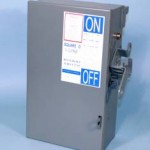
Buy PQ3206 Square D Bus Plug
MIDWEST was asked if the reliable life expectancy of bus plugs followed the classic bathtub curve. In other words, the rate of failure of bus plugs would be high when they are first put into service, ie new bus plugs. Then the failure rate would remain very low until the bus plug was very old, near the end of its reliable life. At that time the failure rate would rise again, similar to the rate when new. If one plotted the curve of the failure rate, it would have the shape of a bathtub. MIDWEST had two answers to the question. The first answer was “We don’t know, ask the manufacturer.” Our second answer was more important, “The failure rate is related to environment and not age.” We know the causes of old or new bus plug failures. New, old, and very old, obsolete bus plugs fail if they are overloaded, overheated. Bus plugs fail if they are in an area with a lot of vibration or physical movement. All bus plugs fail early in wet areas. The enclosure eventually just rusts away. New bus plugs fail if they are not properly installed. This is much more common than one might think. Old and new bus plugs fail if they get very dirty and vibrate and overheat. There isn’t much to a bus plug. So, if you install them properly and keep them dry, clean, no vibration, and under loaded, they will last for decades and you do not need to worry about the bathtub phenomenon. Sounds like a good idea for all electrical equipment.
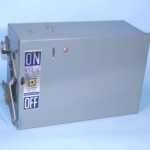
Buy Square D PQ3640 Bus Plugs
All too often our little friend the bus plug ends up making the ultimate sacrifice resulting in a catastrophic failure in the line of duty.
Not long ago we got a call from a customer asking for a bus plug replacement for one of theirs which failed in service. The circumstances surrounding the bus plug failure cannot be discerned.
The bus plug involved was a Square D PQ3640 (3 phase, fusible, 600 volts, 400 amps), the older version of the Square D PBQ style bus plug. One can only speculate as to what happened exactly, but the evidence told of a frightening scenario. A hole the size of an orange was burned completely through the bus plug cover. The inside guts burned beyond recognition, copper splattering along with carbon residue scattered throughout the inside of the bus plug.
Oddly enough the extent of the damage was confined to the bus plug itself and did not affect the bus duct proper. As mentioned many times before, bus plugs often operate under highly stressed conditions seriously compromising their life in service.
For sake of convenience, economy of effort, or sheer tempting of fate, some mortal souls choose to swap out a bus plug on an energized bus duct. Imagine being up 20 feet in the air on a scissors lift and grabbing hold of a 200 amp bus plug and trying to yank the thing out of a hot bus duct, wearing no face shield, no arc flash or shock protection, and on top of all that, being under the gun to get it done before you go on your coffee break. No, this is not the Moscow circus. Some folks still do this.
Bus plugs connect to the bus bar in bus duct using spring loaded finger clusters. The bus plug is attached and removed from the bus bar by force of movement (F = MA, plus the added force needed to overcome the spring loaded tension of the finger clusters). The bus plug enclosure proper is mounted to the hanging bus duct enclosure by clamps holding the bus plug in place. The old bus plug is removed, the bus duct is inspected to make sure everything is copasetic and the new bus plug is put in place. The entire routine is fairly straightforward, on a de-energized and locked out circuit. On a live circuit, ladies and gentlemen hold on to your hats. Things unexpected can occur. Assumptions made may prove untrue. Working on a live circuit without proper arc flash or shock protection puts you in a place you really don’t want to be. Questions we’d like to ask: Is a person working under such live conditions aware of how much arcing fault current can take place? Are they aware that a fault might last much longer than a fault on a normal feeder? Are they aware that the blast could blow them off the lift; Are they aware that they have both hands in contact with a potential shock hazard and a shock could “cross their heart;” Are they aware that an arcing fault on many bus ducts is too dangerous even with the maximum protective clothing under NFPA 70E? Be safe, don’t rush, and MIDWEST recommends turning off the bus duct.
10.0 Why look down when you can look up.
9.0 Our reconditioned bus plugs come in various colors. Take your pick as long as it’s grey.
8.0 Our reconditioned bus plugs are guaranteed to bring good luck to those who use them. Just ask any of our happy customers.
7.0 Our reconditioned bus plugs come with a standard one year warranty,
6.0 Our reconditioned bus plugs look and operate like new. Check them out and compare for yourself.
5,0 Our reconditioned bus plugs meet national testing standards.
4.0 Our reconditioned bus plugs are readily available. Manufacturers do not keep inventories of many types of new equipment. Lead times for new equipment orders can run into weeks or even months.
3.0 Our reconditioned bus plugs are fast and easy to purchase. Check out our web site at www.swgr.com to see how easy it is.
2.0 Our reconditioned bus plugs receive the same care as rare pieces of art. Well not quite. But the fact remains, our technicians take tremendous pride in their work.
1.0 And the number one reason to buy a used bus plug is it saves you money, up to 70% off the cost of new.
Two of the strangest locations we have seen with bus duct and bus plugs were in former manufacturing facilities that had been converted to very nice office spaces. One facility converted a building to their executive offices. Very fancy with lots of wood, glass and dramatic lighting. Had plush carpeting everywhere and actually very nice wall paintings and art. You would never guess the six feet above the ceiling was just jam packed with extremely old building infrastructure. Old and new heating ducts, sprinkler system, communication wires, conduits, a mass of abandoned pipes and cables, abandoned light fixtures, old dirty wood structure supporting an old wood roof, and a complete bus duct distribution system chuck full of old and obsolete bus plugs and just a few new bus plugs. There were two totally different worlds separated by fancy ceiling tile. It was like standing in 2010 and looking up into 1940.
Another facility was set up the same way, but this facility was only about 25 years old. The most dramatic feature of this facility was that the space above the office ceiling was about 20 feet to the roof. When you looked above the ceiling tile, you found a massive open area. The bus duct in this area was about midway between the roof and the office ceiling tile. From one vantage point, you could just about see the entire bus duct system and all the bus plugs. In addition there were no really old bus plugs. An eerie feature was all the threaded rod hanging from the roof supports down to the ceiling below. It was a massive lost space hidden above a normal office environment.
These were two strange places for bus duct and bus plugs, which are usually found in exposed manufacturing or commercial buildings.
We were looking for bus plugs and met Orville and Wilber Wright. Well, sort of. MIDWEST was in Dayton, Ohio, looking at old used bus plugs in a former manufacturing facility. A big place. A thousand bus plugs. They had used Square D, ITE, and ITE Bull Dog bus plugs. They had used bus duct and bus plugs throughout the entire facility. We found bus plugs in all the manufacturing areas and above the ceilings in the offices, even the executive office. The facility had evolved and expanded over ten decades. There was a century of history in this manufacturing plant. We found electrical infrastructure every where, behind walls that had been added or moved, above ceilings that had been remodeled many times, hidden in closets, and secreted away in basements long forgotten. We were especially surprised to find a solemn plaque in front of a very old building, a hundred years old that had been beautifully remodeled inside as executive offices. We were looking at old electrical bus plugs and transformers in an area of the building, walked out the front door to find the plaque that read, in part, “…these buildings were constructed in 1910 and 1911 to house the factory of Wilbur and Orville Wright’s first airplane company, The Wright Company.” Now that’s a paradigm shift. One moment it’s just an old building. A second later it’s the Beginning of Manned Flight. Today we have “Human Spaceflight.” But we also still have bus plugs, some new and some old and some no longer used.
Once in a while, we get very confusing calls. The confusion may be no one’s fault. Just two people talking really fast and not realizing they are discussion totally different things. These calls don’t last long, but they can be pretty funny while they do. For example, in one case the call wasn’t for a used bus plug but for using gold plated bus plugs. The conversation was extremely confusing. The customer was referring to horizontal and vertical mounted bus plugs, surface mounted bus plugs, and cable plug type. They discussed temperature ranges and then morphed into new universal bus plugs, which we never heard of. And we’ve heard of them all. The confusion went on as the customer talked about paralleling and dual stacking. We thought we were on the right track when they spoke of contact resistance and snap in place connection. The whole conversation took less the 90 seconds and was turning into total nonsense. They didn’t have a manufacturer or catalog number, just a verbal description. When they brought up gold plating, we knew their bus plugs were not the same as ours. Because we both were using general words, the specifics that would have tipped us off never came up. A fast conversation between two people talking about totally different things. They were talking about new universal bus plugs and sockets for computer type connections, 30 volt, 1 amp devices. We were thinking of 480 volt, 200, 400, or even 600 amp devices for large power distribution. We call this brain lock. You had to be there.
Our Switchgear Shop claims nothing surprises them anymore. Well they got a surprise last week. We received a 400 amp, old bus plug for reconditioning. It looked in great condition, almost like a new bus plug. The receiving inspection read something like, Good, Good, Good, on and on, and at the end, Junk. It seems the reason the customer sent in this bus plug was because it looked like the Titanic. It had an 18 inch slice along one side of the enclosure. Very clean, very deep and perfectly straight. We have no clue how they did this. But we suspect a fork truck was involved. MIDWEST gets a few old bus plugs that have lost a battle with a fork truck. So our guys took a picture and added this one to our “Wall of Horror.”