Archive

Archive for the ‘General Bus Plug Information’ Category

Circuit Breaker Style Bus Plug Shorted with Wire
March 11th, 2011 2 comments


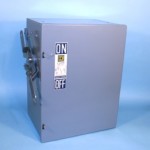
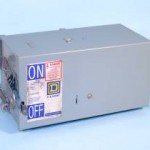
200 Amp PKA36200 Square D Bus Plug For Sale

200 Amp PKA36200 Square D Bus Plug For Sale

About the craziest bus plug MIDWEST’s field services have seen was a circuit breaker style bus plug that had the circuit breaker removed and replaced with wire jumpers. Apparently this was done as an extreme emergency temporary fix. It was a 200 amp bus plug. To do this, the entire bus duct must have been turned off, otherwise the jumpers would have had to be installed hot, which would be crazy.  The circuit breaker had been removed and insulated building wire used to connect the line side copper bars, of the 200 amp bus plug, to the feeder cables. The jumpers were connected to the feeder cables using taped up split bolts. The feeder went to the main fused switch for a very large molding machine, so there was fault protection at the machine. But the line side of the main switch could have had an extremely high arc flash hazard level, since the only protection was the main breaker for the entire 1200 amp bus duct. It could have been a Square D bus plug or a Cutler Hammer bus plug. Actually it wasn’t either, but the manufacturer of the bus plug doesn’t make any difference. MIDWEST’s Field Services runs into some of these nightmares now and then. The danger of temporary fixes is they often are forgotten and take on a permanent life within the power system. For temporary repairs, we suggest attaching yellow warning banner ribbon, or other safety measures, until the permanent repairs can be made. In this case though, the temporary fix was too dangerous and should not have been done.


Why Disassemble Bus Plugs for Reconditioning

February 25th, 2011 Comments off

MIDWEST was asked by a retired electrician why we bother disassembling a bus plug to recondition it. He worked for a contractor for years and they serviced bus plugs and bus duct a few times. But all they had to do was clean them off and operate them a couple

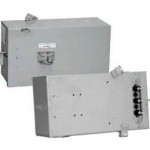
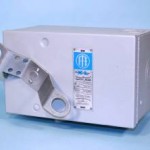
ITE RV366 Bus Plugs Available at www.swgr.com

ITE RV366 Bus Plugs Available at www.swgr.com

times. They never found any problems. They didn’t bother removing them from the bus duct. He said he worked on GE General Electric bus plugs, Square D bus plugs and westinghouse bus plugs. He wanted to know what we would find that they didn’t. The obvious area of concern would be the disconnect fingers on the back of the bus plugs. These are not visible unless you remove the bus plug from the bus duct. It’s not unusual for disconnect fingers to be misaligned, bent or damaged by overheating due to improper fit on to the bus duct. In addition, we often find fuse holder supports or operating mechanism supports actually broken. A broken support for an operating mechanism is a disaster waiting to happen. It’s especially dangerous because it will fail right when you are operating the bus plug. And that’s a bad place to be if you are the one switching the bus plug. The concern is for the safety of the person doing the switching. It’s easy to repair or replace equipment. But it’s not so easy to repair or replace people or body parts.


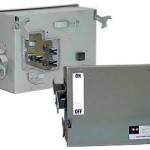
Square D PBQ4640 Bus Plugs Available at www.swgr.com

Square D PBQ4640 Bus Plugs Available at www.swgr.com

Whether it’s an ITE RV366 bus plug or RV364 or Square D PBQ4640 bus plug, any bus plug can have these defects. Many defects are more related to the installation and environment than to the particular manufacturer. The big deal is we know all the things that can go wrong with electrical bus plugs and most of these failures can not be found with a quick visual inspection of an installed bus plug by someone inexperienced, who has never tore one apart, or repaired one after it has broken or failed mechanically or electrically.


Bus Plug Neutral – You see it on the nameplate, but its not there

January 31st, 2011 Comments off

We asked MIDWEST’s Switchgear Shop for an example of a replacement bus plug problem or defect that would not be picked up by standardized reconditioning and testing procedures.  Procedures that might be found in published data. We were looking for something that went directly to the value of experience. The value of quality workmanship.  Here’s a quick example from one of MIDWEST’s switchgear Engineering Technicians.


He spoke of a Federal Pacific bus plug, catalog number LSP 1436SN, 600 volt, 400 amp, just as an example. He said it could just as well be a Cutler Hammer Bus Plug catalog number HD 1364N, or a replacement Square D bus plug or Westinghouse bus plug. It didn’t make a difference.  A service company could simply test, or repair or completely recondition a bus plug. Then perform the tests that look for current or voltage related problems. Do the quality control physical and mechanical inspection. The reconditioned Square D bus plug could look and perform so well that you might think it was brand new. But as part of the quality control, veteran Engineering Technicians

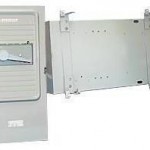
Cutler Hammer HD1364N Bus Plug For Sale by MIDWEST

Cutler Hammer HD1364N Bus Plug For Sale by MIDWEST

 know to double check the nameplate of the reconditioned bus plug with what they actually have. They said this could very easily be missed, because the nameplate is always correct, almost. The last error he found was a bus plug that had a neutral indicated in the catalog number on the nameplate, like the two just mentioned, but actually did not have the neutral bus. It had been removed. It came into the Switchgear Shop that way, as was determined by inspecting other bus plugs in the same lot. Just a detail, a really big detail. So standardized tests can not replace experience and quality workmanship.      


Replace Bus Plugs Due to Failure, Not Just New Load

January 26th, 2011 Comments off


Cutler Hammer CP2HD366 Bus Plugs For Sale by MIDWEST

Cutler Hammer CP2HD366 Bus Plugs For Sale by MIDWEST

Much of the demand for reconditioned and new surplus bus plugs is because the user has to replace bus plugs that are defective.  One of the worst things that happen is the bus plug operating mechanism breaks when you try to open or close it. It is very dangerous if the bus plug is half open or one pole opened and the other two are half closed yet. This type of failure is due to the lack of maintenance, specifically the lack of exercising the bus plug operating mechanism periodically. The other enemies are dirt, moisture, heat, and, as we have said many times, fork lifts.  Sometimes folks are very surprised that so many reconditioned bus plugs are used to replace damaged or defective bus plugs rather than just for additional load or expansion.


Federal Pacific LSP1432 Bus Plugs For Sale by MIDWEST

Federal Pacific LSP1432 Bus Plugs For Sale by MIDWEST

For every Cutler Hammer CP2HD366 bus plug purchased for an expansion project, we might also replace a Federal Pacific LSP1432SN bus plug because the customer’s existing bus plug failed to operate properly. When it comes to bus plugs, run to failure is the standard operating mode. The perception is they don’t need maintenance because the never do anything. They just sit on the bus duct. And that is true, but it is also the reason they eventually may fail to operate properly when needed.

The only real pattern may be the use of newer style replacement bus plugs for expansion projects than for replacement of defective equipment

Finding Bus Plugs in White Space

January 18th, 2011 Comments off
 
Bus Plug Square D PKA36200

Bus Plug Square D PKA36200

If you read the recent information on Facebook beating Myspace by managing in “white space,” rather than in a formal business management environment, you have a good idea how MIDWEST makes many decisions to improve its web site for our customers. We make so called guesses based on conversations and suggestions from our customers.  They tell us what they like. And in doing so, they are the white space between all the seasoned directives we get from the marketing professionals. The ‘world wide web’ is still exciting uncharted territory.  There are not many years of prior art.

In response to customer white space chatter, MIDWEST set up a web site specifically directed at those looking for buyers of bus plugs. Hence, the domain name www.busplugsbuyer.com. You see here the results of white space management. This specific target site makes it easier for those that have bus plugs to sell to find us in general. Of course, they could find MIDWEST specifically if they already knew we existed. But, for those that don’t know who MIDWEST is, they might make a general search for buyers of bus plugs. Then go from the general to the more specific. Specifically, whether a GE General Electric bus plugs, Square D bus plugs, Cutler Hammer bus plugs, ITE Bus Plugs, or Federal Pacific bus plugs, it doesn’t make a difference.  According to our customers, they would first search for a bus plug buyer and then go from there. This is all very simple from the seller’s point of view.

When Bus Plugs Start to Fail Frequently

January 10th, 2011 Comments off
 
Square D PQ3206 Bus Plug

Square D PQ3206 Bus Plug

It is not unusual for MIDWEST to get a call because a company is having numerous problems with their old bus plugs. Things go along okay for years and then one year they have one failure after another. It seems to make no difference who the manufacturer is. They could be old Square D bus plugs, GE General Electric bus plugs, Westinghouse bus plugs, Cutler Hammer bus plugs or ITE bus plugs. The problem seems not to care who the manufacturer is.  When this pattern appears, it is usually because a chronic mechanical or environmental problem has been present for many years and has been getting progressively worse. Soon or later the mechanical problem or contaminate reaches a critical stage and the bus plugs collectively start to fail. Usually the failure seems to be caused by overheating, or by mechanical failure between the bus duct and bus plugs, or by moisture.  The problem isn’t just moisture or dirt. It’s the accumulation of dirt over many years or the presence of moisture over many years. This means there is a chronic condition causing you to replace bus plugs. One typically doesn’t have to suddenly replace Square D bus plugs or replace Cutler Hammer bus plugs because of normal operating conditions. And replacing Westinghouse bus plugs one after the other without addressing the root cause, will not make the problem go away.  So if you find yourself having to repair or replace numerous bus plugs, look for a chronic cause. If you just don’t find something, then look for a recent acute change that would affect all the bus plugs.


Need a Square D PQ3620G NOW

December 16th, 2010 Comments off


PQ3620G Square D Bus Plug For Sale

PQ3620G Square D Bus Plug For Sale

Sometimes you couldn’t write the script for the strange things that happen in the real world.  At least in our world of reconditioning old used bus plugs and selling them to folks that tell us they couldn’t tell the difference from new.  The technical world seems so boring to outsiders, but MIDWEST has its share of action. For example, a large food processing facility called at 6:15 PM on a Monday night, in a screaming panic, because they needed a replacement 200 amp bus plug and they needed it right away. They couldn’t get a new one immediately and the electrical suppliers for most of the US were already closed for the day.  The cracking in his voice changed to audible relief when we told him we had a fully reconditioned Square D PQ3620G bus plug, boxed and ready for shipping pickup. It was set to go to another customer, but it was part of an order for over 100 bus plugs and there was no urgency for it to ship. It was a shipping scramble but the food processing plant had their like new Square D bus plug the next morning. What’s the chance MIDWEST would have a Square D PQ3620G bus plug sitting at the shipping dock, ready to go, and someone calls and needs it “right now.”  The answer to that question is that it’s much more common than one would ever guess. It seems improbable, but it happens fairly often. The odds may be higher because of the number of bus plugs, transformers and circuit breakers we ship.  But it’s always a nice thrill for MIDWEST to defy the odds. And it gives the Engineers something to argue about, the odds versus reality.


Infrared Scanning Bus Plugs when You Can Not Open the Cover

December 10th, 2010 Comments off
 
General Electric AC323R Bus Plug Available from MIDWEST

General Electric AC323R Bus Plug Available from MIDWEST

Sometimes you just can not safely perform an electrical maintenance service per the written specification. For example, in today’s world of real concern for arc flash hazards, safely opening the cover of an energized bus plug, to perform an Infrared Scan, may not be possible. It may not be safely justified because of the high risk. So one argument is whether or not one can actually tell if a bus plug is hot because of overloading or because of a poor connection that is overheating. Is it a load problem or a connection problem?  Is there a problem at all?

Because our Thermographers are all required to work on bus plugs in our switchgear shop, they are very familiar with the interior of most bus plugs. They may have totally reconditioned a specific Square D or Bull Dog 100 amp bus plug. Or they may have repaired many ITE, GE General Electric or Cutler Hammer 60 amp bus plugs. Therefore they know where the interior switch or breaker is located. They may know exactly where the conductors connect to the bus plug feeder terminals.  This knowledge and experience is a big advantage, but the Infrared task is still difficult. The indications of overheating, whether load or connection related, may be very subtle because the interior heat must be re-emitted by the bus plug enclosure, greatly dampening the heat pattern.

Again, knowledge of the bus plug allows the Thermographer to turn art into science, at least to some degree. The thermographer may compare a suspect old bus plug to an identical bus plug nearby. Comparing the feeder conduit helps identify the possible ampacity of an old bus plug.  Comparing the heat pattern of the different plane surfaces of a suspect old or new Cutler Hammer or Square D bus plug may give additional information to help determine the existence and cause of heating.


Our thermographers have special safe ammeters to measure the load on a bus plug feeder, where practical and safe. Knowing the actual load, say on a feeder from an old Federal Pacific bus plug, is extremely helpful in determining if the suspected heating is load related or connection related. It is extremely difficult, if even possible, to determine the presence of overheating, much less the cause, by just looking at one plane of the energized bus plug with even a very sensitive Infrared Scanner.


It is the combination of the Thermographer’s experience and equipment knowledge that makes scanning energized bus plugs still very useful.  This same experience and knowledge aid in determining the possible cause of a suspected problem manifested by heat.

Bus Plug Connection or Load Problem Using Infrared

November 24th, 2010 Comments off

MIDWEST frequently is asked how we can tell if an overheating problem in an electrical bus plug, found using Infrared Thermography, is a connection problem or a load problem. Especially when the bus plug cover can not safely be opened.  Overheating from a load problem usually displays a paintbrush effect on the bus plug enclosure. Large and continuous areas may display a higher temperature pattern. Looking at the electrical bus plug from different angles may still display a wide pattern of overheating and no indication of a spot source. This is difficult, even for an experienced Thermographer. MIDWEST’s Thermographers have the advantage of extensive training and experience reconditioning, maintaining, repairing and testing bus plugs in our switchgear shop. With this experience, they know the location of the internal components of the various bus plugs, whether Square D, Cutler Hammer, GE General Electric, Westinghouse, ITE Bulldog, or Federal Pacific. The combination of this knowledge and experience and their understanding of Infrared Thermography, gives them the tools they need to best differentiate between overheating due to load and overheating due to a poor connection or contact.


A connection problem may display a more localized heat pattern that sometimes can be confirmed by Infrared Scanning the bus plug from different angles.  The heat pattern at each angle may confirm the heat is coming from the same somewhat specific location.  With the cover closed, it is very difficult to identify the exact location. It might be the fuse clip or the lug for a feeder cable or the switch or breaker contact.


Finally, when possible, measuring the load on the bus plug feeder, when safe, and comparing it to the bus plug rating can help validate whether the problem is load or connection. Only when safe, the bus plug cover may be opened and an accurate scan of the inside of the bus plug performed.  It is not always possible to determine the exact cause of overheating in a bus plug, but these are some of the tools that increase our success.

Broken Handle Bus Plug

November 10th, 2010 Comments off
 
XLVB322 ITE Bus Plug

XLVB322 ITE Bus Plug

Once in a while MIDWEST gets phone calls that are just scary.  For example, a maintenance electrician called to ask what he should do. He needed to turn power off to a production machine. It was fed directly from an old bus plug. But the bus plug handle was broken so he couldn’t switch the bus plug. He tried using a vice grip, but the whole bus plug was moving and it still would not turn off. Production said they could not turn off the whole line just for one lousy switch. He said the bus plug was obsolete and he just wanted to get it out of there. It was kind of hanging at an angle and the pipe for the feeder going out the top was pulled out. He thought he and another guy could use a lift and pull it off live. He thought that might be okay because they would make sure there was no load on it.  He said he had worked on broken bus plugs before.

This man was in a big jam between making a bad decision and doing what his boss wanted. He needed help. Our answer was simple and we told him we would send a letter if he needed. There was danger of serious injury or death if they tried to remove that live bus plug from a live bus duct. The bus duct would have to be turned off. The danger of shock hazard and arc blast hazard was too great under the circumstances. In addition, the situational danger was extreme because they would be working from a platform lift with no way to escaped from shock or arc blast. Plus they could be knocked right off the platform. And they were in a position that no one could immediately help them.


We were sure his boss did not fully understand the level of danger and just saw the problem as simply mechanical. We have been through this before. Once everyone understands how dangerous it is, they work out a safe solution, like turn the power off on third shift.


The big danger is beginning to think you can do something that you know is too dangerous. Sometimes, the longer you think about it, the more you convince yourself that maybe this time it would be okay. You’ll just be careful. When you start that line of thought, you just have to stop yourself.


If you know there is a danger of serious injury or death, you are not allowed to do it.