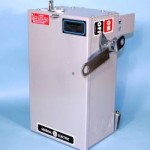
Buy FVK363R General Electric Bus Plugs
MIDWEST receives many requests from folks that want to sell us their used bus plugs. These requests come from all over the country. Usually we ask for a little biography on their old bus plugs. If we are interested, we may ask them to send us some digital pictures of what they have. To recondition bus plugs, there is a huge difference in the cost between bus plugs that look like new bus plugs and those that have been painted several times and are damaged. Refurbishing damaged bus plugs is a waste of time. Along with all this, there is a need to have a sense of humor. Just about all the folks that call MIDWEST are great people, but they sure don’t know our business. Here is a recent quick example. We received a call from someone wanting to sell us several pallets of like new bus plugs. They described them; Gave us some catalog numbers; And said they just want to get rid of them. We asked for some digital pictures and they were happy to accommodate. When we reviewed the pictures, all their used bus plugs looked just great. Perfect candidates for refurbished bus plugs. But the pallets were outside on a nice sunshiny day. Good light for great pictures. But it rains outside and bus plugs do not like rain. We called the owners and they said their like new bus plugs were located in an area that was always warm and seldom rained. Seldom doesn’t mean never. It means occasionally does. Occasionally means at least once and at least once means rust. And rust means disaster for bus plugs. MIDWEST is not interested in rusty old bus plugs, even if they look like new bus plugs.
Previously MIDWEST discussed the problem of making certain the disconnect fingers lineup properly when you replace a bus plug. We really didn’t answer the question of how to make sure replacement bus plugs are connected properly. Here are a couple suggestions. Put a very thin film of proper contact lubricant on the contact surface of the old bus plug disconnect fingers. Install the bus plug on to the bus duct. Note the position of the replaced bus plug and how it went into place. Then remove the bus plug and closely inspect the contact surface of the disconnect fingers. The film of contact lubricant should reveal that the disconnect fingers properly slid, ie wiped, on to the bus bar in the bus duct. Remove any excess lubricant. In addition, one can inspect the bus bars of the bus duct and see visible evidence that the disconnect fingers of the replacement bus plug actually wiped the surfaces of the bus bars correctly. After having verified the bus plug had been properly installed, install it again in the same manner as the first time. All this should not be necessary, but sometimes old or obsolete bus plugs are difficult to tell if they connected properly. It can be especially difficult when installing some large bus plugs. The physical effort to get them in place impedes the ability to sense if they went into place properly. Follow the manufacturer’s instructions on the possible use of contact lubricant. Regardless, too much lubricant is a mistake because it collects dust. Also, if new, reconditioned or repaired bus plugs are installed in a previously empty space on the bus duct, you should be able to see the contact wipe marks on the bus bar the first time the bus plug is installed or see new wipe marks on the disconnect fingers of the bus plug itself. All this is a simple way to give greater confidence the bus plug is installed properly. For safety reasons, MIDWEST strongly recommends this only be done on de-energized bus duct.
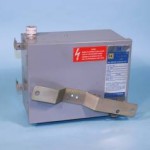
Buy Square D Bus Plug
Maintenance mechanics and maintenance electricians are very self reliant people. They have the ability to get things done, often with limited resources, and they have a lot of common sense in the maintenance world, the real world. When it comes to installing replacement electrical bus plugs, their common sense may tell them, if it fits, it’s connected right. This is not always true. The problem, when installing replacement or new bus plugs is that it is very hard to see the actual disconnect finger connections when sliding the bus plug into place on the bus duct. Installing an old bus plug from a platform lift, much less from ladders, can be a real challenge. One can’t always get the lift right under the bus duct. It’s hard and sometimes impossible to see well enough to make sure the replacement bus plug disconnect fingers line up properly with the bus duct bus bar. And some bus plugs are very heavy. They may take two people to install. It can be a challenge. Using Thermographic Scanning, Infrared Scanning, MIDWEST sometimes finds overheating at the disconnect fingers that connect the bus plug to the bus duct. When we check it out, we find that one or more of the fingers has slid under the bus bar inside the bus duct. The actual contact surface may be only 25% of what it should be and the contact pressure may be very little if the disconnect finger assembly breaks and the only real connection occurs because it is jammed between the bus bar and the bus plug phase assembly. The big worry is for a short circuit between the bus bar of the bus duct. So, for old or new replacement bus plugs, just because the bus plug enclosure fits on to the bus duct, does not mean the bus plug is properly connected to the bus duct. It can be a challenge, but care must be taken when installing bus plugs. One can not rely on alignment alone to assure the proper connection is made.
For arc flash safety reasons, MIDWEST recommends turning off the bus duct before replacing a bus plug or installing a new bus plug.
A foundry called MIDWEST for another replacement bus plug. They said this was the third one he bought from us in the last two years. He thought it was strange that he suddenly had so many failures and had to call us for replacement bus plugs. The man that called was a foundry maintenance mechanic. These men are the salt of the earth. They can fix just about anything with just about nothing. So we pay pretty good attention to their problems. In this case he complained that their bus plugs must be junk because they were suddenly having so many failures. He was sure something was wrong right from the manufacturer. They never had any problems and suddenly they were all failing. We checked our records and all the replacement bus plugs were for old equipment manufactured in the 1960s. They actually had very good luck with their bus plugs until the last couple years.
We had a little confirmation bias going. The maintenance mechanic thought there must be something wrong with the bus plugs. Why? Well, because the bus plugs were failing, so there had to be something wrong with them. Makes sense, kind of. The reality was that the equipment was getting very old, it was dirty, was seldom exercised, and therefore was mechanically less reliable. We explained that electrical equipment ages and as it gets older the frequency of failure will increase, sometimes rapidly, depending on the condition. We see a very low failure rate for bus plugs in a facility that isn’t very old and is clean. For similar facilities that are much older or much dirtier, the failure rate is higher, and increases as the facilities age. But all this is trumped by the condition of the facility and the load on the bus duct and bus plugs. In a foundry, all bets may be off. In a foundry, when equipment suddenly starts to fail, the sudden increase in failure rate is usually due to condition and not merely age. The failures are a warning that it is time for cleaning and maintenance.
MIDWEST’s Switchgear Shop was asked if they had a simple video of reconditioning a bus plug. The answer was, “Not yet, but give us a couple weeks.” They figured the customer asked, so they had the green light to make a video. This was truly a collaboration of Techies. Three weeks later they had two hours of video of everything to do with reconditioning an old used bus plug. They figured they had it all covered, disassembly, stripping, cleaning, replacing hardware, painting, reassembly, labeling, testing, and final QC checkout. Everyone was pleased until they were given the task of reducing their famous bus plug video from 2 hours to 5 minutes. Ouch! This seemed impossible to them. There was a lot of work, and therefore video, to reconditioning old used and sometimes obsolete bus plugs. The problem was solved by having just one person work on the editing.
In the end, everyone was pleased until Engineering viewed the video and went crazy because all the final testing and QC was edited out. The video is now back for re-editing. You can’t please everyone, especially fanatics.
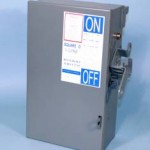
Buy PQ3206 Square D Bus Plug
MIDWEST was asked if the reliable life expectancy of bus plugs followed the classic bathtub curve. In other words, the rate of failure of bus plugs would be high when they are first put into service, ie new bus plugs. Then the failure rate would remain very low until the bus plug was very old, near the end of its reliable life. At that time the failure rate would rise again, similar to the rate when new. If one plotted the curve of the failure rate, it would have the shape of a bathtub. MIDWEST had two answers to the question. The first answer was “We don’t know, ask the manufacturer.” Our second answer was more important, “The failure rate is related to environment and not age.” We know the causes of old or new bus plug failures. New, old, and very old, obsolete bus plugs fail if they are overloaded, overheated. Bus plugs fail if they are in an area with a lot of vibration or physical movement. All bus plugs fail early in wet areas. The enclosure eventually just rusts away. New bus plugs fail if they are not properly installed. This is much more common than one might think. Old and new bus plugs fail if they get very dirty and vibrate and overheat. There isn’t much to a bus plug. So, if you install them properly and keep them dry, clean, no vibration, and under loaded, they will last for decades and you do not need to worry about the bathtub phenomenon. Sounds like a good idea for all electrical equipment.
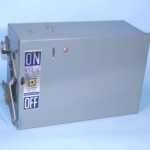
Buy Square D PQ3640 Bus Plugs
All too often our little friend the bus plug ends up making the ultimate sacrifice resulting in a catastrophic failure in the line of duty.
Not long ago we got a call from a customer asking for a bus plug replacement for one of theirs which failed in service. The circumstances surrounding the bus plug failure cannot be discerned.
The bus plug involved was a Square D PQ3640 (3 phase, fusible, 600 volts, 400 amps), the older version of the Square D PBQ style bus plug. One can only speculate as to what happened exactly, but the evidence told of a frightening scenario. A hole the size of an orange was burned completely through the bus plug cover. The inside guts burned beyond recognition, copper splattering along with carbon residue scattered throughout the inside of the bus plug.
Oddly enough the extent of the damage was confined to the bus plug itself and did not affect the bus duct proper. As mentioned many times before, bus plugs often operate under highly stressed conditions seriously compromising their life in service.
A maintenance electrician asked MIDWEST what he should do about a 200 amp Square D Bus Plug that was sagging several inches down from the overhead bus duct. He said the conduit from the bus plug was poorly supported and was pulling it down. His supervisor wanted him to try and fix it on the fly. That made him really uncomfortable and he wanted MIDWEST’s recommendations.
This problem has nothing to do with the manufacturer. It could have been a General Electric or Westinghouse bus plug just as easy. The problem is the installation, not the equipment. We have seen this all too often when doing Infrared Scans of overhead bus duct and bus plugs.
First of all we recommended in the strongest terms that no one try to fix this problem without shutting the power off. We mean shut off the power to the bus duct, not just shut off the bus plug. The connection of the disconnect fingers on the back of the bus plug to the bus duct is the most vulnerable to failure and will do the most damage if it faults while the system is on. Besides possibly getting someone seriously injured or killed, you could lose a section of bus duct and have a protracted power outage. The danger to the maintenance electrician is too great to even consider adjusting the bus plug energized.
As far as just leaving well enough alone, we don’t buy that either. This is what MIDWEST calls an incipient failure, a failure that will happen sometime in the future. When, we are not sure. But it will certainly happen. Our experience is these things happen on July 4th or Thanksgiving Day. That’s just the way things seem to go sometimes.
The danger of catastrophic damage to equipment and, more important, the danger to a maintenance electrician trying to adjust the bus plug while it is hot, is just too great. We would categorize the idea of doing this hot as “Crazy.” Besides, you are not allowed to do something that has the danger of serious injury or death.
Turn all the power off and properly plumb and support the bus plug. We also recommend removing the bus plug and checking it for damage, before reinstalling it correctly. Do it right and no one gets hurt, always a good idea.
For sake of convenience, economy of effort, or sheer tempting of fate, some mortal souls choose to swap out a bus plug on an energized bus duct. Imagine being up 20 feet in the air on a scissors lift and grabbing hold of a 200 amp bus plug and trying to yank the thing out of a hot bus duct, wearing no face shield, no arc flash or shock protection, and on top of all that, being under the gun to get it done before you go on your coffee break. No, this is not the Moscow circus. Some folks still do this.
Bus plugs connect to the bus bar in bus duct using spring loaded finger clusters. The bus plug is attached and removed from the bus bar by force of movement (F = MA, plus the added force needed to overcome the spring loaded tension of the finger clusters). The bus plug enclosure proper is mounted to the hanging bus duct enclosure by clamps holding the bus plug in place. The old bus plug is removed, the bus duct is inspected to make sure everything is copasetic and the new bus plug is put in place. The entire routine is fairly straightforward, on a de-energized and locked out circuit. On a live circuit, ladies and gentlemen hold on to your hats. Things unexpected can occur. Assumptions made may prove untrue. Working on a live circuit without proper arc flash or shock protection puts you in a place you really don’t want to be. Questions we’d like to ask: Is a person working under such live conditions aware of how much arcing fault current can take place? Are they aware that a fault might last much longer than a fault on a normal feeder? Are they aware that the blast could blow them off the lift; Are they aware that they have both hands in contact with a potential shock hazard and a shock could “cross their heart;” Are they aware that an arcing fault on many bus ducts is too dangerous even with the maximum protective clothing under NFPA 70E? Be safe, don’t rush, and MIDWEST recommends turning off the bus duct.
10.0 Why look down when you can look up.
9.0 Our reconditioned bus plugs come in various colors. Take your pick as long as it’s grey.
8.0 Our reconditioned bus plugs are guaranteed to bring good luck to those who use them. Just ask any of our happy customers.
7.0 Our reconditioned bus plugs come with a standard one year warranty,
6.0 Our reconditioned bus plugs look and operate like new. Check them out and compare for yourself.
5,0 Our reconditioned bus plugs meet national testing standards.
4.0 Our reconditioned bus plugs are readily available. Manufacturers do not keep inventories of many types of new equipment. Lead times for new equipment orders can run into weeks or even months.
3.0 Our reconditioned bus plugs are fast and easy to purchase. Check out our web site at www.swgr.com to see how easy it is.
2.0 Our reconditioned bus plugs receive the same care as rare pieces of art. Well not quite. But the fact remains, our technicians take tremendous pride in their work.
1.0 And the number one reason to buy a used bus plug is it saves you money, up to 70% off the cost of new.