MIDWEST frequently is asked how we can tell if an overheating problem in an electrical bus plug, found using Infrared Thermography, is a connection problem or a load problem. Especially when the bus plug cover can not safely be opened. Overheating from a load problem usually displays a paintbrush effect on the bus plug enclosure. Large and continuous areas may display a higher temperature pattern. Looking at the electrical bus plug from different angles may still display a wide pattern of overheating and no indication of a spot source. This is difficult, even for an experienced Thermographer. MIDWEST’s Thermographers have the advantage of extensive training and experience reconditioning, maintaining, repairing and testing bus plugs in our switchgear shop. With this experience, they know the location of the internal components of the various bus plugs, whether Square D, Cutler Hammer, GE General Electric, Westinghouse, ITE Bulldog, or Federal Pacific. The combination of this knowledge and experience and their understanding of Infrared Thermography, gives them the tools they need to best differentiate between overheating due to load and overheating due to a poor connection or contact.
A connection problem may display a more localized heat pattern that sometimes can be confirmed by Infrared Scanning the bus plug from different angles. The heat pattern at each angle may confirm the heat is coming from the same somewhat specific location. With the cover closed, it is very difficult to identify the exact location. It might be the fuse clip or the lug for a feeder cable or the switch or breaker contact.
Finally, when possible, measuring the load on the bus plug feeder, when safe, and comparing it to the bus plug rating can help validate whether the problem is load or connection. Only when safe, the bus plug cover may be opened and an accurate scan of the inside of the bus plug performed. It is not always possible to determine the exact cause of overheating in a bus plug, but these are some of the tools that increase our success.
Categories: General Bus Plug Information Tags: breaker contact, bus plug, bus plug connection, bus plug enclosure, bus plug feeder, Cutler Hammer, electrical bus plug, Federal Pacific, feeder cable, fuse clip, GE, General Electric, Infrared Scanning, Infrared Thermography, ITE Bulldog, load problem, overheating bus plug, overheating problem, Square D, Westinghouse
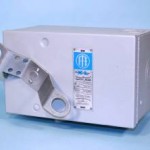
XLVB322 ITE Bus Plug
Once in a while MIDWEST gets phone calls that are just scary. For example, a maintenance electrician called to ask what he should do. He needed to turn power off to a production machine. It was fed directly from an old bus plug. But the bus plug handle was broken so he couldn’t switch the bus plug. He tried using a vice grip, but the whole bus plug was moving and it still would not turn off. Production said they could not turn off the whole line just for one lousy switch. He said the bus plug was obsolete and he just wanted to get it out of there. It was kind of hanging at an angle and the pipe for the feeder going out the top was pulled out. He thought he and another guy could use a lift and pull it off live. He thought that might be okay because they would make sure there was no load on it. He said he had worked on broken bus plugs before.
This man was in a big jam between making a bad decision and doing what his boss wanted. He needed help. Our answer was simple and we told him we would send a letter if he needed. There was danger of serious injury or death if they tried to remove that live bus plug from a live bus duct. The bus duct would have to be turned off. The danger of shock hazard and arc blast hazard was too great under the circumstances. In addition, the situational danger was extreme because they would be working from a platform lift with no way to escaped from shock or arc blast. Plus they could be knocked right off the platform. And they were in a position that no one could immediately help them.
We were sure his boss did not fully understand the level of danger and just saw the problem as simply mechanical. We have been through this before. Once everyone understands how dangerous it is, they work out a safe solution, like turn the power off on third shift.
The big danger is beginning to think you can do something that you know is too dangerous. Sometimes, the longer you think about it, the more you convince yourself that maybe this time it would be okay. You’ll just be careful. When you start that line of thought, you just have to stop yourself.
If you know there is a danger of serious injury or death, you are not allowed to do it.
Categories: General Bus Plug Information Tags: arc blast hazard, broken bus plug handle, broken bus plugs, bus plug handle, bus plugs, danger of death, danger of serious injury, obsolete bus plugs, old bus plugs, replacement bus plug handle, shock hazard, used bus plugs
Here’s another odd but very dangerous circumstance that MIDWEST ran into during the field data collection for an Arc Flash Hazard analysis. The customer had an old Square D bus duct run in the oldest part of their plant. It was actually a complex made up of several buildings, the oldest being a wood structure going back seventy years. They had mostly Square D and General Electric bus duct and bus plugs, and a small run of ITE. The old part of the plant was used for storage. All the manufacturing equipment had long ago been removed. There were very few Square D bus plugs still being used in the bus duct in this area. There were maybe a dozen bus plugs that were still installed but no longer in use. In most cases, the pipe and wire feeder had been removed. But we found one 100 amp bus plug, no longer used, had a conduit going into a small room full of junk. We had been told the bus plug was off and the fuses probably removed. They didn’t know where the conduit went. When we checked, and we always check, we found the bus plug closed and hot, the feeder energized. The electrician was pretty surprised. We traced the conduit to a back small storage area, dark, no lighting, where it terminated in a 6 by 6 junction box on the wall right next to the door. This circuit was “deadly hot” because the cover was missing and the conductors were sticking out of the box, wrapped with the frayed remains of old cloth type tape. This was a deadly accident just waiting to happen. When MIDWEST recommended turning off the old bus plug; removing the fuses; and removing the conductors and conduit from the bus plug, they balked. Thought just turning it off was okay. But, since this was an abandoned circuit, not to be used again, we always recommend removing it. We consider this a safe work practice that eliminates the possibility of something “deadly hot” injuring or killing someone in the future.