Archive

Archive for September, 2010

Bus Plug Clearance Safety
September 24th, 2010 Comments off
 
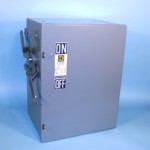
Square D Bus Plugs Cat. No. PQ4620

Square D Bus Plugs Cat. No. PQ4620

We ran across blogging information about safe clearances for bus plugs. There was interest in the correct code requirements for various size bus plugs, 2000 amp bus plugs to 400 amp bus plugs to 60 amp bus plugs. Sometimes code requirements are the only hammer the electrician may have to force others to be safe. We’ve dealt with used, obsolete, and new bus plugs for decades and we have one big rule for experienced electrical personal who work around this stuff for a living. “If it seems unsafe, it is unsafe.”  As far as inexperienced or non electrical folks, stay away from electrical power bus plugs. They are not your friend.

 Would it make sense to tell an experienced electrician, who feels that a 200 amp Square D bus plug is unsafe to fool with, that he actually would be safe just because it meets code. Nonsense. We would trust the extra caution of experience, over code, any day, especially when the code is defined as a minimum safety standard.  Having said this, we would also caution against listening to the type of experience that says something is safe, even though it does not meet code, just because the experienced person has done it many time before and nothing ever happed.  Experience or not, just don’t work on or around anybody’s bus plugs hot. Whether Square D, Cutler Hammer, GE General Electric, or Siemens bus plugs, do not work on bus plugs energized.


Sometimes the criticism of the location of electrical bus duct and bus plugs is heaped on the electrical contractor that installed it. Having worked in electrical contracting in a past life and worked in manufacturing plants for decades, we often find the electrical bus duct and bus plugs are ignored when other equipment is installed near them.  Space is a premium, so newly installed pipe or duct or hangers can go only a foot or two from the bus duct or plug.  And after 20 years, there isn’t enough room left for an electrician to safely work around bus duct or plugs, regardless of code or experience.  So don’t! 
Having Bus Plugs from Many Manufacturers

September 15th, 2010 Comments off

MIDWEST was asked by a manufacturing plant that used Siemens bus plugs in their facility, why they had not only Siemens bus plugs, but also used ITE Siemens, Square D and Cutler Hammer bus plugs. And most of his main switchgear and circuit breakers were GE General Electric. His purchasing department wanted maintenance to pick one electrical equipment manufacturer and stick with them. Purchasing figured they could get better prices that way. 


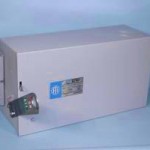
ITE Bus Plugs Cat. No. RV424

ITE Bus Plugs Cat. No. RV424

First we explained that each type of electrical equipment they had, probably represented a time period or an expansion project. For example, that 100,000 square foot addition in 1968 may have been all Square D. The electrical contractor may have got his best pricing from Square D and therefore bought Square D bus plugs and bus duct. The contractor on a later project may have used Cutler Hammer. Later yet, Siemens. This was not unusual. Or this may have happened because of different delivery dates. Or a particular manufacturer of bus plugs may have fallen out of favor with contractors because of quality problems or high prices. 


All this could be avoided by specifying a specific manufacturer. But single sourcing one manufacturer of electrical switchgear may result in higher prices. The manufacturer would have a lock on the sales. The manufacturer’s sales rep would usually figure this out pretty quick. If you put an alternate in your specification, you basically have the same environment as open source bidding.  Sometimes a particular electrical bus duct and bus plug manufacturer has a lock on a customer’s business because of the purchasing department or maintenance department at that time. The head of maintenance for ten years just may be more familiar with or favor GE General Electric bus plugs. Or purchasing may be hooked on Eaton Cutler Hammer bus plugs. So it goes sometimes. But it can be very difficult to continually single source the electrical equipment you purchase for many years and decades. There are just too many variables and they change over time.  There is not a problem having equipment from different electrical equipment manufacturers, as long as replacement bus plugs or other equipment and parts are readily available. Delivery is sometimes a problem in today’s ‘just in time’ world. MIDWEST’s reconditioned electrical switchgear, including bus plugs, is one solution to the availability problem. 


There are situations where using only one manufacturer of electrical switchgear may be important and required. For example, Mission Critical facilities, remote access facilities that require many spare components, continuous process facilities, and, of course, facilities that are actually subsidiaries or are owned by a specific electrical equipment manufacturer.

Arc Welding Faulted Bus Plug and Bus Duct

September 10th, 2010 Comments off

MIDWEST had an emergency call from a manufacture because they blew up a large 800 amp bus plug and their production was down. They were the primary ‘just in time’ supplier of some parts to a larger manufacturer. They couldn’t afford a major loss of production because they would then become the secondary supplier or even worse.  We had a replacement reconditioned bus plug but they wanted someone to look at their bus duct system and the other old bus plugs because something just didn’t seem right when the 800 amp bus plug failed. 


When we inspected the bus duct, we had to do a double take on what we saw. The brackets supporting the splice connection at the ends of each section of bus duct were melted away in some areas. And some of the hangers and supports also had damage. It was as if someone had taken a welder or cutting torch and melted away parts of the bus duct support brackets and other supports and bolts along the length of the bus duct. This was a four wire system.  But you might think of it as a five wire.  A, B, and C phase, plus neutral, and ground.  It was apparent they had an unprotected fault from phase to ground, a ground fault. The ground, in this case, was the metal enclosure and supports for the bus duct. The bus duct was protected by an old 2000 amp fused bolted pressure switch. There was no ground fault protection on the old system. Before the 2000 amp fuse blew, a lot of welding and melting took place.  Fortunately only one replacement bus plug was needed and one section of bus duct had to be replaced. The arcing and melting damage to steel brackets and supports, although visually dramatic, was not enough to prevent them from getting back on as soon as the damaged section of bus duct and damaged bus plug were replaced. They intended to complete other structural repairs later, maybe. At the time, their only concern was to get production back up as soon as possible, even if it was only temporarily. We all know how stressful production schedules can be. The cause of the problem was failed supports on their old obsolete bus plug. It lasted a long time, but eventually it sagged enough for one phase to go to ground, the metal enclosure.  And after a few moments of 277 volt arc welding, they had a mess.