Why Do Bus Plugs Have a Short Life Expectancy?
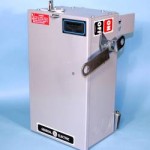
General Electric Bus Plug
I was asked by a customer why bus plugs have such a short life expectancy. He said they had to replace bus plugs every year. They perform an annual Infrared Scan of their electrical system and every year they find bad bus plugs. He said they never have trouble with their circuit breakers. His words, “How come?”
One could do a fancy analysis of the failure modes of bus plugs and correlate the most probable failure modes to their load and environment. Come up with a probability of failure. Assign that probability to the number of bus plugs they have and decide if they have an unusually high failure rate. We have performed Failure Mode and Effects Analyses (FMEA) on electrical systems, a long and egregious task. What we found was that we ended up with some of the basic information we would have by just having an experienced Power Field Service Engineer or Technician walk through their facility and write down their evaluations, expectations and recommendations. We also found that we generated a lot of information that had no value or was not accurate based on real life experience. The “walk through” takes an hour or two for a fairly large facility, as compared to 80 hours of engineering time for a failure mode and effects analysis on a small facility. The important question may be “Which procedure provides the best results?” My opinion is the value of the walk through will far surpass the value of FMEA. The exception may be a mission critical facility, in which case one may wish to do both, a professional walk through and a FMEA.
Now back to the point and the simple answer. Bus plugs fail frequently because of (1) vibration, (2) heavy loading (3) dirt and (4) no maintenance. That’s it. Nothing sophisticated. They never get cleaned, much less maintained. Seldom get exercised. Move a bit or a lot or vibrate, as they hang from bus duct connected to the ceiling and are themselves connected, typically by conduit, to equipment on the floor. And frequently load just keeps getting added to an old bus plug. The biggest problem is the connection of the disconnect fingers to the bus duct, especially where vibration and load (ie heat) are a factor.
Bus plugs in a clean, quiet, steady load facility, like a commercial building, seldom have problems. Our Thermographers have said Infrared Scanning bus duct with many bus plugs, in a dirty, loud, congested manufacturing facility, sometimes is like looking at a string of lights through the Infrared Scanner.