Archive

Archive for April, 2009

Danger Danger – Bus Plugs

April 29th, 2009 Comments off

Or sorry not me, I have something planned later tonight

By Dan Marchewka


Huh?


Dangerous Waters,  Aguas Peligrosas


A famous actor once said, (I forgot his name) “Do you feel lucky today, Well do you, punk?”


Those allusions may be a little extreme, but are they really?


Older electricians (there are still some around) remember the days of open Frankenstein switches (there are still some in service today), those fabled switches of yore, who take their namesake from Frankenstein movies as electrodes strode across open air circuits and voltage danced freely around the laboratory like gypsies at a wine tasting festival. The Frankenstein switch, open knife blade switches typically mounted on slate boards, were thrown in live by hand. In those days PPE (Personal Protective Equipment) were not yet a distinct part of worker safety. In fact, back then, worker safety was not yet considered part of worker safety.


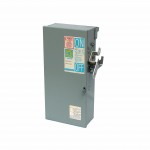
Where is all this leading? Hang on. Meet the door operated bus plug, a second cousin to the floor operated bus plug. While these two little devices are of the same family and serve the same purpose, the former is the troubled nephew of the clan and is not (skeptics are you listening) for the faint of heart. Older door operated bus plugs such as the Square D Safeflex, for example, (there are others from other manufactures)  were designed such that the door, as in metal door, as in bare metal door handle, were part of the bus plug’s operating mechanism. Now here’s where it gets good. The person opening the bus plug door, say to change out a fuse, balancing himself, (not herself, there weren’t as many women electricians around back then)  up high on the Scizzors lift, believing the load is off, (he knows the end machine has been turned off) was most often not fully appreciative of the surprise he was about to engender. Opening the door, unless he was made of stone, would reveal a startling revelation: A gee-wiz moment, (people don’t say gee-wiz anymore do they?) Ok a holy *hit moment. As anyone who’s done it can testify, opening the door of a door operated bus plug is like prom night but without the tuxedo –you never know what awaits you. The movable contacts of the bus plug switch are part of the bus plug door. While load may be off the circuit the voltage is not. Opening the door breaks the circuit.  So let the word go out to friend and foe alike, the torch has been passed to a new generation of Americans. When conducting this high wire circuit interrupting act be careful to identify the type of bus plug and always wear your appropriate protective equipment.


For you older electricians I know what you are thinking, it was the fun part of the job. Fair enough.


Be safe….and remember, bus plugs are “Dangerfields”…they deserve your respect.


Categories: Uncategorized Tags:

Plugging Away

April 16th, 2009 Comments off
Bus Plug

Bus Plugs For Sale

Definition: As the name suggests a Bus Plug is a type of switch which plugs into a bus as part of a power distribution system.

The purpose of a Bus Plug is to provide a localized power feed to electrical devices.

Bus plugs always contain their own source of circuit protection. Circuit protection can be either in the form of a fuse or a circuit breaker.

Bus plug voltage ratings (USA) range from 120/240, 208/120, 240, 277/480, 480, 600

Bus Plug Ampere ratings (USA) range from 15 to 1600 amps. The most common bus plug ampere ratings fall within the range of 30-200 amps with 30 and 60 amps being the most common size bus plugs in use overall.

Why are bus plugs such a hot item in the used electrical equipment market? The answer can be found in a combination of factors: Bus plugs often operate in environments which are not the most conducive to the long life of electrical devices. The atmosphere in manufacturing facilities can contain quantities and qualities of air contaminants and heat temperatures in great abundance, making for the short life of bus plugs. Oil and various air contaminants accumulates on insulating members of the bus plug causing a decrease in insulation resistance. Low insulation resistance increases the risk of flash over between either phase to phase or phase to ground. High ambient temperatures can lead to “cooking a fuse” where fuse thermal thresholds can be compromised degrading fuse performance.

Bus plug internal contacts contain silver tabs brazed to copper contact arms. Arcing from normal open and closing operations under load causes the silver contact surface to pit leading to increased degrees of contact deterioration.

Bus plug external contact fingers, which make contact to the bus itself, are often the source of bus plug failure. Finger contact surfaces are vulnerable to environmental contaminants. Heat as a result of a resistance thresholds being breached can lead to failure. It is not uncommon for these fingers to completely melt due to high contact temperatures.

Devices called Tap Boxes are part of the bus way power distribution system. Tap boxes are enclosure devices which connect power cable feeds to the Bus Way system. Tap Boxes come in two types: “Plug In Tap Box” and “End Tap Box” types. The former is what it sounds like. It connects to the bus way through a plug in type of connection. End Tap Box’s provide power to the bus way by connecting at either end of a particular line of bus way. Both types of devices are items in demand in the used electrical power distribution market.

One of the things we do here at Midwest is recondition and sell bus plugs. The reconditioning process involves completely disassembling the bus plug. The various component parts are then inspected, cleaned, polished and painted. After reassembly, the reconditioned bus plug is put through a series of tests per Midwest’s Quality Control Program, (QCP). The bus plug contacts are tested for contact resistance. Contact resistance is measured in micro or milli ohms. Because higher ampere rated bus plugs have larger contact surface areas, lower contact resistance values can be expected on higher ampere rated bus plugs. The bus plug is then tested for insulation resistance measuring the integrity of insulating members. Test leads are connected between various conductor and frame locations. Test results for insulation resistance are measured in megohms.

Finally the bus plug is load tested. 80% of rated load current is put through the device as a final check before it goes out the door.

By Jason Honick

Sales representative, Midwest Testing, Switchgear Division